Look at the body
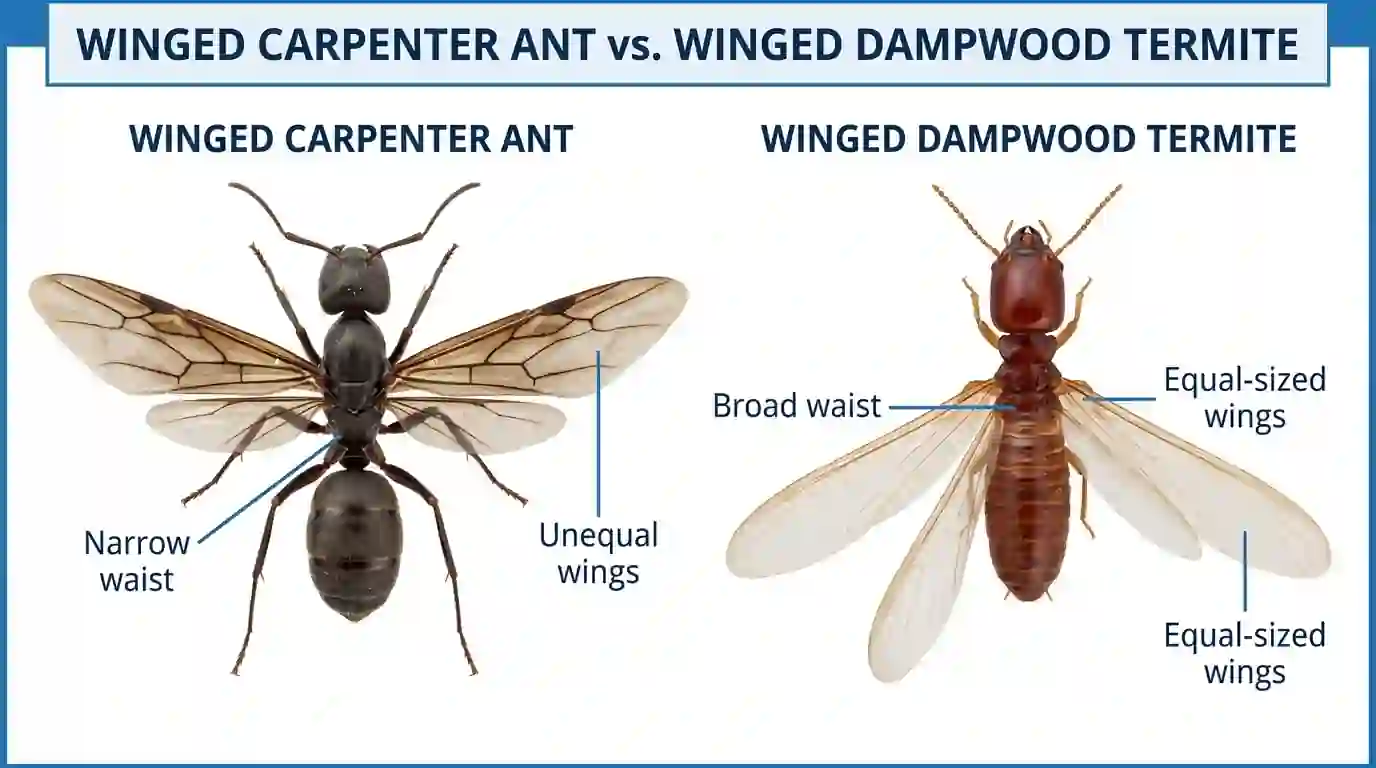
Carpenter ants have a narrow, pinched waist between the thorax and abdomen and bent, elbowed antennae. Winged reproductives have front wings noticeably longer than the hind wings. Western carpenter ant workers are large, roughly 6 to 13 millimeters, and usually black or dark red-black.
Termites have a broad waist with no pinch, straight beaded antennae, and two pairs of wings of equal length. The Pacific dampwood termite, the main termite in western Washington, is large for a termite, and swarmers often fly to lights on warm evenings from late summer into fall.
Read the frass
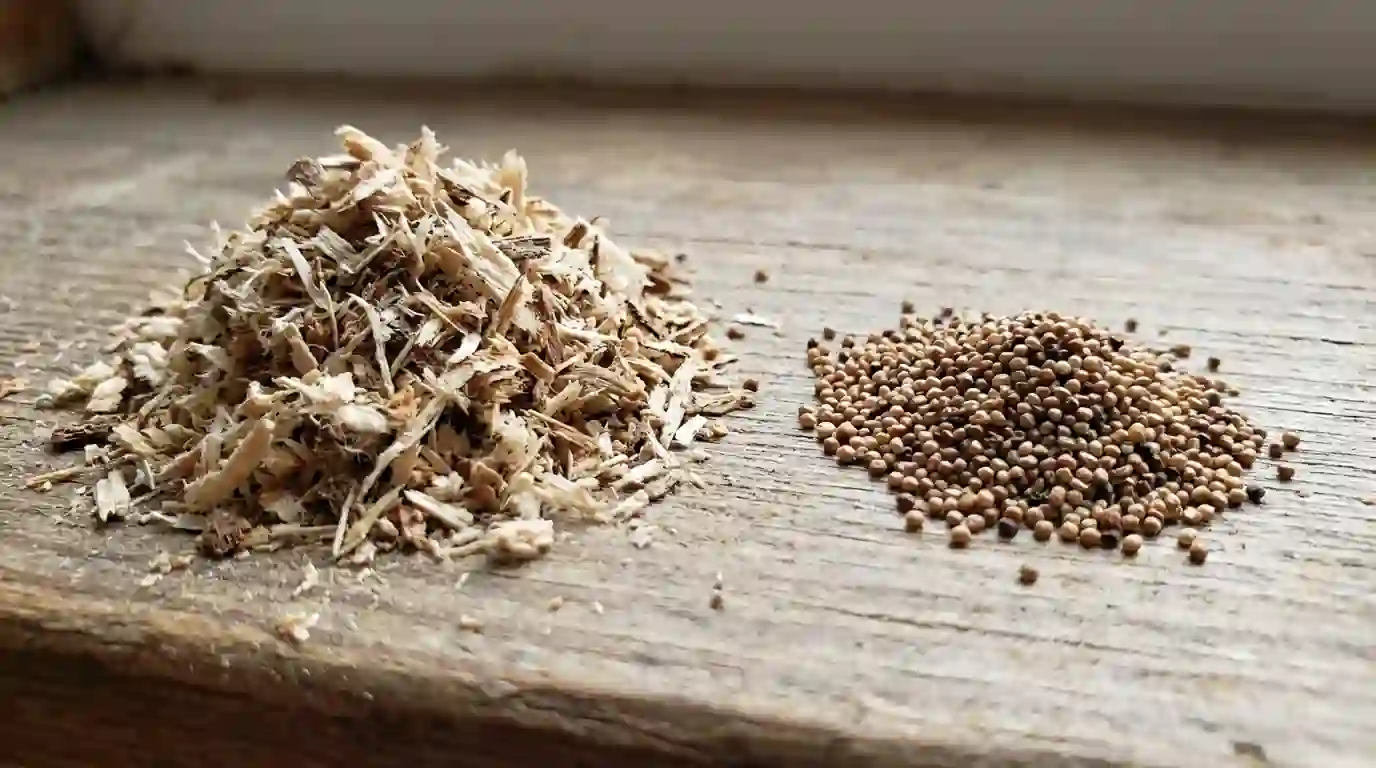
Carpenter ants excavate wood but do not eat it, so they push out frass that looks like fine sawdust mixed with insect parts. It collects in small cones under gallery openings at window sills, sill plates and deck connections.
Dampwood termites leave dry, hard fecal pellets with six flat sides. The pellets pile up below kick-out holes. If you can roll a few between your fingers and they feel like tiny seeds, it points to termites.
Look at the damage
Carpenter ant galleries are smooth and clean, almost sanded. Dampwood termite galleries are rougher and often follow wet, decayed wood, with pellets packed inside.
Both insects concentrate where wood is wet. Washington State University notes carpenter ants target wood above about 15 percent moisture, and dampwood termites need high-moisture wood to survive. Either way, a leak, gutter or crawl space moisture issue is usually nearby.
Moisture is the common thread
Both insects are moisture indicators. Common sources in Seattle homes include gutters that overflow onto rim joists, bathroom fans venting into the attic, leaking plumbing under sinks and tubs, soil or mulch piled against siding, and crawl spaces with poor ventilation or a torn vapor barrier.
A simple moisture meter reading on suspect wood helps. Wood above roughly 15 percent moisture is in the range carpenter ants prefer, and much wetter wood is typical of dampwood termite activity. Fixing the water source protects the structure even after treatment.
If you are buying or selling an older home, a wood-destroying organism inspection is worth doing. It separates active problems from old damage and gives you a written report with photos.
What it means for a Seattle home
Carpenter ants are the most common structural pest in Washington according to WSU, and they are far more common in Seattle homes than termites. Subterranean termites, the kind that drive termite control in many other states, are uncommon west of the Cascades.
That makes moisture correction a big part of the fix for both. Treat the insects, then repair the gutter, the drip or the crawl space ventilation that made the wood attractive.
A simple timeline for what to do
If you find winged insects indoors, start by collecting a few on clear tape and noting the room and time. Swarms that come from inside walls or window frames are more significant than a few insects that blew in through an open door.
Next, check the area below for frass and probe nearby wood. Soft wood near a leak or a damp sill is the most likely nest location for either insect.
Then look outside on the same wall for the moisture source: a dripping downspout, soil touching the siding, or a deck ledger without flashing. Photograph what you find; it helps the inspection go faster.
Finally, book an inspection rather than spraying. Repellent sprays scatter carpenter ant trails and do nothing to termite colonies inside wood, and both make the professional trace harder.
What to collect before you call
- Save a few insects on clear tape, including winged ones
- Photograph frass and note where it collects
- Note the season and time you see swarmers
- Check nearby wood for softness with a screwdriver
- Look for leaks, gutter overflow or damp crawl areas
- Avoid spraying so trails and activity stay readable