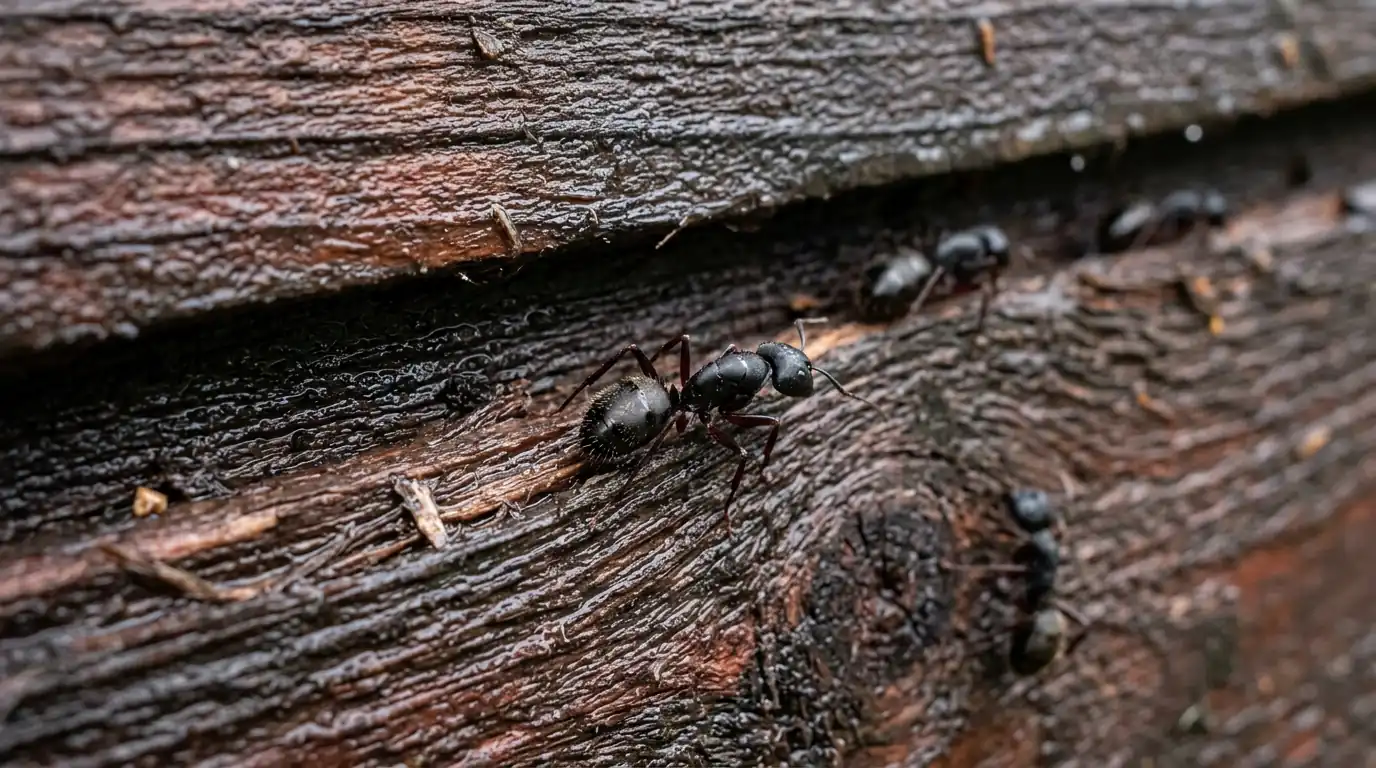
Large black ants, 6 to 13 mm
Camponotus workers dwarf kitchen ants. Indoor sightings in late winter and spring, especially near bathrooms and kitchens, mean a nest in or near the structure.
Ants & Wood Destroyers
Washington State University entomologists call carpenter ants the most common structural pest in the state. Camponotus modoc, the big black ant of Puget Sound, excavates galleries in wet wood and quietly expands year after year. We locate the nests, treat the colony network, and show you the moisture that made your framing attractive.
Call (206) 944-0849 All treatments
Reviewed by Marjorie Tidwell, Pest Prevention Writer. Updated 2026-10-05.
In short: Call (206) 944-0849 if you are seeing large black ants indoors, piles of fine sawdust, or hearing faint rustling in walls. We inspect for frass, gallery openings and moisture, trace trails to locate satellite and parent nests, treat the network directly and with non-repellent barriers, and document the wet-wood conditions that need fixing. Spring sightings deserve a same-week look.
What this treatment covers
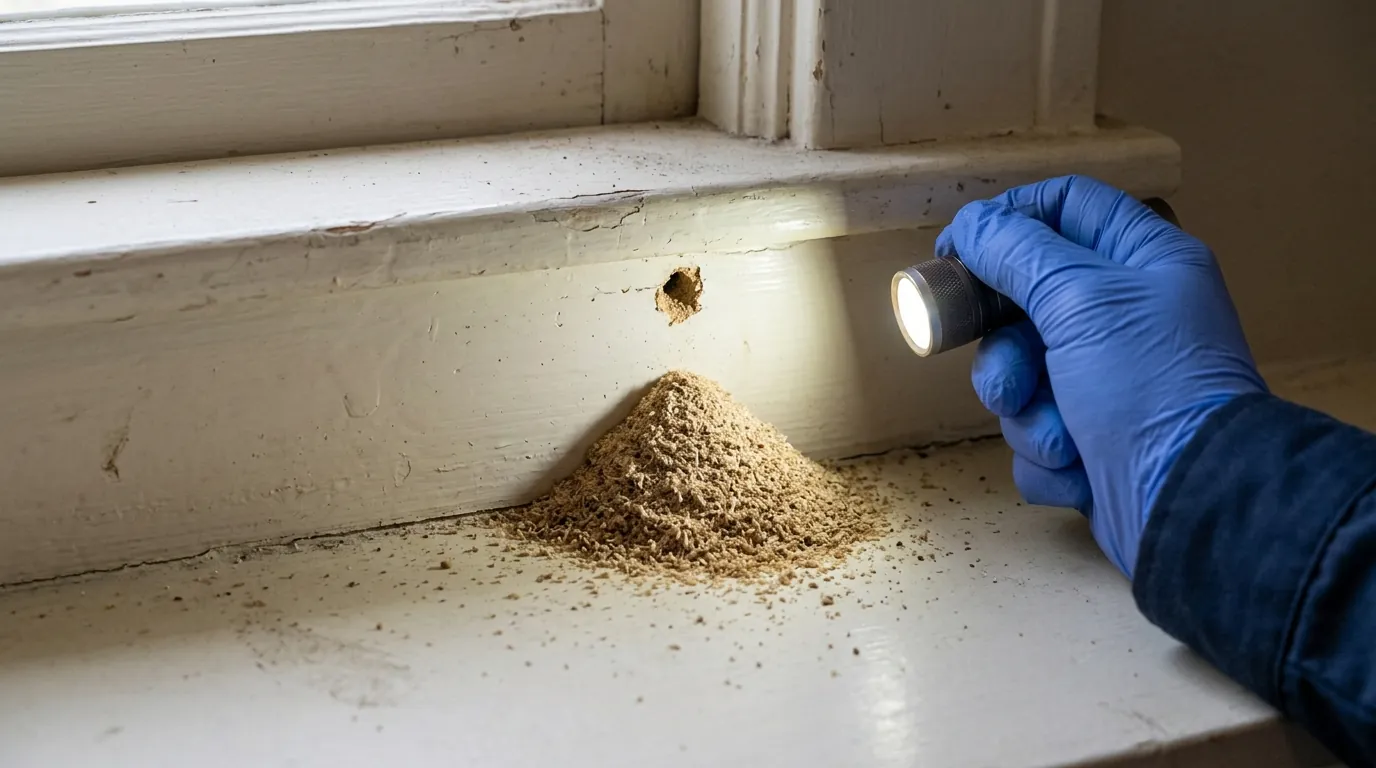
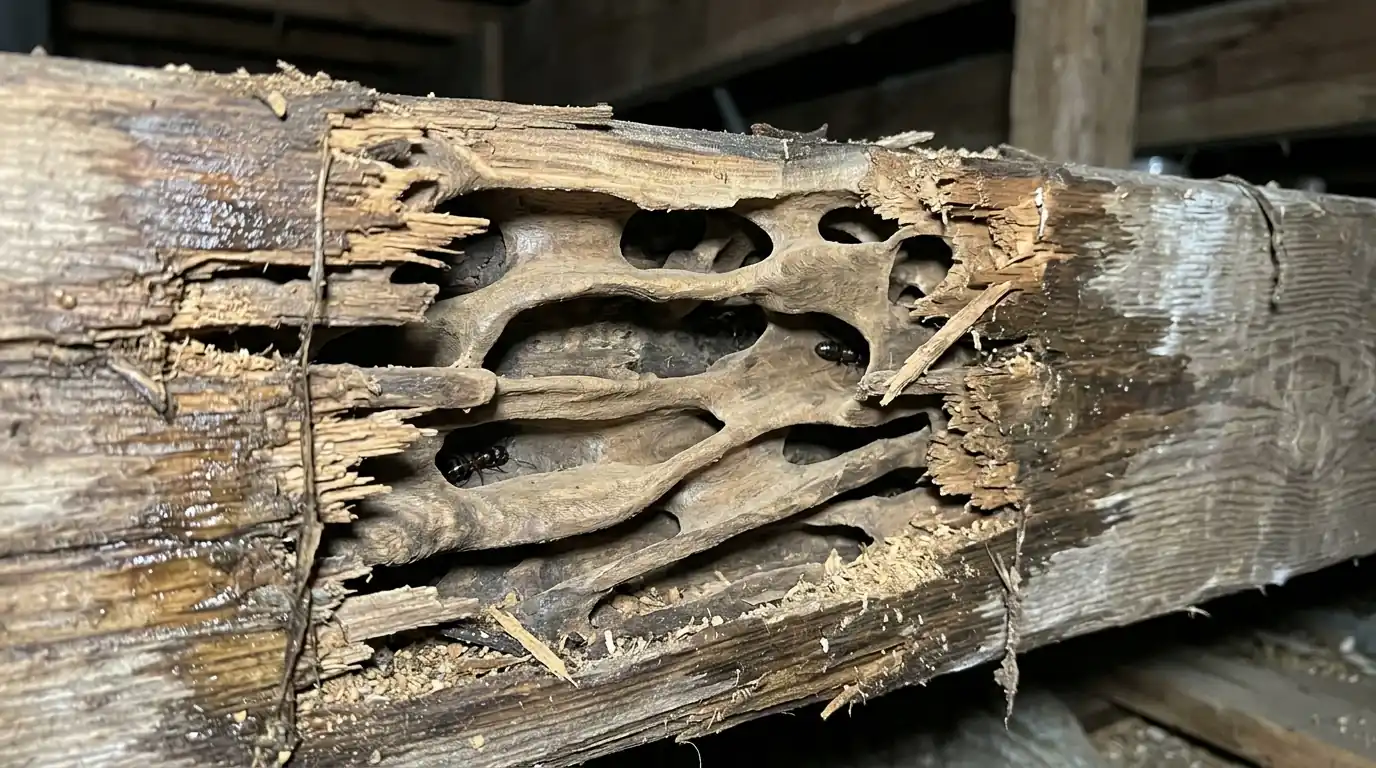
Carpenter ants do not eat wood; they excavate it. The western black carpenter ant, Camponotus modoc, hollows smooth galleries in structural lumber to house its colony, pushing the debris out as frass: fine, sawdust-like material mixed with insect fragments that collects in small cones below gallery openings. A mature parent colony, usually outdoors in a stump, log or landscape timber, seeds satellite colonies inside nearby structures, and those satellites are what homeowners hear rustling in walls on quiet nights.
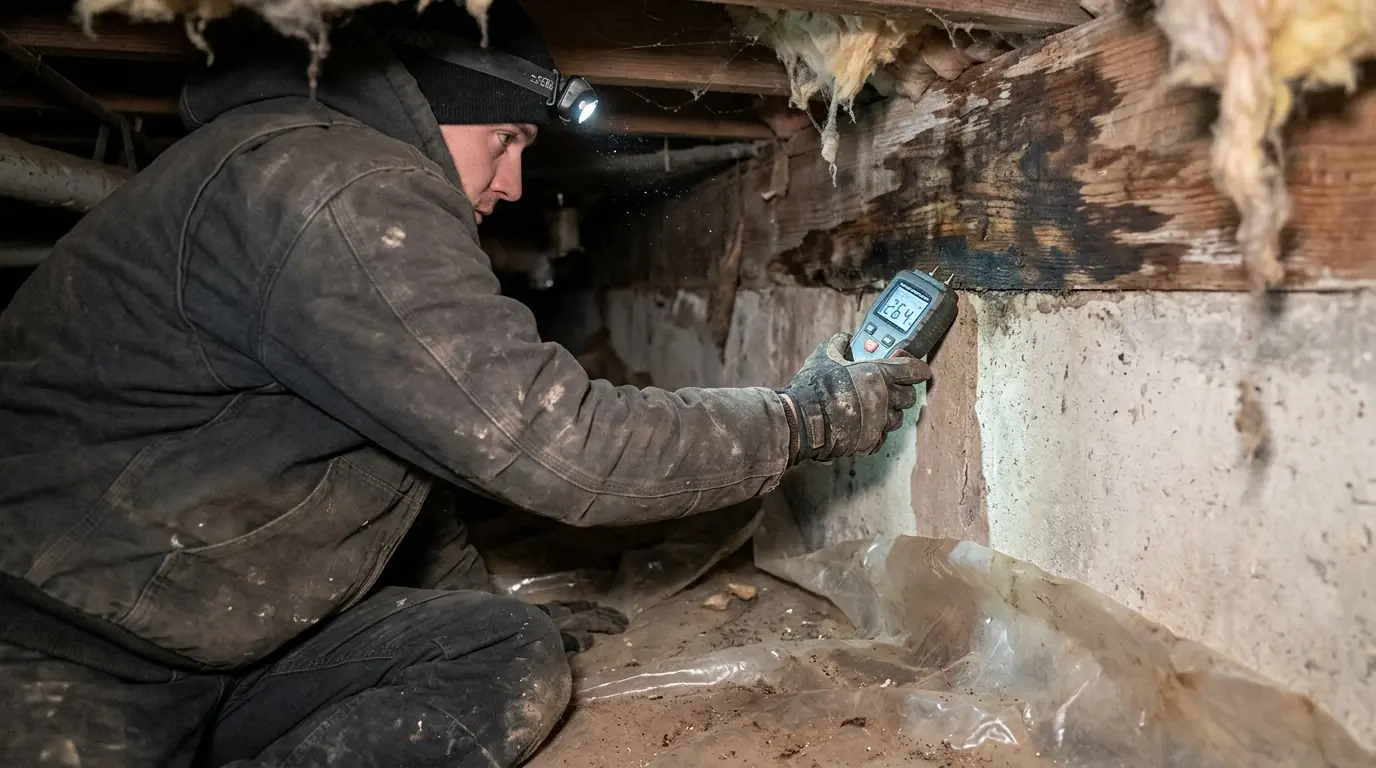
The inspection is the heart of this service, because treatment that misses the parent colony fails by next season. We follow foraging trails at their active hours, map frass deposits and gallery openings, probe suspect wood, and check the moisture map of the house: WSU's guidance is blunt that these ants target wood above roughly 15 percent moisture, so the leaky gutter line, the plumbing drip and the unvented crawl corner are all evidence.
Treatment combines direct application into located galleries and voids, non-repellent perimeter work that foragers carry through the colony network, and targeted baiting where trail access is limited. Then the structural honesty: you get photographs of the moisture conditions and any visible gallery damage, so the repair conversation happens with facts.
Catch it early
Camponotus workers dwarf kitchen ants. Indoor sightings in late winter and spring, especially near bathrooms and kitchens, mean a nest in or near the structure.
Frass below window frames, sill plates or deck connections: fine wood shavings with insect parts, re-appearing after you vacuum it.
A crinkling, paper-like sound in a quiet room is a satellite colony excavating. Press an ear or a glass to the wall after dark.
Reproductive swarmers emerging indoors are near-proof of an interior nest. Save a few; wing and waist shape separate them from termites.
Exposed wood that shows clean, sanded-looking tunnels, often found during remodels or deck repairs, is past infestation and possibly current.
Carpenter ants commute. A steady dusk trail along a fence top, cable or branch toward the house marks the route between parent and satellite.
The Seattle angle
This is the carpenter ant capital of the country for straightforward reasons. The species evolved in Northwest conifer forests, and Seattle neighborhoods are effectively thinned forest: fir and cedar over every block, stumps and landscape timbers for parent colonies, and 37 inches of annual rain keeping wood at the moisture content the ants need. Washington State University identifies carpenter ants as the state's most common structural pest, and our call pattern agrees, with sightings ramping every March as colonies wake and swarm.
The city's housing adds the second ingredient. Homes with decades of service have accumulated the small water failures that create nestable wood: a gutter seam dripping onto a rim joist, a bathroom vent exhausting into the attic, grade soil touching siding. Satellite colonies follow that moisture indoors, which is why we treat the inspection's moisture map as seriously as the ants themselves, and why the fix that lasts always has a repair component for the wet wood.
How the job runs
Ant size, frass locations, sounds, swarmers. Spring sightings get same-week scheduling.
Frass mapped, suspect wood probed, moisture read, crawl space and attic walked.
Foraging routes, followed at active hours, point from satellites back to the parent colony.
Direct gallery and void treatment plus non-repellent applications across the routes.
Follow-up confirms the network is dead; you keep photos of damage and moisture conditions.
Honest numbers
Carpenter ant pricing follows the inspection, because a single accessible satellite is a different job from a multi-nest network with a parent colony two properties away. The variables:
For planning context, published figures put carpenter ant structural repairs at $300 to $3,000 depending on how long the colony worked, and associated moisture remediation at $1,500 to $4,000 when rot is involved. Early treatment is the cheap version of this story, which is why spring sightings deserve a call rather than a wait.
Make the visit count
Straight answers
Usually meaningful but not catastrophic if caught within a season or two. Carpenter ants excavate along the grain of already-damp wood, so early damage concentrates where water was. Colonies left for years are the $3,000 repair stories; this spring's sighting treated now is rarely one.
Both swarm in spring, which causes the confusion. Carpenter ants have elbowed antennae, pinched waists and unequal wing pairs; the frass they push out looks like sawdust. Western Washington's common termite, the dampwood, leaves pellet-like frass instead. Bring us the insect and we will settle it in seconds, and our WDO inspection covers both.
You can, and the colony will not notice. Workers you see are a fraction of a network whose queens sit in galleries, often in a stump outdoors. Repellent sprays also scatter trails, which makes the professional trace harder. The kill has to travel to the nests.
Because WSU's 15 percent moisture threshold is the whole game. Carpenter ants do not nest in dry wood. Every carpenter ant infestation marks a water problem, and treating the ants while leaving the wet wood is scheduling a reinfestation.
Rarely. Most gallery and void treatment works through existing openings, small drilled access in inconspicuous spots, or from the crawl space and attic. If a wall genuinely must be opened, we show you why first, and the opening doubles as your look at the damage.
Spring is when colonies swarm, forage hardest and are easiest to trace, so it is the efficient season to kill a network. But satellites stay active in heated structures all year, and we treat them all year. The real deadline is before another season of excavation.
Big black ants in the house? That is a structural question.
Call (206) 944-0849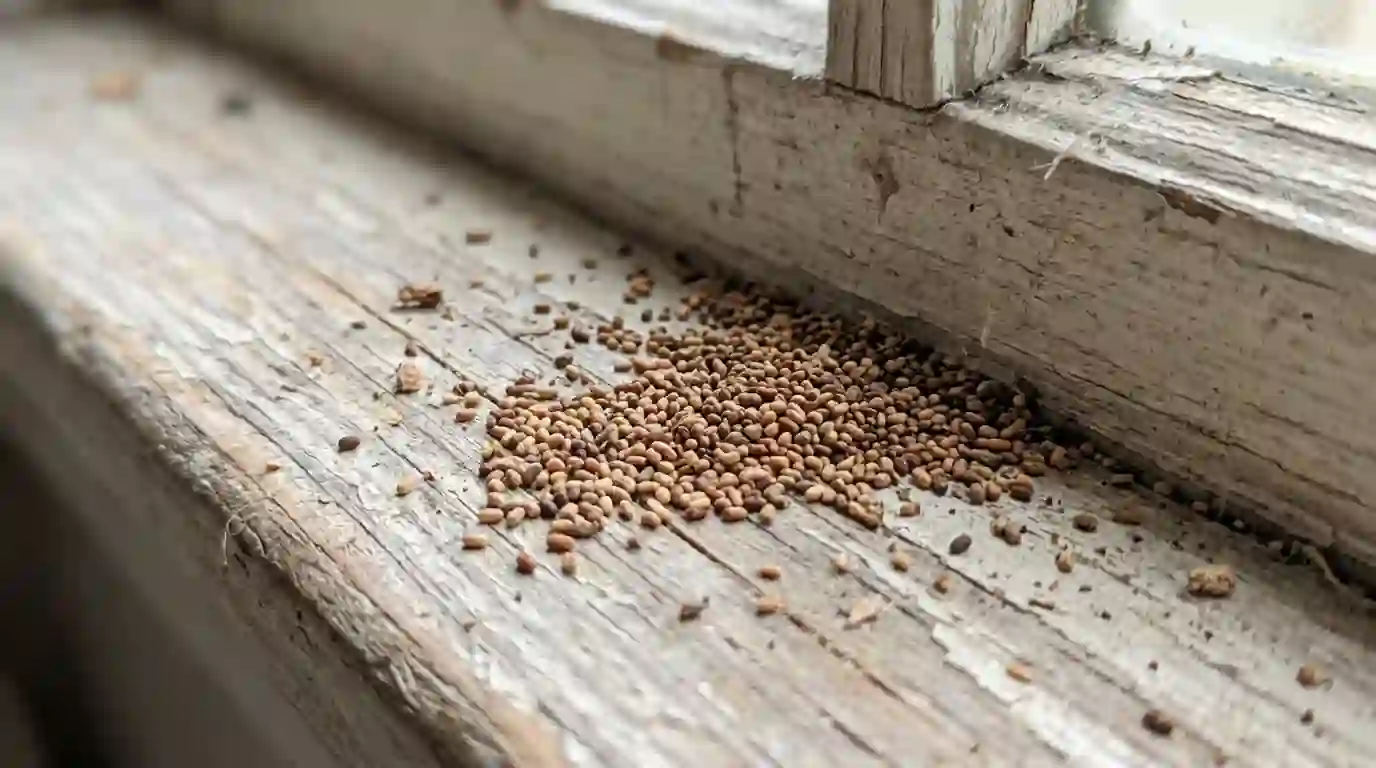
Talk to a technician
One inspection maps the nests, the trails and the moisture. One treatment kills the network. Call while it is still a small repair story.
Call (206) 944-0849Answered 24/7 from our Seattle service office.
Find the office
Our service office sits at 1440 5th Ave in Seattle, with the head office over in Aberdeen. Calls route to a person, not a queue, any hour.