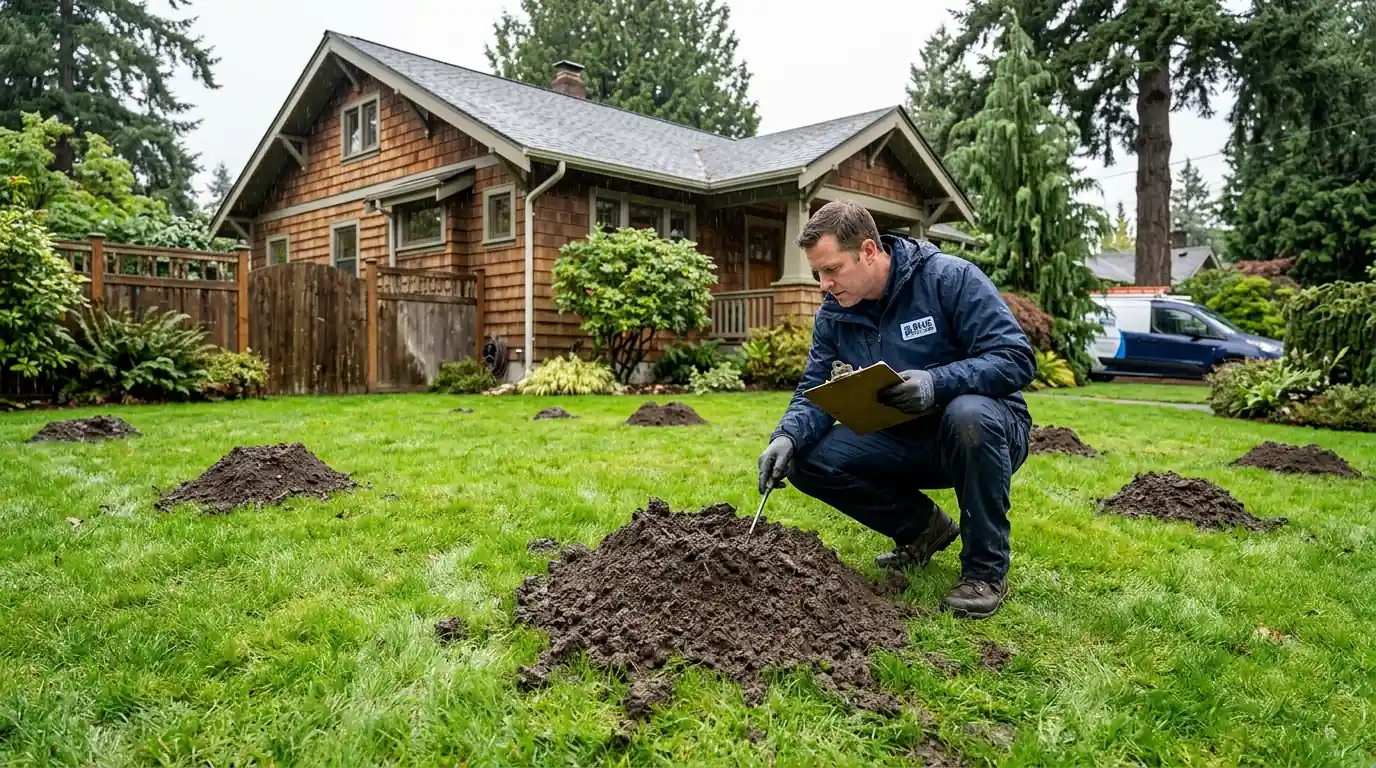
Volcano-shaped mounds
Round mounds of loose soil with no visible hole are classic molehills.
Wildlife & Exclusion
Seattle's moist soil is perfect for moles, and the mounds show up every fall and spring. Moles push up molehills while hunting worms; voles chew roots and girdle shrubs. We identify which you have, target the active tunnels and runways, and protect beds and young trees so the yard recovers.
Call (206) 944-0849 All treatments
Reviewed by Marjorie Tidwell, Pest Prevention Writer. Updated 2026-10-05.
In short: Call (206) 944-0849 if molehills are erupting across the lawn or you see surface runways and chewed plant stems. We identify moles versus voles, map active tunnels or runways, target them with methods suited to the species and Washington rules, and protect garden beds and young trees with barriers where damage is concentrated.
What this treatment covers
Moles and voles cause very different damage, and the fix depends on which one you have. Moles are insect-eaters that tunnel underground, pushing up volcano-shaped molehills and raised surface ridges while hunting earthworms and grubs. Voles are small rodents that make shallow runways through grass, chew roots and bulbs, and girdle the bark of shrubs and young trees, especially under winter mulch and snow.
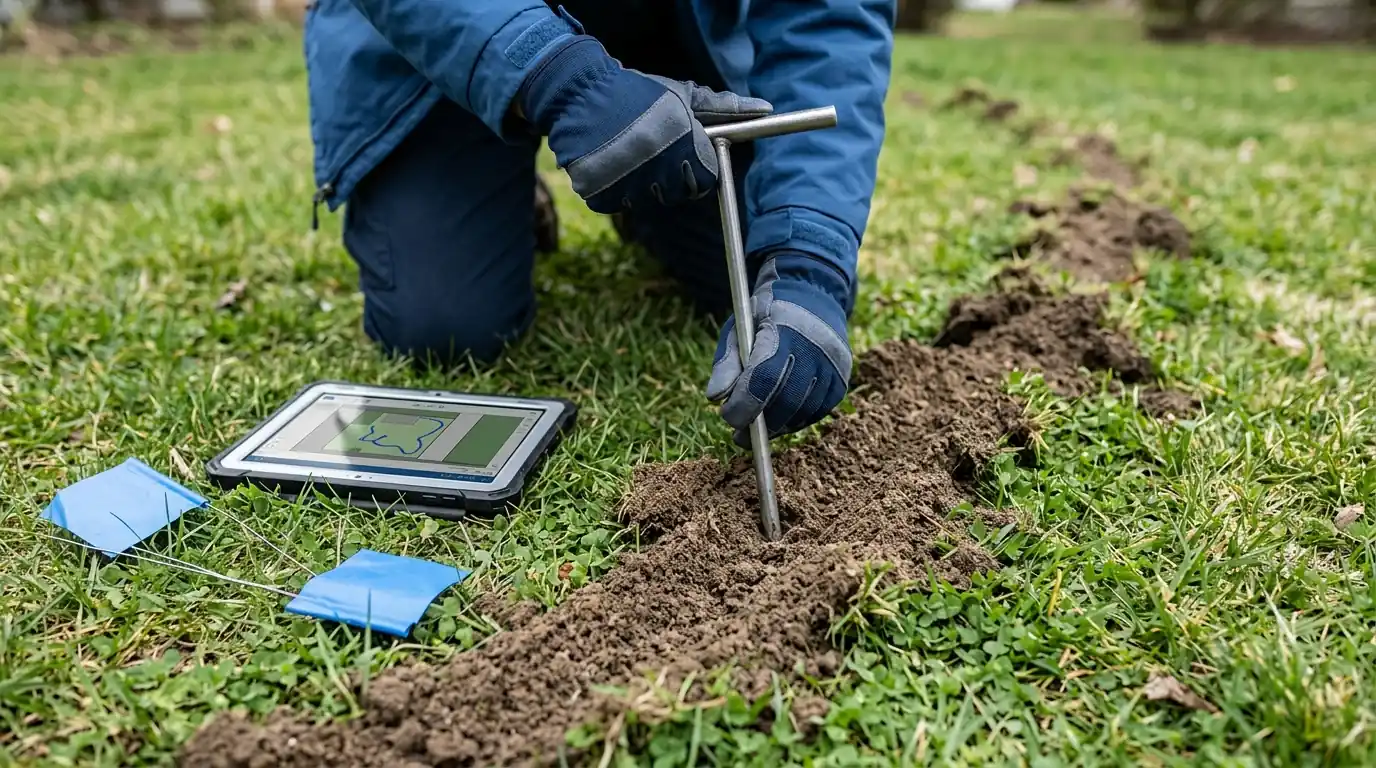
For moles, success comes from finding the active tunnels. We map the system, tamp down runs and see which ones are re-opened, because only active main tunnels are worth targeting. Treatment follows Washington's rules on mole control methods. For voles, we target runways and burrows, reduce the dense ground cover and mulch they hide in, and protect trees and beds with hardware cloth guards and buried barriers.
Prevention for both comes down to habitat. Moles follow earthworms in moist soil, which Seattle has in abundance; voles follow cover and food. Barriers around beds, trunk guards and smart mulching keep damage down after the active animals are handled.
Catch it early
Round mounds of loose soil with no visible hole are classic molehills.
Surface tunnels that feel spongy underfoot are mole feeding runs.
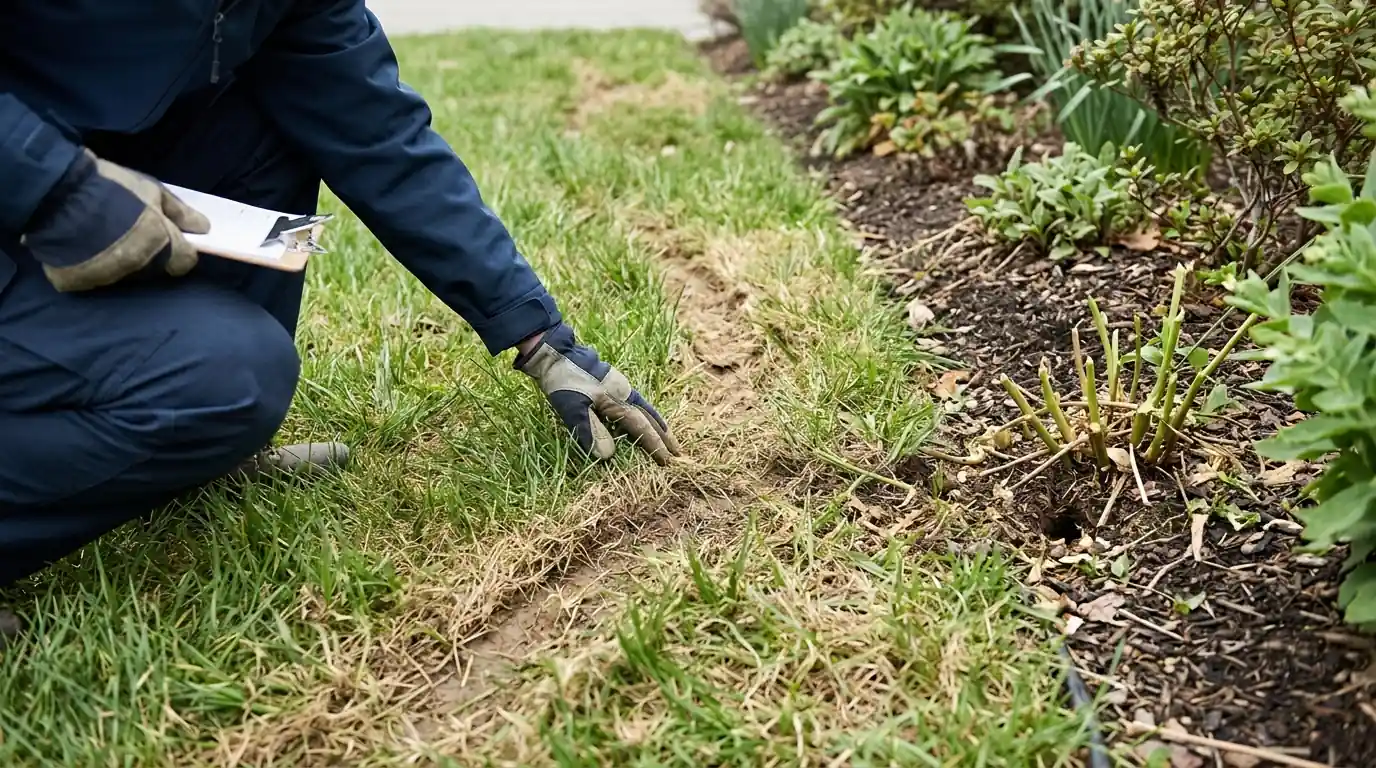
Clipped, path-like trails at the surface, especially after snow or tall grass, point to voles.
Girdled trunks and stems under mulch are vole damage and can kill young plants.
Voles eat roots and bulbs from below; plants that wilt or pull up easily may have vole damage.
Voles use open burrow holes about an inch or two wide; moles rarely leave open holes.
The Seattle angle
Western Washington's moist, worm-rich soil is ideal mole habitat, and Seattle-area yards see molehills erupt with the fall rains and again in spring. The Townsend's mole, the largest North American mole, is native to this region, along with smaller species, and they can rework a lawn in days when the soil is soft.
Voles take advantage of the region's lush ground covers, deep mulch beds and long mild seasons. Damage often shows up in late winter as girdled shrubs and young trees. Washington has specific rules about mole control methods, and we follow them, combining targeted control with barriers and habitat changes so the yard recovers and stays protected.
How the job runs
Mounds, ridges, runways or chewed plants; photos help.
Mole or vole confirmed, active tunnels and runways mapped.
Species-appropriate methods on active tunnels and runways.
Trunk guards, bed barriers and mulch adjustments where damage concentrates.
Re-check active runs and adjust through the peak season.
Honest numbers
Mole and vole work is quoted on the yard and the activity found. What sets the number:
Most residential jobs combine an initial visit with one or two follow-ups during peak activity. The written quote covers the season, with barrier materials itemized.
Make the visit count
Straight answers
Moles leave round soil mounds and raised ridges; voles leave surface runways, open holes and chewed plants. The damage pattern usually tells us within minutes.
Moles mostly eat earthworms and insects, not plants. Damage comes from tunneling that uproots plants and ruins lawns. Voles are the ones that eat roots and bark.
Wet soil is easier to dig and brings worms near the surface, so moles tunnel more actively in fall and spring rains.
Not reliably. Moles mainly eat earthworms, which are abundant in Seattle soils. Grub treatment alone rarely solves a mole problem.
Yes. Hardware cloth trunk guards, keeping mulch pulled back from trunks, and reducing dense ground cover all help.
Yes, Washington has rules about mole control methods. We follow them and use approved approaches combined with barriers and habitat changes.
Molehills popping up again? Catch them while tunnels are active.
Call (206) 944-0849
Talk to a technician
Mole or vole identified, active tunnels targeted, beds and trees protected. Call and send us a photo of the damage.
Call (206) 944-0849Answered 24/7 from our Seattle service office.
Find the office
Our service office sits at 1440 5th Ave in Seattle, with the head office over in Aberdeen. Calls route to a person, not a queue, any hour.