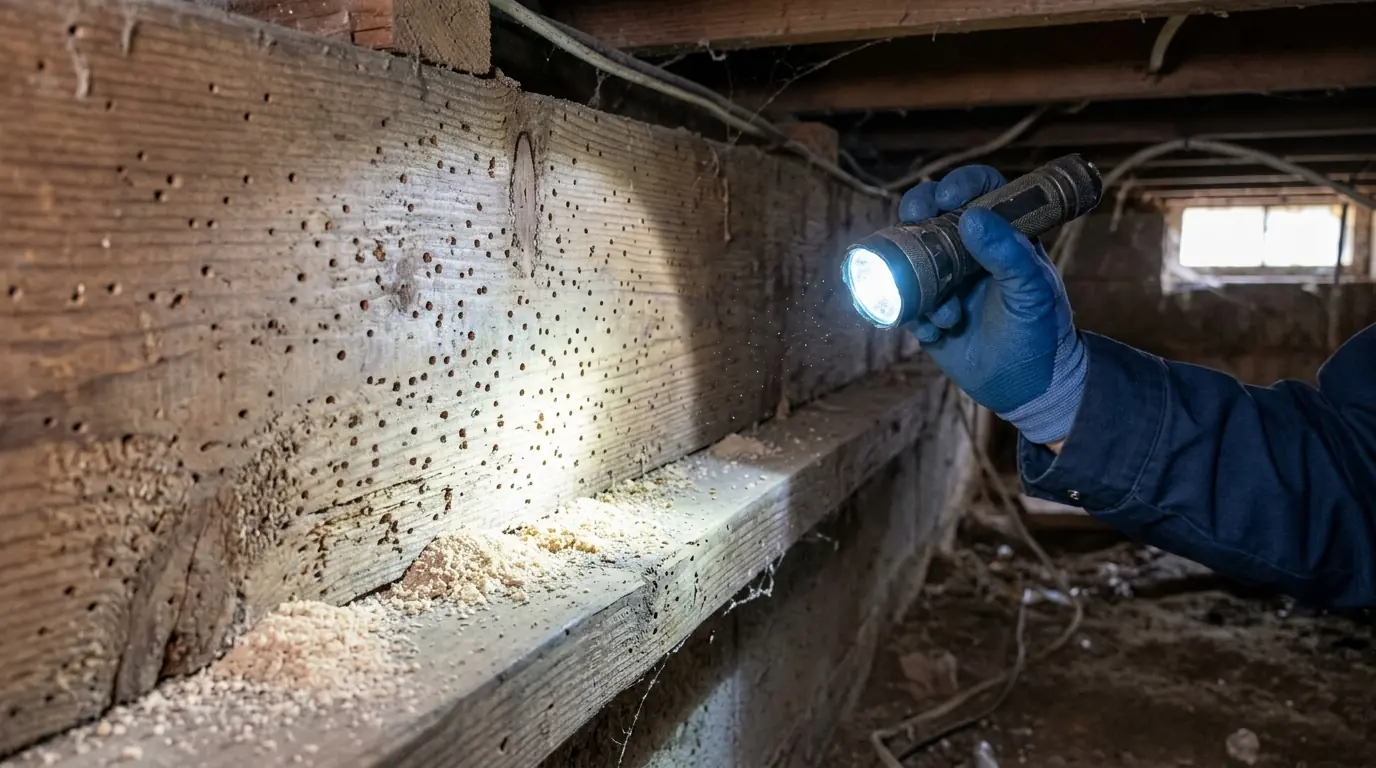
Pin-size round exit holes
Openings about one sixteenth of an inch across joists and sills mark adult emergence, past or present; count and location start the assessment.
Ants & Wood Destroyers
The third wood destroyer is the quiet one: beetles whose larvae chew inside joists for years before a single hole shows. Anobiid powderpost beetles are a known crawl space problem in damp western Washington homes. We determine whether the holes you found are history or an active infestation, treat the wood that needs it, and correct the humidity that sustains the cycle.
Call (206) 944-0849 All treatments
Reviewed by Marjorie Tidwell, Pest Prevention Writer. Updated 2026-10-05.
In short: Call (206) 944-0849 if you have found small round holes and powdery frass on framing, usually in the crawl space. We inspect to establish whether larvae are still active, treat infested and vulnerable wood with penetrating borates, address the crawl space moisture that anobiids depend on, and schedule a seasonal re-check, since adult emergence is the proof of change.
What this treatment covers
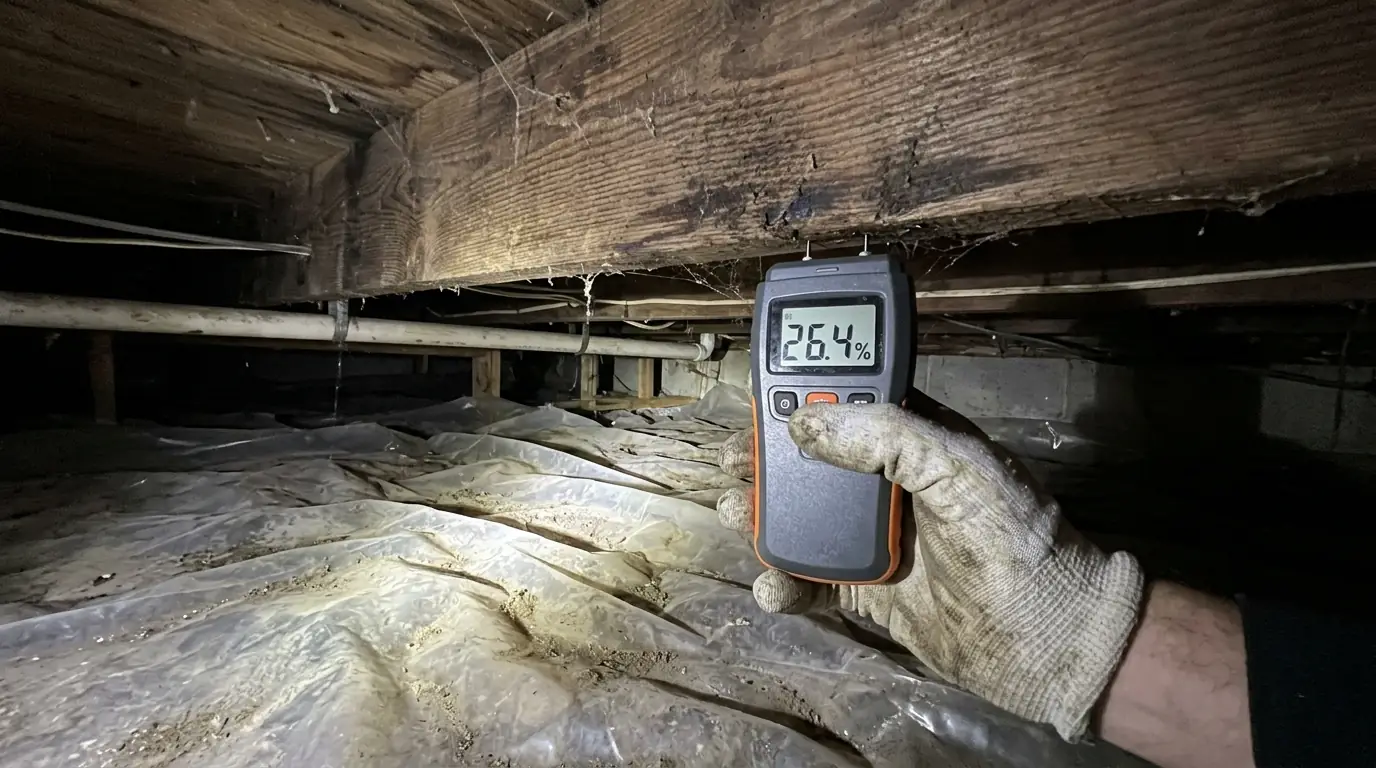
Beetle work begins with the question other wood destroyers do not pose: is this infestation even alive? Anobiid exit holes, round and about a sixteenth of an inch, persist in wood forever, and a great deal of old Seattle framing carries holes from infestations that died decades ago. The inspection reads the evidence that separates past from present: frass color and texture, whether powder is freshly streaming or packed and yellowed, hole-edge sharpness, seasonal emergence timing, and the moisture content of the member, because anobiid larvae need wood above roughly 13 to 14 percent moisture to thrive.
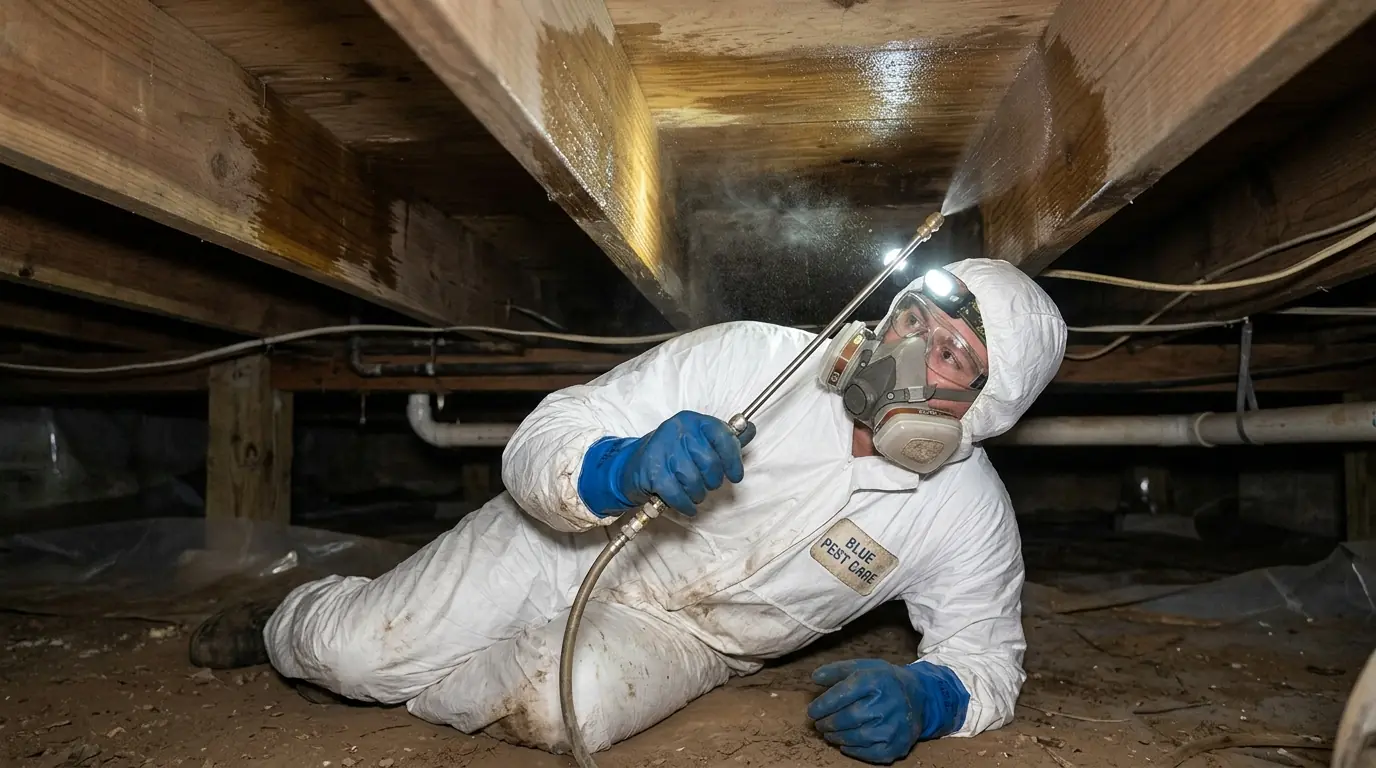
Where activity is confirmed, treatment centers on penetrating borates: applied to infested and vulnerable framing, they soak into the wood larvae are eating and end the cycle as new generations tunnel and feed, while also protecting against re-infestation and decay fungi. Severely weakened members, joists that flex or crumble, get flagged with documentation for structural repair. Fumigation, the dramatic option, is almost never warranted for crawl space anobiids and we will tell you so.
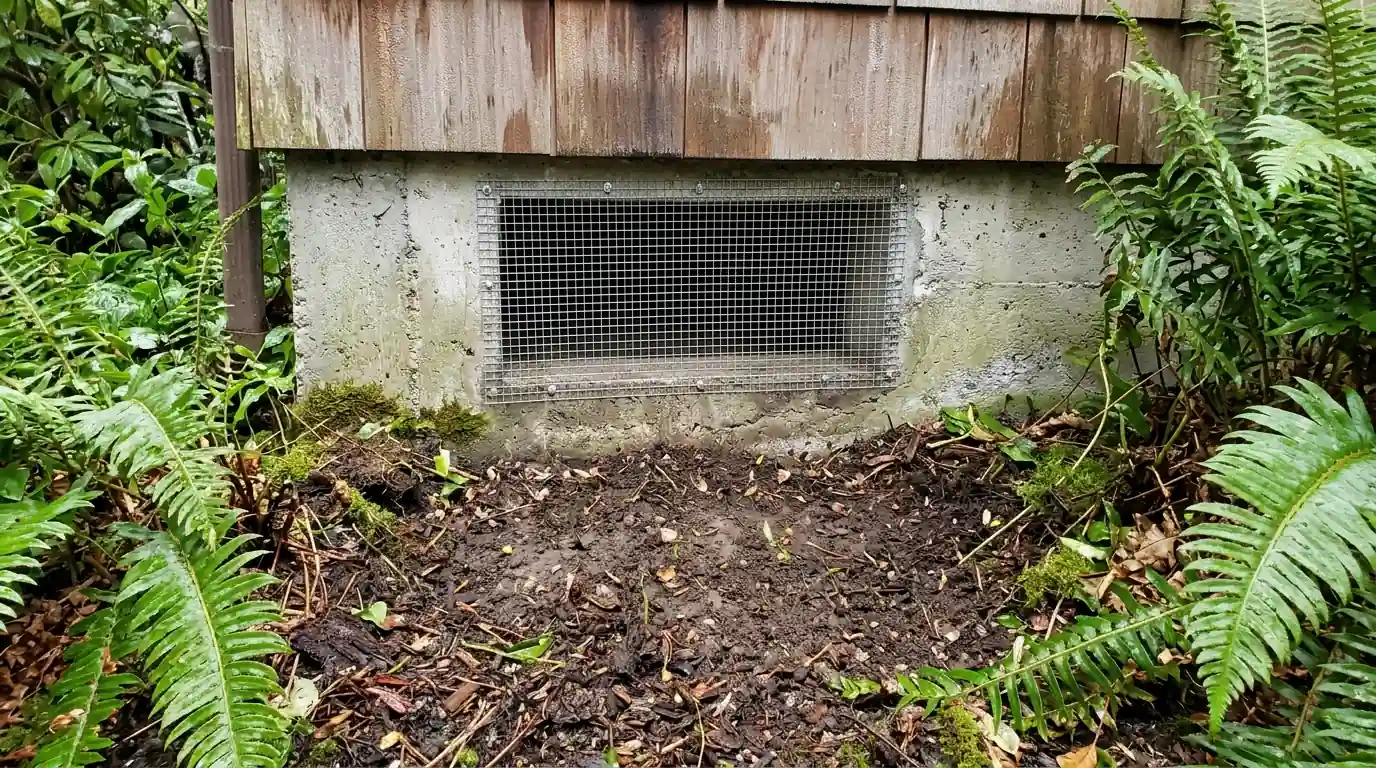
The condition correction is the half that lasts. Anobiid infestations in this region live almost exclusively in damp, poorly ventilated crawl spaces, so the treatment report addresses ventilation, vapor barrier condition and drainage. Dry the crawl below the moisture threshold and the beetle cycle starves even without chemistry; with borates in the wood as well, the framing is doubly closed to them.
Catch it early
Openings about one sixteenth of an inch across joists and sills mark adult emergence, past or present; count and location start the assessment.
Frass streaming from holes or piling pale and loose on the vapor barrier suggests recent activity; old frass packs and yellows.
Anobiids in this region overwhelmingly infest crawl space framing, where humidity stays in their range; attic finds are rarer.
A joist that gives underfoot pressure or probes soft has lost section to larvae, rot or both, and needs the structural flag.
Adults emerge roughly April through July; finding them on the barrier or at crawl vents during those months argues active cycle.
Transaction reports often flag beetle evidence without the activity verdict; this service supplies the verdict and, only if needed, the fix.
The Seattle angle
Anobiid beetles are a recognized western Washington problem for the same structural reasons as every wood destroyer here, concentrated one level down. The roughly 62 percent of Seattle single-family homes built over vented crawl spaces put framing a few feet above damp soil, and where vents have been blocked, barriers have failed or drainage runs toward the house, crawl humidity holds wood in the beetles' preferred moisture band year-round. The region's older housing supplies the second requirement, time: anobiid generations run two to five years inside the wood, so the infestations we treat in pre-1980 homes have often been cycling quietly for decades.
The encouraging local fact is how mechanically beatable they are. Unlike pests that walk in from the neighborhood, an anobiid population lives and dies by the crawl space's moisture, and Seattle crawl spaces can be dried: cleared vents, intact vapor barrier, corrected drainage. Treatment plus that correction does not just suppress the infestation, it removes the habitat.
How the job runs
Frass condition, hole edges, moisture readings and season establish active versus historical.
Affected members are diagrammed and probed; weakened wood gets the structural flag.
Penetrating application across infested and vulnerable framing ends the larval cycle in the wood.
Ventilation, vapor barrier and drainage findings are documented, with fixes quoted or referred honestly.
A seasonal follow-up during adult emergence months confirms the cycle is broken.
Honest numbers
Beetle pricing follows the verdict and the footage. A monitoring recommendation after an old-damage finding costs you an inspection; an active infestation is quoted on scope:
We quote treatment only on confirmed activity; paying to treat sixty-year-old exit holes helps nobody, and the report will say monitoring when monitoring is the honest answer. Where treatment proceeds, the number is written against the diagrammed footage before work starts.
Make the visit count
Straight answers
Several independent clocks: fresh frass is pale, loose and streams from working holes while old frass yellows and packs; new exit holes have sharp clean edges; moisture readings say whether the wood can currently support larvae; and spring emergence either happens or does not. We give you the verdict with the evidence, not a guess.
Occasionally; larvae make a faint ticking or rasping in quiet conditions, which is where the old name death-watch beetle comes from. But silence proves nothing with a two-to-five-year generation feeding slowly inside the wood. The physical evidence decides.
For crawl space anobiids, almost never, and we will say so if someone has quoted you one. Borate penetration into accessible framing plus moisture correction defeats the local species without tenting the house. Fumigation belongs to rare whole-structure infestations of other beetle families.
The crawl space anobiids target structural softwood framing in damp conditions; furniture infestations typically involve different species arriving in the wood itself. If you have powdery holes in a furniture piece, show us, but the crawl infestation is not migrating to your dining table.
Slowly, which is both the mercy and the trap. Individual larvae feed for years and early infestations are structurally trivial, but cycles left for decades in sustained damp can honeycomb members. The inspection's structural flags tell you exactly where on that timeline your framing sits.
It genuinely can over time: push the wood below the larvae's moisture threshold and the population fails. We pair drying with borate treatment because the chemistry works immediately and protects permanently, while the moisture correction guarantees the long term. Together they close the case.
Found powder under the holes? Get the verdict first.
Call (206) 944-0849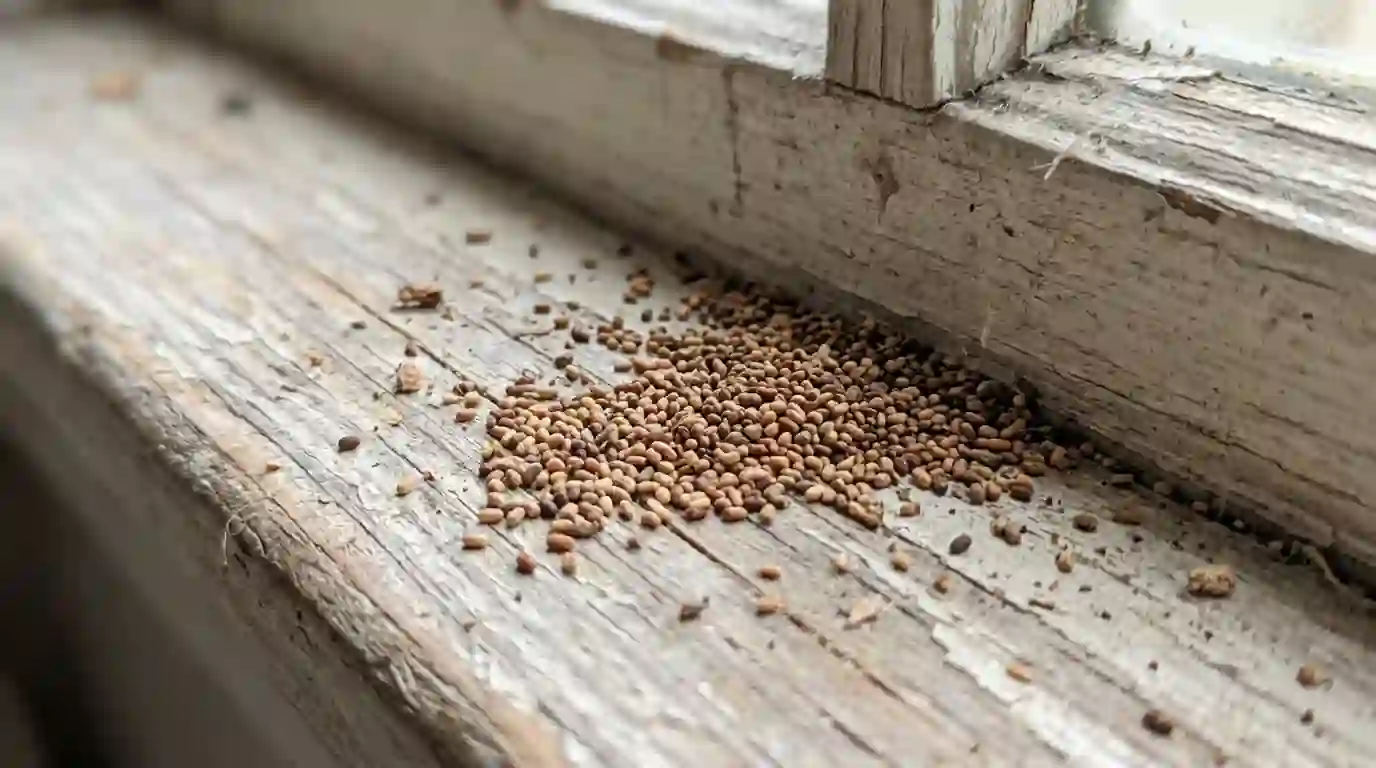
Talk to a technician
One inspection dates the evidence, one treatment protects the wood, one moisture fix removes the habitat. Call and tell us what you found.
Call (206) 944-0849Answered 24/7 from our Seattle service office.
Find the office
Our service office sits at 1440 5th Ave in Seattle, with the head office over in Aberdeen. Calls route to a person, not a queue, any hour.