Running and rolling at sunrise
Daytime-schedule noise, often like marbles or nuts rolling across the ceiling, is the classic squirrel signature.
Wildlife & Exclusion
Rats run at night; squirrels run at dawn and dusk. If the attic wakes you at sunrise, it is probably squirrels. Eastern gray squirrels have made Seattle's tree canopy home and its attics a favorite nursery. We confirm the species, check for young, move the animals out with one-way doors, and repair the roofline so they cannot chew back in.
Call (206) 944-0849 All treatments
Reviewed by Marjorie Tidwell, Pest Prevention Writer. Updated 2026-10-05.
In short: Call (206) 944-0849 if you hear running, rolling or chewing in the attic around sunrise and sunset. We inspect the roofline for chewed entries, check the attic for nests and young, install one-way exclusion doors so the squirrels leave on their own, then permanently repair and reinforce the entries with steel. Attic cleanup follows if nesting has soiled the insulation.
What this treatment covers
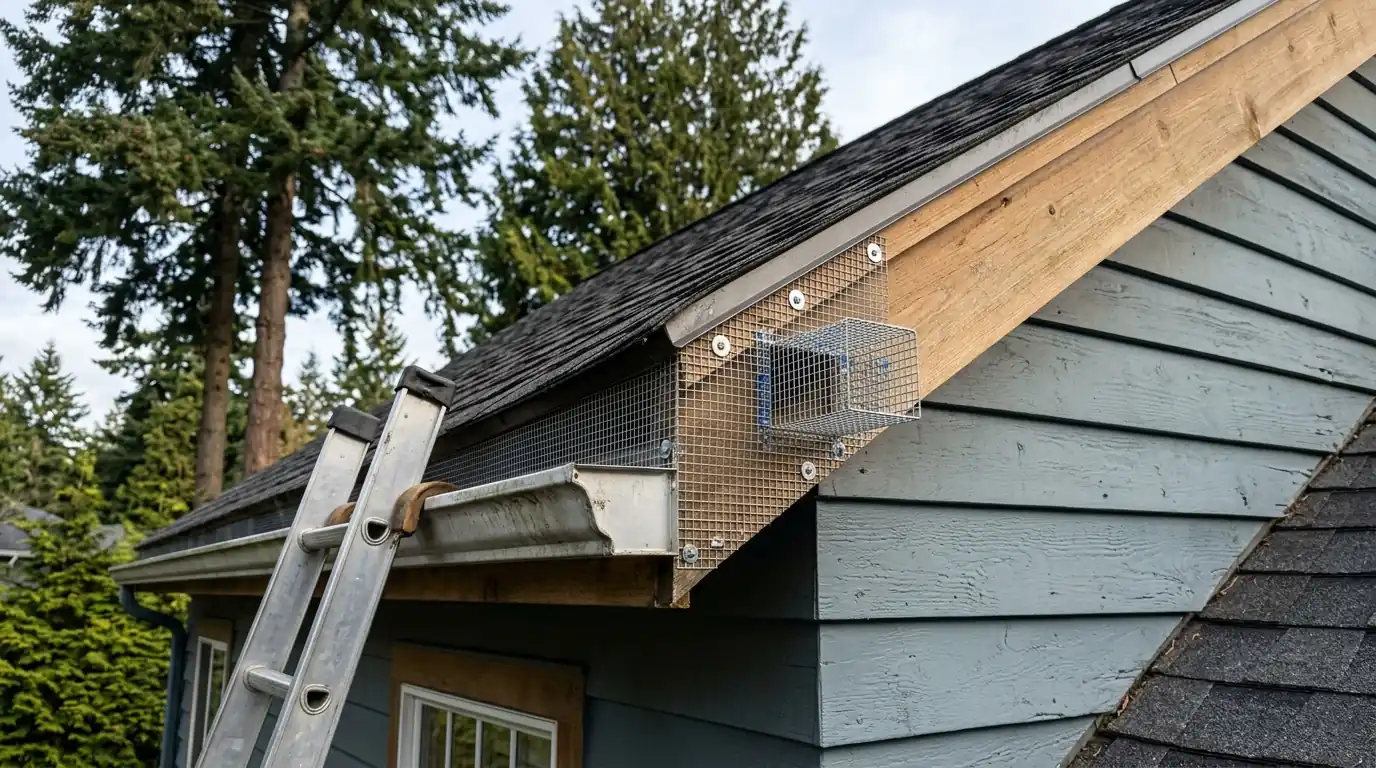
Squirrel work is humane exclusion by default, because it is also the method that works. Trapping and relocating squirrels mostly moves a problem down the street and orphans dependent young inside your attic, which then die in the insulation and become a dead animal job. Instead we find the entry, almost always a chewed soffit corner, a gap where the gutter meets the fascia, a roof vent, or the junction where two rooflines meet, and mount a one-way door that lets the animals exit to forage but not return.
Timing around young is the part that separates professionals from the internet. Eastern gray squirrels in the Puget Sound region typically raise litters in late winter and again in summer, and a nest of kits cannot leave through any door. The inspection checks for nesting and young before exclusion goes on; when babies are present, we wait until they are mobile or reunite them with the mother off-structure, so nobody is sealed in.
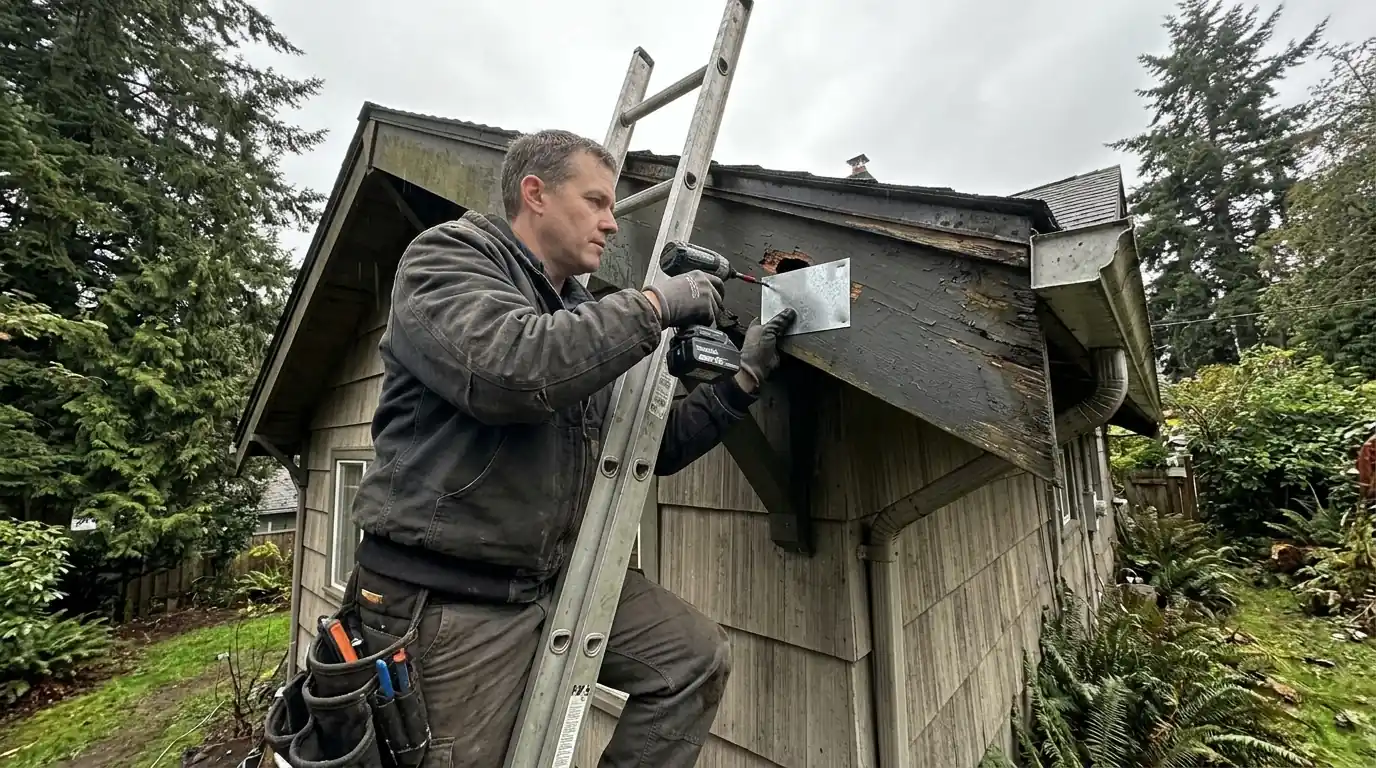
Once the house is confirmed empty, the entries get permanent repair: galvanized hardware cloth and sheet metal on chewed fascia and soffit corners, rodent-rated vent guards, and branch-trimming advice for the limbs giving the squirrels a launch ramp onto the roof. If the attic insulation is soiled or nested, our attic cleanup service restores it.
Catch it early
Daytime-schedule noise, often like marbles or nuts rolling across the ceiling, is the classic squirrel signature.
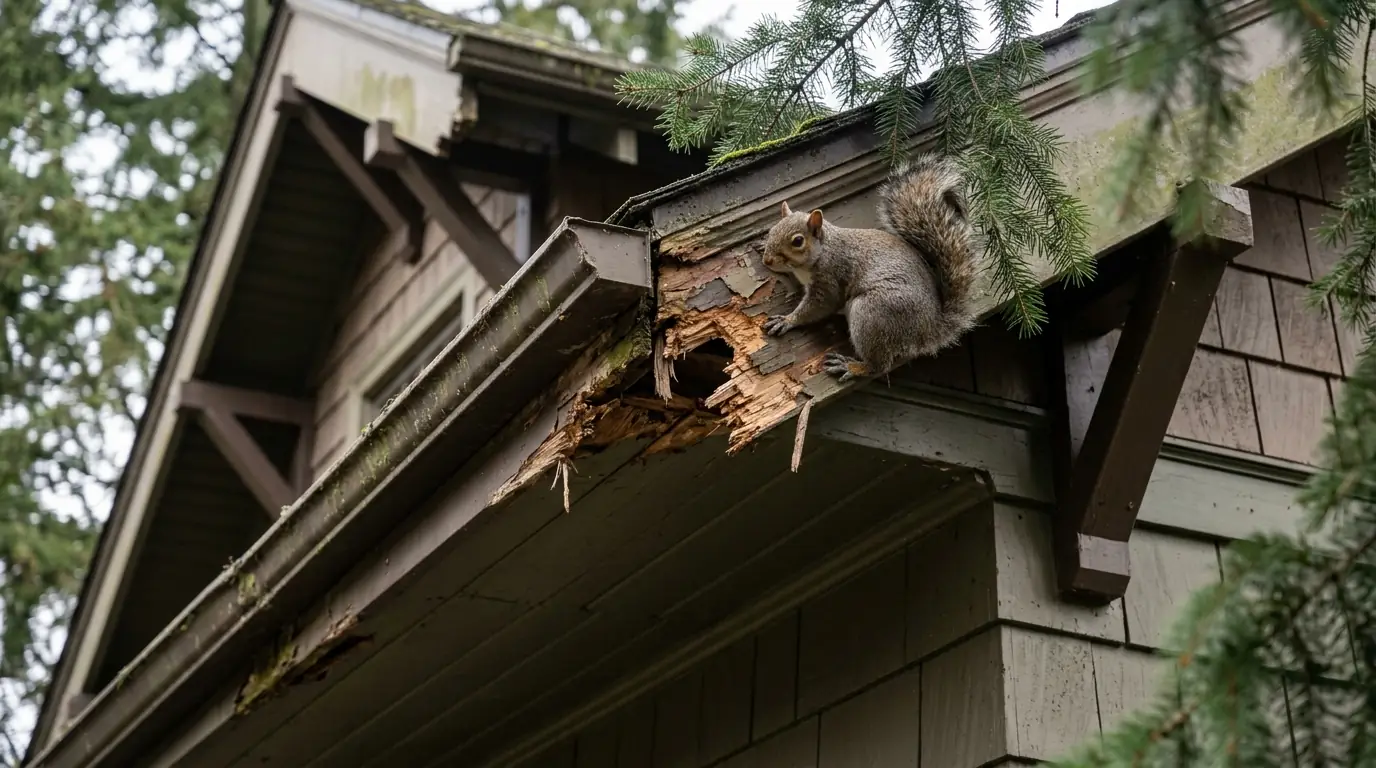
Rounded, gnawed openings of two to three inches at soffit corners, fascia or vents, often with fresh pale wood edges.
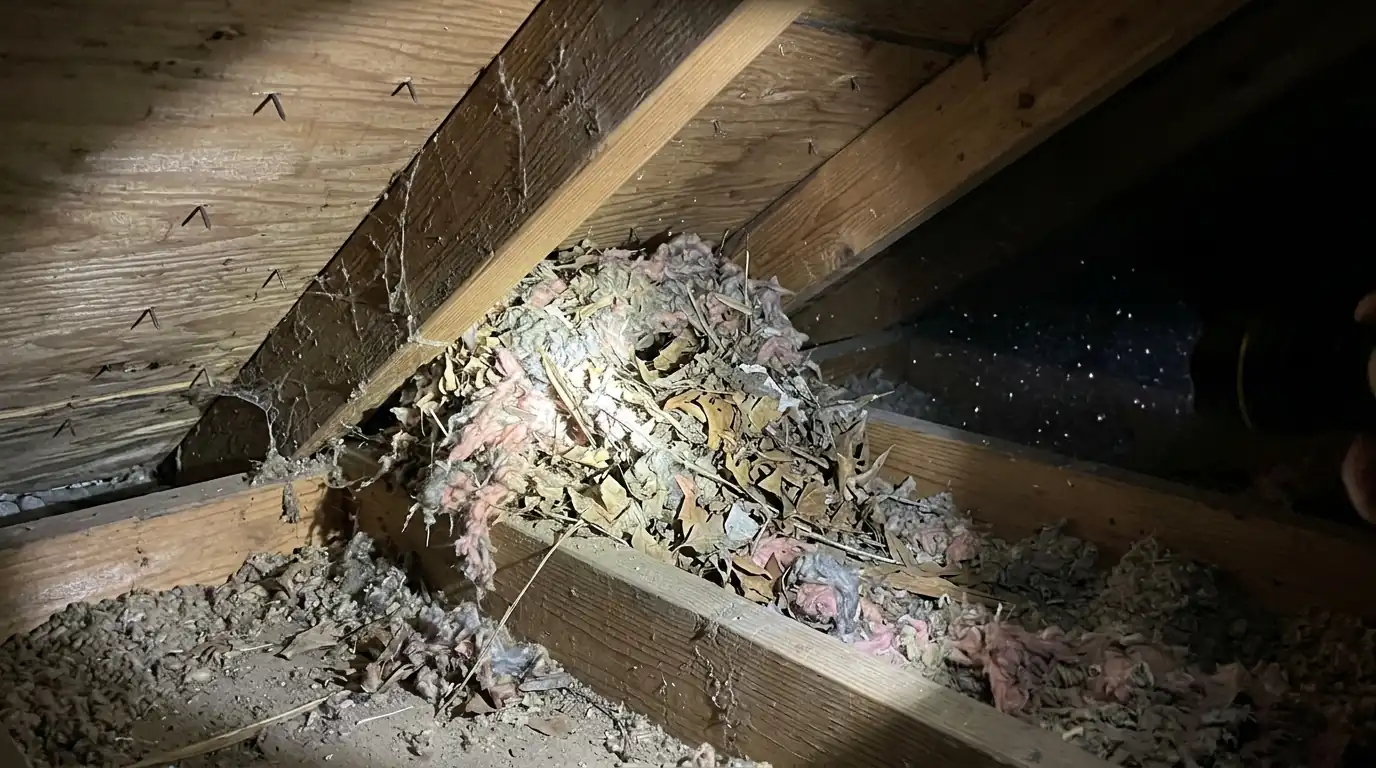
Nesting squirrels drag and shred insulation into a leafy nest near the entrance; it is often visible from the hatch.
Repeated roof traffic in the same spot, especially carrying leaves in spring, means a nest is being built nearby.
Squirrels gnaw constantly, and wiring insulation is a known fire risk; any chewed wire needs an electrician's eye.
Overhanging limbs within a few feet of the roofline give squirrels a launch ramp straight to the soffit.
The Seattle angle
The squirrel in your attic is almost certainly not a local. The eastern gray squirrel was introduced to the Seattle area and has spread across the city's parks and tree-lined neighborhoods, largely displacing the native Douglas squirrel in urban areas. Seattle's dense canopy of mature street trees, ravine greenbelts and established yards gives it unlimited highways to rooflines, and the city's older housing, with aging fascia, original soffit vents and decades of gutter-line wear, gives it easy places to chew in.
The local pattern is seasonal and predictable: attic calls rise as squirrels look for sheltered nest sites ahead of their late-winter and summer litters. That predictability is useful, because the best time to exclude is when the attic is empty, and the best time to repair is right after. A squirrel-proofed roofline, combined with a few trimmed limbs, stays squirrel-proof for years.
How the job runs
Sunrise and sunset noise tells us it is likely squirrels before we arrive.
Roofline entries mapped, attic checked for nests and dependent kits.
Squirrels leave to forage and cannot get back in; young are handled first if present.
Once quiet, entries are sealed permanently with steel and sheet metal.
Attic cleanup if needed, plus the trim list that removes launch ramps.
Honest numbers
Squirrel jobs are quoted on the roofline survey, because the number of entries and the repair work drive the price far more than the animals do. What sets it:
You get one written quote covering exclusion, confirmation and repair, so the job does not end with an open hole and a second invoice. Cleanup, if needed, is itemized separately.
Make the visit count
Straight answers
Timing is the quickest clue: squirrels are active at dawn and dusk, rats in the hours after dark. Droppings and entry size help too, rat entries are smaller and greasier, squirrel holes are larger and chewed round. The inspection confirms it either way.
Relocation often fails the animal and the homeowner: it can orphan young left in the attic and simply opens the vacancy to the next squirrel. One-way exclusion plus permanent repair handles the actual problem, which is the open entry.
Squirrels chew wiring insulation, and exposed conductors in an attic are a recognized fire risk. If our inspection finds chewed wiring, we photograph it and recommend an electrician check it before the attic is closed up.
Most squirrels leave through a one-way door within a few days. We confirm the attic is empty before permanent sealing, which usually means a short return visit. Nests with young can extend the timeline until the kits are mobile.
Squirrels test repairs, which is why we use steel hardware cloth and sheet metal instead of foam or wood patches. Trimming branches back from the roof removes the launch points that make new attempts easy.
Not always. A short stay leaves little behind, but a nesting season can leave shredded insulation, droppings and urine. The inspection tells you which, and our attic cleanup service handles it when it is needed.
Running in the attic at sunrise? Call before the next litter.
Call (206) 944-0849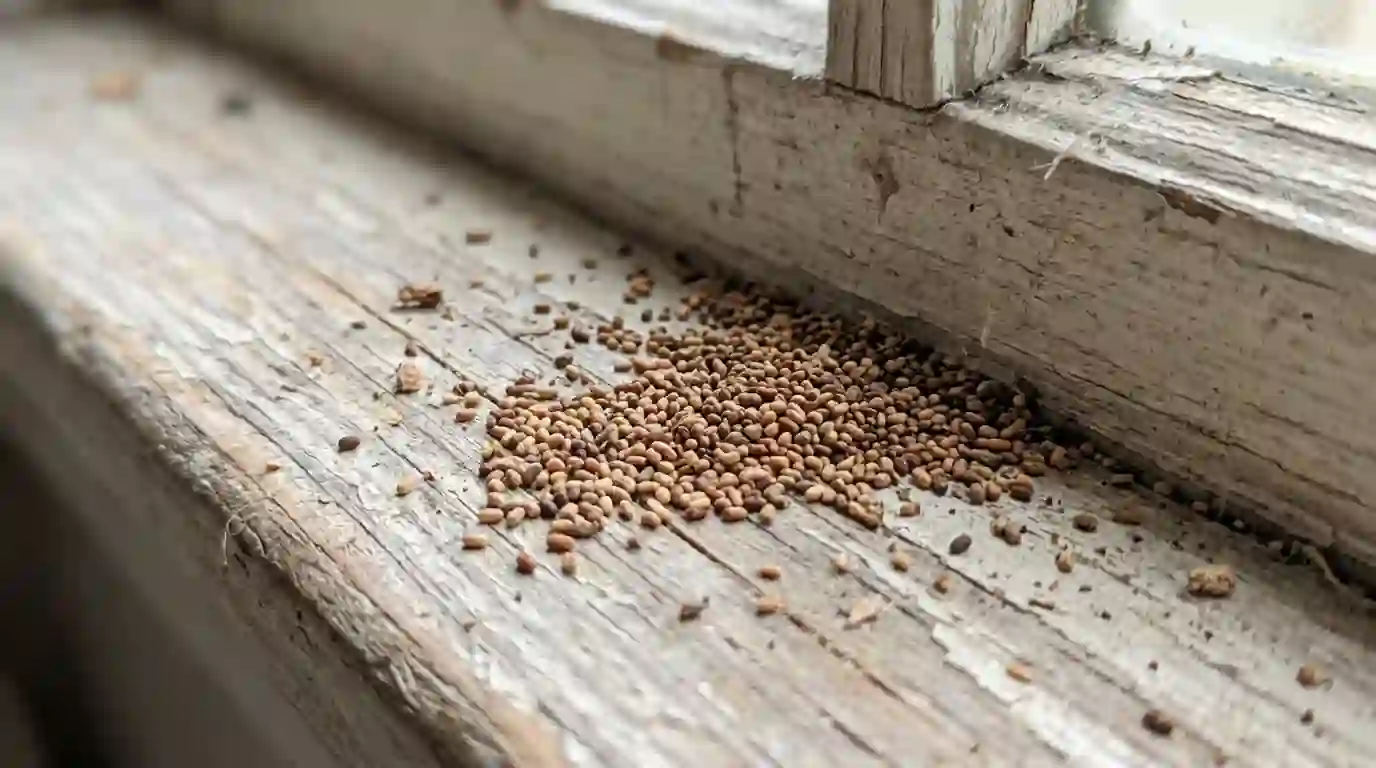
Talk to a technician
Survey, young checked first, one-way eviction and steel repair. Call any hour and we will schedule the roofline inspection.
Call (206) 944-0849Answered 24/7 from our Seattle service office.
Find the office
Our service office sits at 1440 5th Ave in Seattle, with the head office over in Aberdeen. Calls route to a person, not a queue, any hour.