Rice-grain droppings
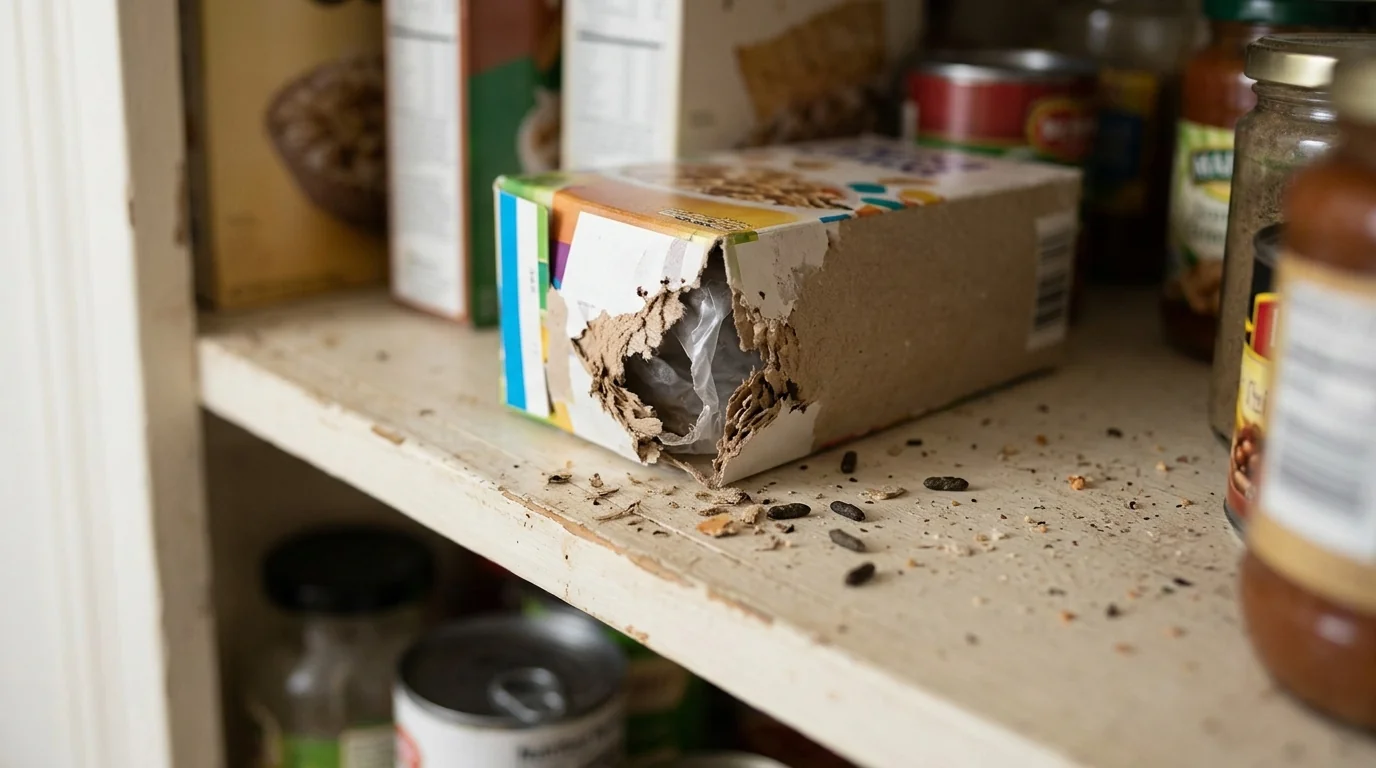
Mouse droppings are 3 to 6 millimeters with pointed ends, concentrated in drawers, under sinks and along kickboards. Finding them in one spot daily means an active runway.
Rodents
A mouse fits through a gap the size of a dime, which is why they beat even tidy houses. House mice and the occasional deer mouse work their way into Seattle kitchens, garages and wall voids every winter. We trap the population, seal the gaps and confirm with a follow-up, so you stop finding droppings in the drawers.
Call (206) 944-0849 All treatments
Reviewed by Marjorie Tidwell, Pest Prevention Writer. Updated 2026-10-05.
In short: Call (206) 944-0849 and tell us where you are seeing droppings. We inspect from the kitchen kickboards to the crawl space, set traps on the active runways the same visit, seal the dime-size entry gaps, and come back to confirm captures have stopped. Most mouse jobs resolve in two to three weeks.
What this treatment covers
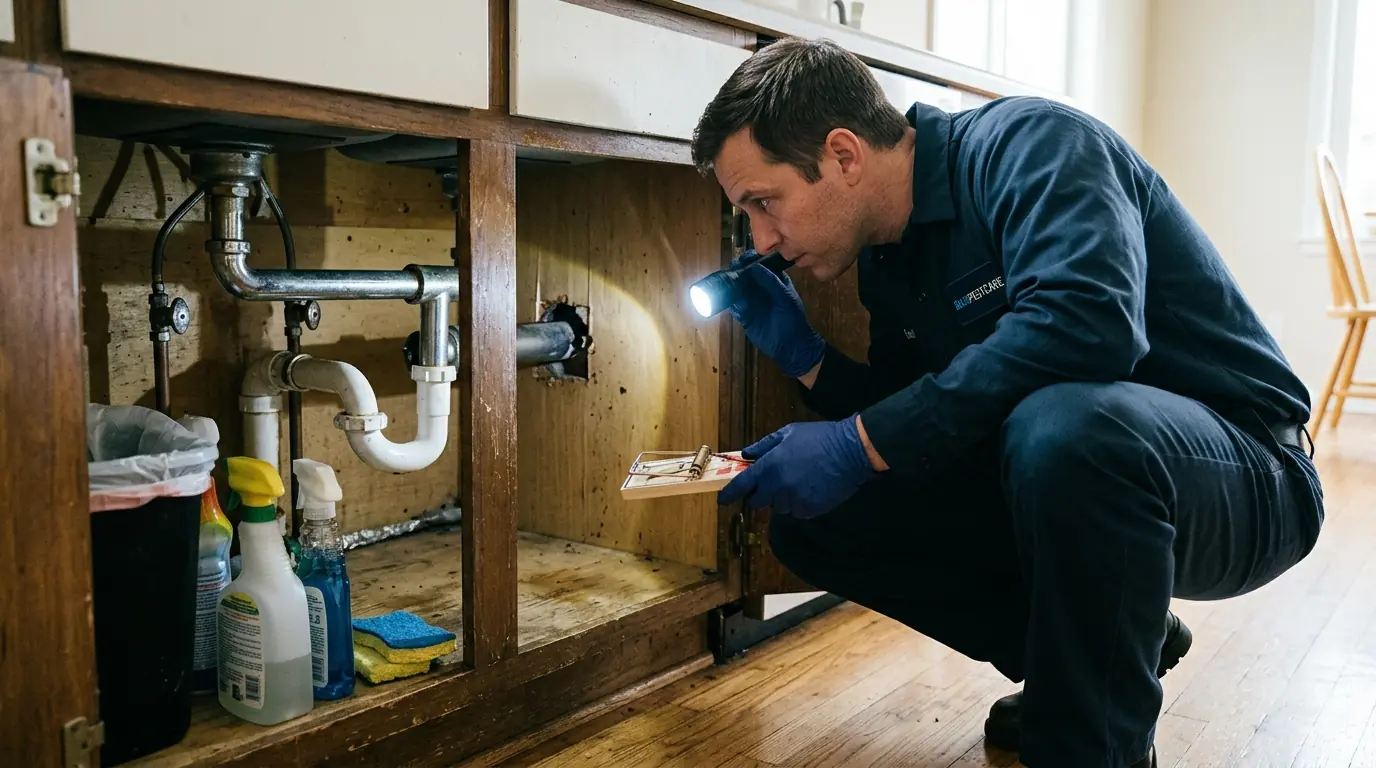
Mice are easier to kill than rats and harder to be rid of, because the entry standard is stricter: a dime-size gap, roughly a quarter inch, is enough. The inspection that starts every mouse job traces droppings and gnaw marks back from where you see them, usually a kitchen drawer or pantry shelf, to where the animals actually live, which in Seattle homes is most often the wall voids, the garage and the crawl space below.
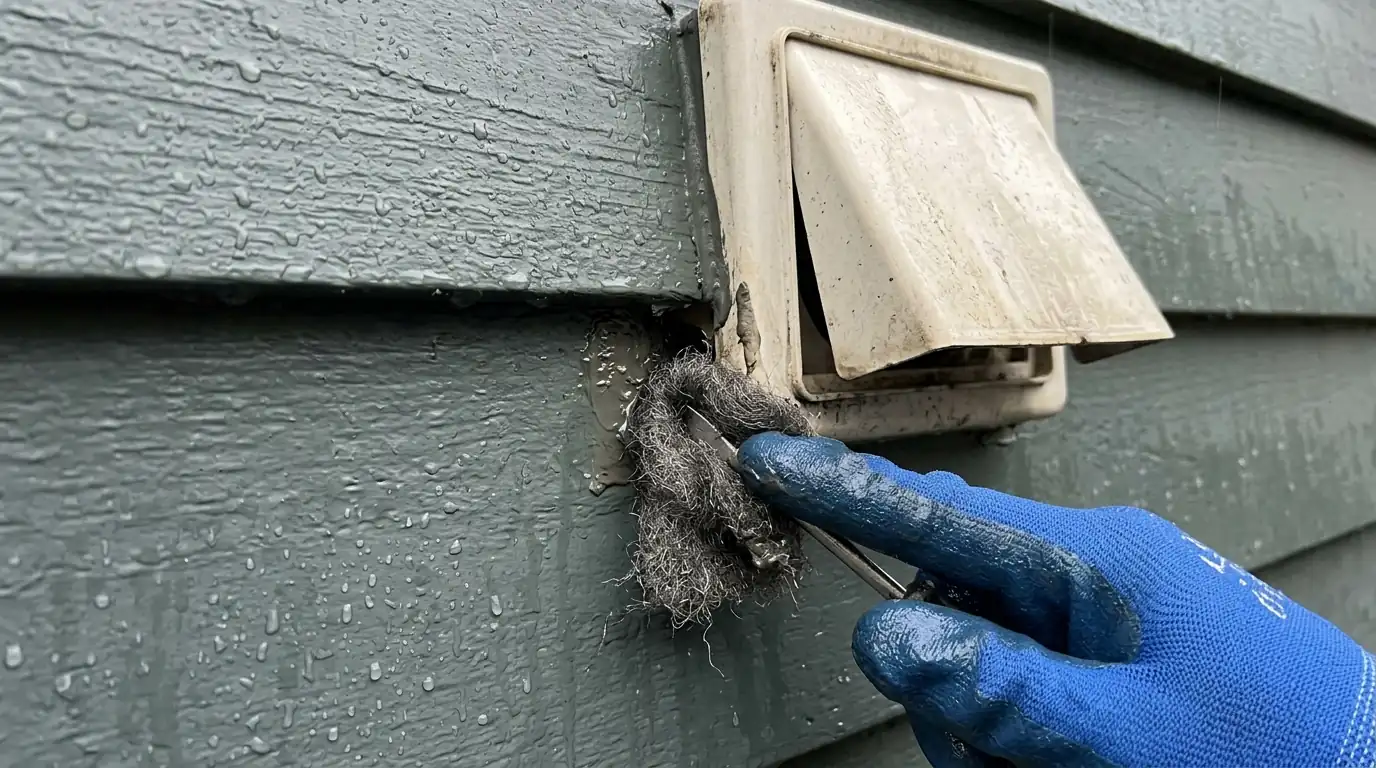
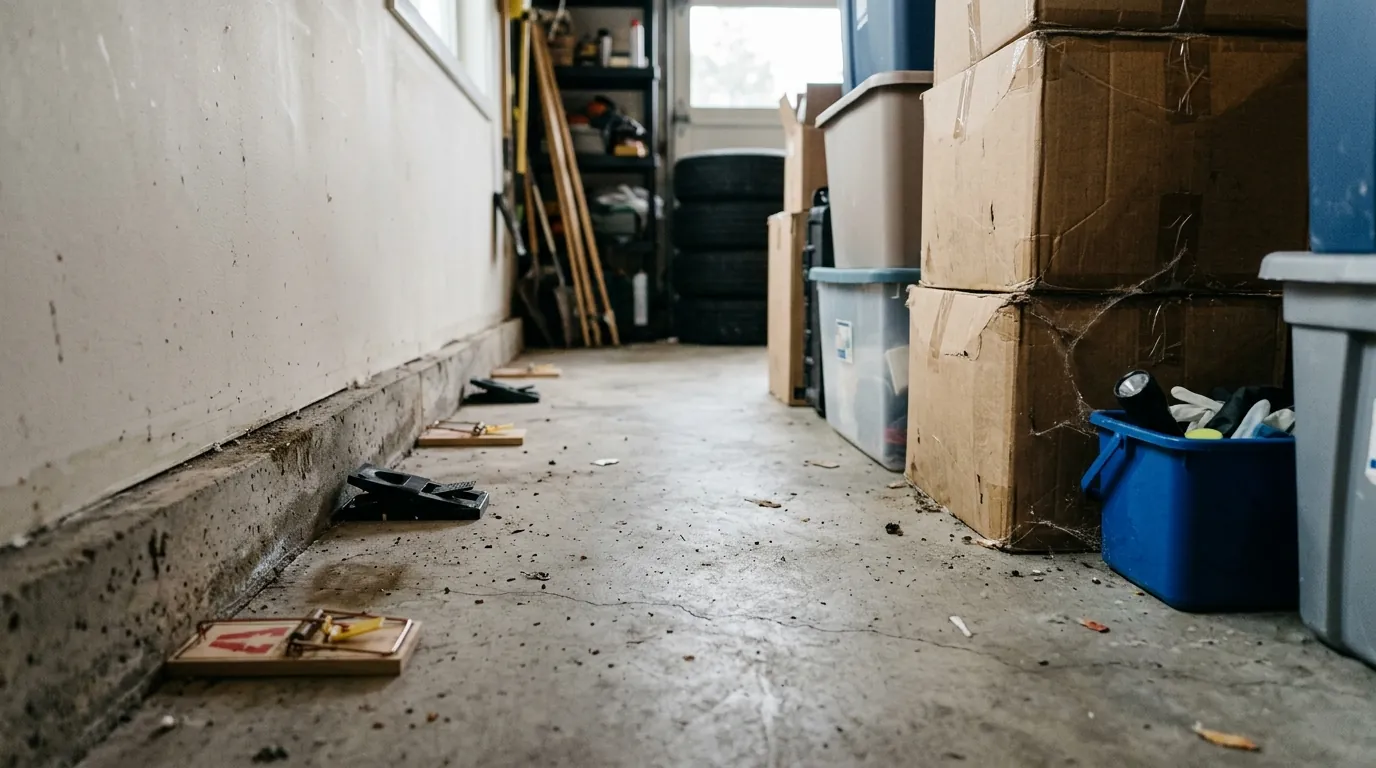
Treatment is dense trapping on the runways, because mice are curious and range only ten to thirty feet from the nest. Snap traps placed correctly outperform any plug-in gadget or ultrasonic device, and we place them where kids and pets cannot reach. Then the gaps get sealed: pipe penetrations under sinks, the gap beside the dryer vent, garage door corners, and the sill-plate gaps a flashlight finds in the crawl space.
One caution we take seriously: deer mice, more common toward greenbelt and rural edges, can carry hantavirus, and their droppings should never be dry-swept or vacuumed. If the inspection identifies deer mouse sign, we handle the droppings with wet-wipe methods and HEPA equipment and tell you plainly what we found.
Catch it early
Mouse droppings are 3 to 6 millimeters with pointed ends, concentrated in drawers, under sinks and along kickboards. Finding them in one spot daily means an active runway.
Mice sound faster and lighter than rats, often in the evening inside wall voids and ceilings near the kitchen.
Small, clean holes in cereal boxes, rice bags and pet food sacks, often with shredded packaging nearby for nesting.
An established mouse presence leaves a distinct odor in closed cabinets and pantries, strongest near the nest.
Shredded paper, insulation and fabric packed behind appliances, in drawer backs or garage boxes.
Gray rub marks around a hole beside a pipe or at a garage corner mark a used entry; mark it and show us.
The Seattle angle
Seattle's mouse season maps to its weather. Around 37 inches of rain spread over roughly 150 wet days keeps outdoor nesting marginal, and when temperatures drop the warm envelope of a heated house wins. Older housing stock does mice a favor: in a city where a large share of homes predate 1980, the sill plates, original weatherstripping and settled gaps around pipe penetrations offer entry at dozens of points, and the vented crawl spaces under roughly six in ten single-family houses give mice a protected staging area directly below the kitchen.
The good news is that mouse exclusion is very achievable. The entry points are low, accessible and sealable, and unlike rats, mice rarely gnaw through a properly installed steel-wool-and-sealant or mesh repair. Most Seattle mouse jobs we run are solved in a single service and one follow-up, and stay solved.
How the job runs
Where the droppings are and when you hear activity tells us where to start before we arrive.
We follow sign from kitchen and pantry back through voids, garage and crawl space to the nesting zone.
Snap traps go on runways in cabinets, voids and the crawl space, out of reach of kids and pets.
Pipe gaps, vent edges, door corners and sill gaps get steel wool, mesh and sealant.
The follow-up counts captures, removes traps once activity stops, and flags any cleanup worth doing.
Honest numbers
Mouse work sits at the accessible end of pest pricing. Published Seattle figures put one-time general treatments between roughly $95 and $550 with an average around $170, and straightforward mouse jobs typically land in the lower half of that band. The variables:
If the population is large or droppings have accumulated in insulation, we will say so at the inspection and quote any cleanup separately rather than burying it in the number. One written price, agreed before work starts.
| One-time mouse service | Quarterly plan | |
|---|---|---|
| Best for | A contained kitchen or garage problem | Homes that see mice back every winter |
| Visits | Initial plus one follow-up | Four visits a year with trap and seal checks |
| Exclusion | Dime-size gaps sealed once | Re-checked each visit as the house settles |
| Typical cost | Lower half of the $95 to $550 Seattle band | Commonly $95 to $185 per visit |
Make the visit count
Straight answers
Mice are nocturnal and shy, so the one you saw is usually the overflow of a larger group. Dropping density tells the real story; a dozen droppings a day in one drawer suggests an established nest within thirty feet.
No. Controlled testing has repeatedly shown mice habituate to ultrasonic devices within days. Money spent there is better spent on sealing the gap beside your dryer vent.
Traps, almost always. Indoors, rodenticide risks a mouse dying in a wall void, and secondary exposure matters in homes with pets. Dense snap trapping kills faster and gives us a body count that proves progress.
Deer mice, identifiable by their white bellies and bicolored tails, can shed hantavirus in droppings and urine. The risk comes from stirring dried material into the air, so never sweep or vacuum suspect droppings. We use wet methods and HEPA filtration where deer mouse sign appears.
Most captures happen in the first week, activity typically ends inside two, and the follow-up confirms it. A house still producing fresh droppings after that tells us there is an unsealed entry, and we go find it.
Yes, wiring is the real risk. Gnawed insulation on conductors is a documented fire hazard, and it is the reason we take attic and crawl space sign seriously even when the kitchen seems like the whole problem.
Droppings in the drawer again this morning? Call now.
Call (206) 944-0849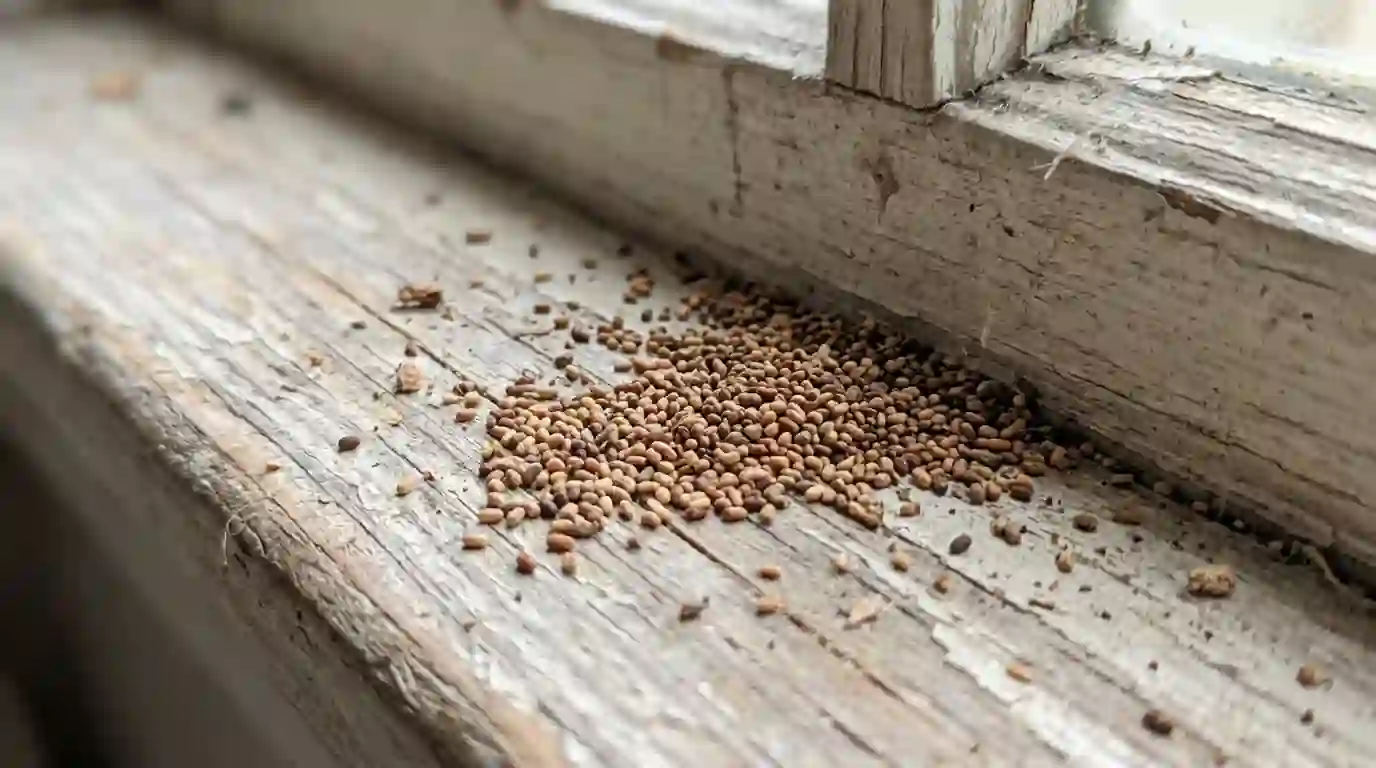
Talk to a technician
One inspection finds the nest and the gaps. One treatment ends it. Call any hour and we will tell you exactly what it takes.
Call (206) 944-0849Answered 24/7 from our Seattle service office.
Find the office
Our service office sits at 1440 5th Ave in Seattle, with the head office over in Aberdeen. Calls route to a person, not a queue, any hour.