Bare patches in wool rugs
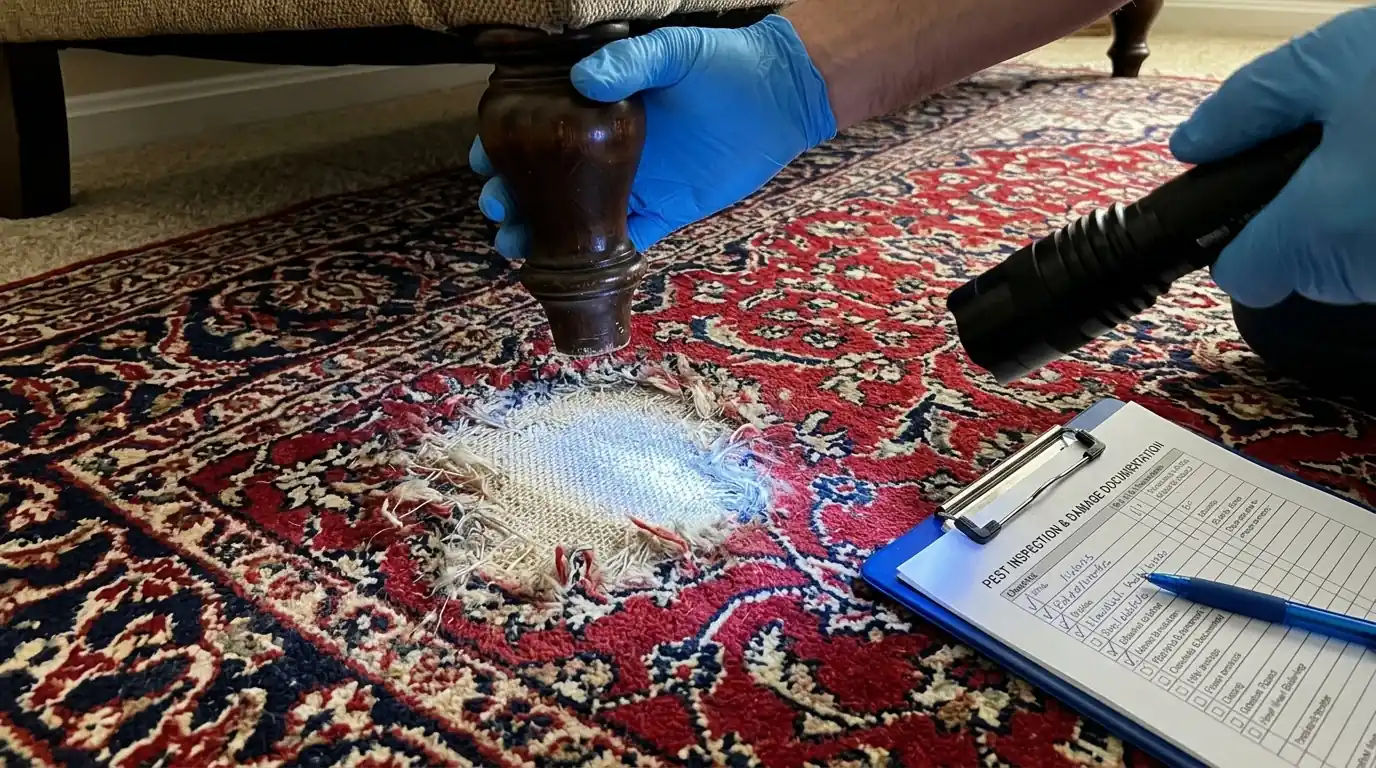
Grazed areas along edges and under furniture where larvae feed undisturbed, often down to the backing in a season.
Spiders, Wasps & Seasonal
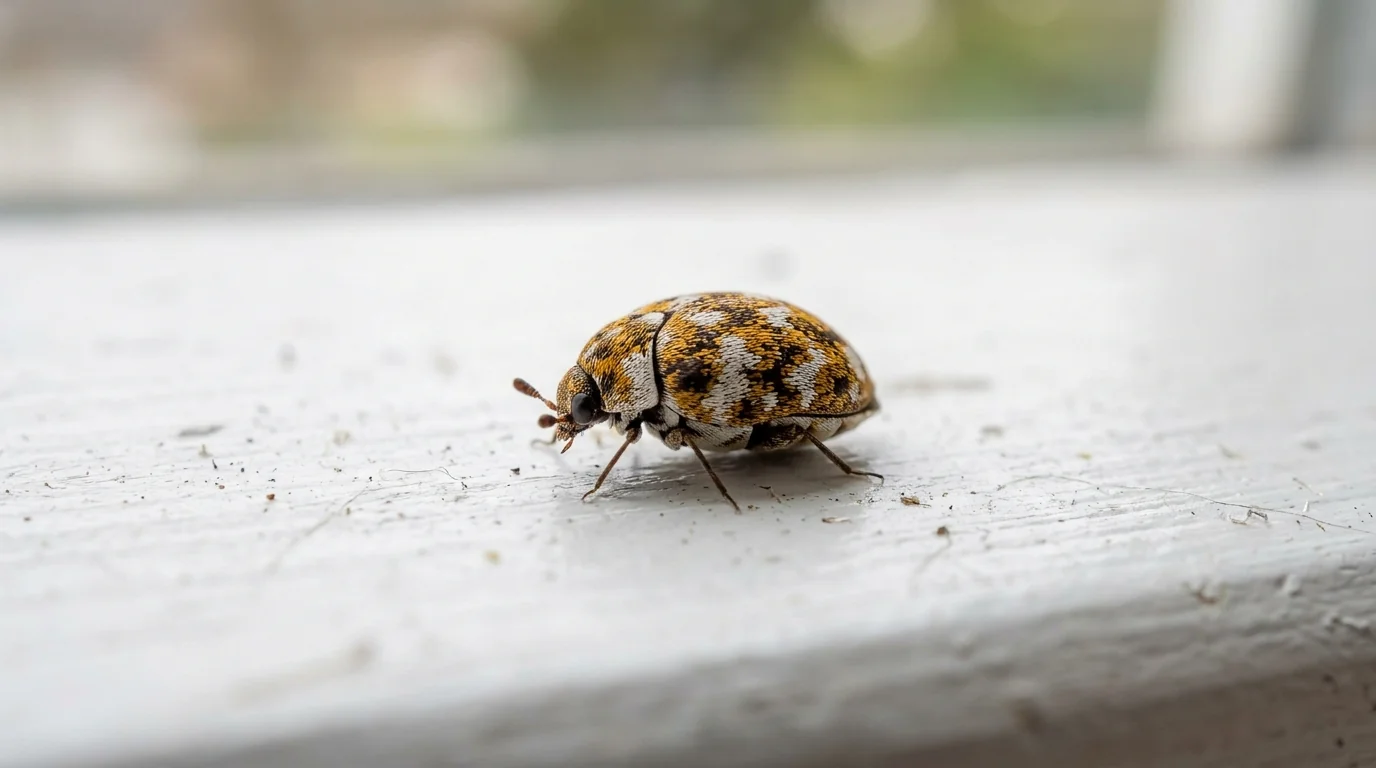
The beetle on the windowsill is harmless; its larvae are quietly eating your wool, feathers and silk. Varied carpet beetles are among the most common fabric pests in Northwest homes. We trace the infestation to every larval feeding site, treat them directly, and set up the storage practices that keep heirloom textiles safe for good.
Call (206) 944-0849 All treatments
Reviewed by Marjorie Tidwell, Pest Prevention Writer. Updated 2026-10-05.
In short: Call (206) 944-0849 if you are finding small mottled beetles at windows, bristly larvae along baseboards, shed skins in drawers, or bare patches in wool. We inspect from closets to floor voids to find every feeding site, treat larvae directly where they feed, handle the lint and debris reservoirs that sustain them, and give you the storage protocol that protects wool, silk, feathers and furs permanently.
What this treatment covers
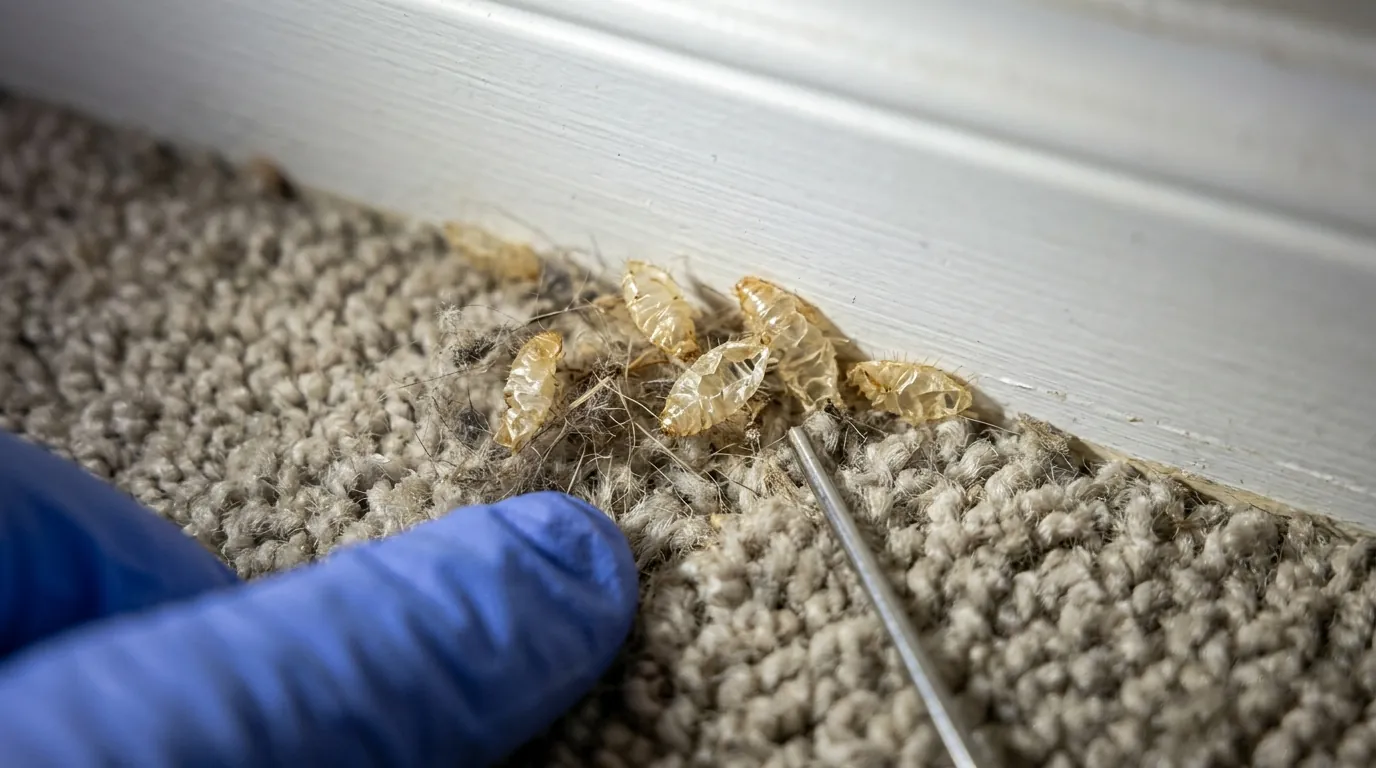
Carpet beetle control fails when it chases the adults. The small mottled beetles at your windows in spring are the finished product, feeding on pollen outdoors and laying the next generation indoors; the damage is done entirely by larvae, bristled, carrot-shaped grubs a few millimeters long that feed for months on anything containing keratin: wool carpet and clothing, silk, feathers, down, furs, felt, and the lint, pet hair and dead insects that accumulate in undisturbed corners. The shed skins they leave behind, translucent and intact, are usually the first evidence owners find.
The inspection is a hunt for feeding sites, and there are always more than one: under rarely moved furniture, along carpet edges and in floor vents, in closets and blanket chests, inside upholstery, in the lint of a floor void, around a forgotten bird nest in the attic or an old mouse carcass in a wall. Each site gets treated directly, with applications appropriate to fabrics and living spaces; infested items are triaged honestly between treatment, laundering and heat, and loss; and the reservoirs, the lint and hair deposits that feed larvae between wool meals, are cleaned out as part of the job.
Prevention is where this service earns its keep for households with textiles worth protecting. Sealed storage for off-season wool, periodic disturbance of the quiet zones larvae need, and the attic-and-void checks that catch the nest-based populations before they seed the closets: you get the full protocol in writing.
Catch it early
Grazed areas along edges and under furniture where larvae feed undisturbed, often down to the backing in a season.
Translucent bristled casts in drawers, closet corners and under beds are the most common first find, and each marks a feeding zone.
Adults heading for daylight in spring mean a completed generation; count and location hint at how established the cycle is.
Scattered holes in off-season wool, often blamed on moths, are as likely carpet beetle work; the skins settle the identification.
The grubs themselves, slow and fuzzy, commuting along carpet edges or inside floor vents, confirm active feeding now.
Old bird or wasp nests and rodent remains above the ceiling are classic source populations that reseed the closets below.
The Seattle angle
Seattle households are unusually good carpet beetle habitat for reasons that sound like compliments. This is a wool city: sweaters, blankets, felted everything, and heirloom textiles, stored through long mild seasons in homes whose closets and floor voids stay at the moderate humidity larvae do well in. The varied carpet beetle, the dominant local species, moves comfortably between outdoor pollen feeding and indoor laying, and the region's mild winters never knock the cycle down the way continental cold does.
The older housing stock contributes its usual share. Decades of accumulated lint in floor voids and heat registers, the occasional historic mouse episode in a wall, and attic corners that have hosted generations of bird nests all function as reservoir populations, which is why our inspections climb past the closet into the attic and voids, and why homes that treat the closet alone see the problem return from above within a year or two.
How the job runs
Skins, larvae, damage or beetles; photos help. We will tell you what to leave in place.
Closets, edges, under-furniture zones, vents, voids, upholstery and attic, until the map is complete.
Direct, fabric-appropriate application at each site; no theatrical whole-house fogging.
Lint, hair and debris deposits cleaned or flagged, and attic nest sources removed.
Item triage completed, then the written storage protocol that ends the vulnerability.
Honest numbers
Pricing follows the site map. One closet with a single feeding zone is the simple end; a multi-room infestation seeded from an attic nest is the other. What sets your number:
Textile damage itself is the cost that dwarfs the service: a single ruined heirloom rug outruns most treatment quotes. The written estimate itemizes sites and scope, and it arrives before anything is treated.
Make the visit count
Straight answers
By the leavings. Carpet beetle larvae shed distinctive bristled translucent skins and graze fabric in irregular bare patches; clothes moth larvae spin silken webbing and cases and feed under them. Bring us either evidence and the identification takes seconds, and it matters, because the treatments differ.
Not meaningfully. They do not bite, though their bristles can irritate sensitive skin on contact, an effect sometimes mistaken for bites. The harm is economic and sentimental: they are efficient destroyers of exactly the textiles people care most about.
Laundering kills larvae and eggs in whatever goes through hot wash or dry cleaning, and aggressive vacuuming is genuinely half the battle, so yes, start there. What home methods miss are the void, vent and attic populations and the sites under furniture nobody moves, which is where reinfestation comes from and where the inspection pays for itself.
Three usual answers: flown in from outdoor pollen feeding through spring windows, carried in on secondhand textiles or dried flowers, or sustained by an indoor reservoir like old nests or lint-filled voids. The inspection names your version, which is what makes the fix durable.
Mostly no; larvae need keratin, so pure synthetics are not food. They will feed on blends, on the wool pad under a synthetic rug, and on the hair and lint that collect in any carpet, which is why synthetic-floored homes still host populations that then find the sweater drawer.
Clean first, since larvae prefer soiled fabric; then sealed, in tubs or garment bags that close completely; then disturbed, meaning the storage gets opened and checked seasonally. Cedar scent is weaker protection than its reputation. The written protocol covers the details per fabric type.
Found the skins in the sweater drawer? Call before spring laying.
Call (206) 944-0849
Talk to a technician
Every feeding site found, treated and documented, plus the storage protocol that closes the door. Call and tell us what you found.
Call (206) 944-0849Answered 24/7 from our Seattle service office.
Find the office
Our service office sits at 1440 5th Ave in Seattle, with the head office over in Aberdeen. Calls route to a person, not a queue, any hour.