Heavy thumping at night
Movement that sounds like a person or a large dog overhead, especially late evening and before dawn, is a raccoon signature.
Wildlife & Exclusion
Raccoons are strong, smart and right at home in Seattle neighborhoods, and they do real damage once they move in. Attics, chimneys, crawl spaces and under-deck voids are prime den sites. We move raccoons out safely, handle dependent young properly, clean up the latrine contamination they leave, and rebuild the entry so they cannot pry it open again.
Call (206) 944-0849 All treatments
Reviewed by Marjorie Tidwell, Pest Prevention Writer. Updated 2026-10-05.
In short: Call (206) 944-0849 if you hear heavy thumping, chattering or growling in the attic, chimney or under the house. We locate the den and entry, check for kits, use one-way exclusion and humane methods to move the family out, decontaminate latrine areas, and rebuild the entry with heavy-gauge materials raccoons cannot pull apart.
What this treatment covers
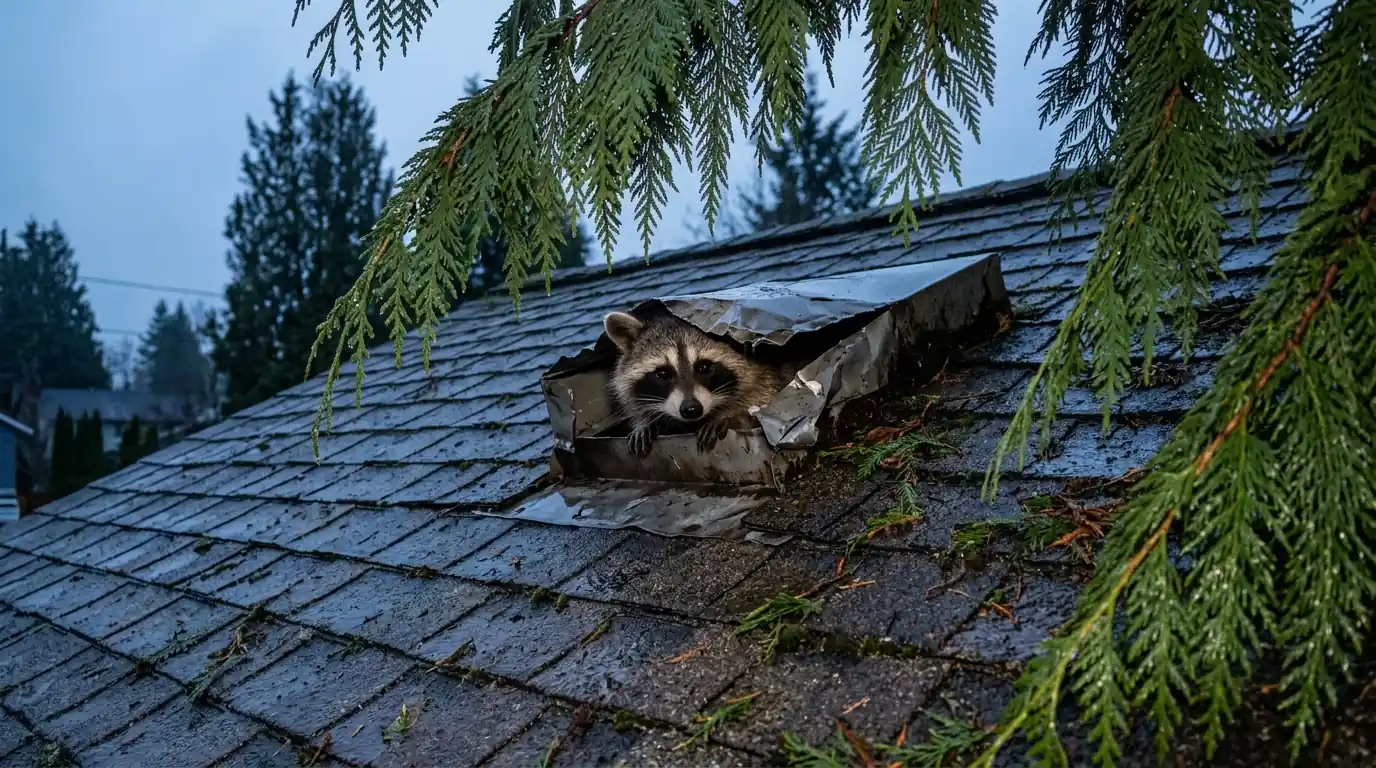
Raccoons are a different class of tenant from rodents. An adult can weigh twenty pounds, tear roof vents and soffit panels open with its hands, and settle into an attic, chimney, crawl space or deck void as a long-term den. Mothers choose these sites to raise spring litters, so many calls involve a family, not a single animal, and that is why the job starts with careful inspection rather than a trap set in the yard.
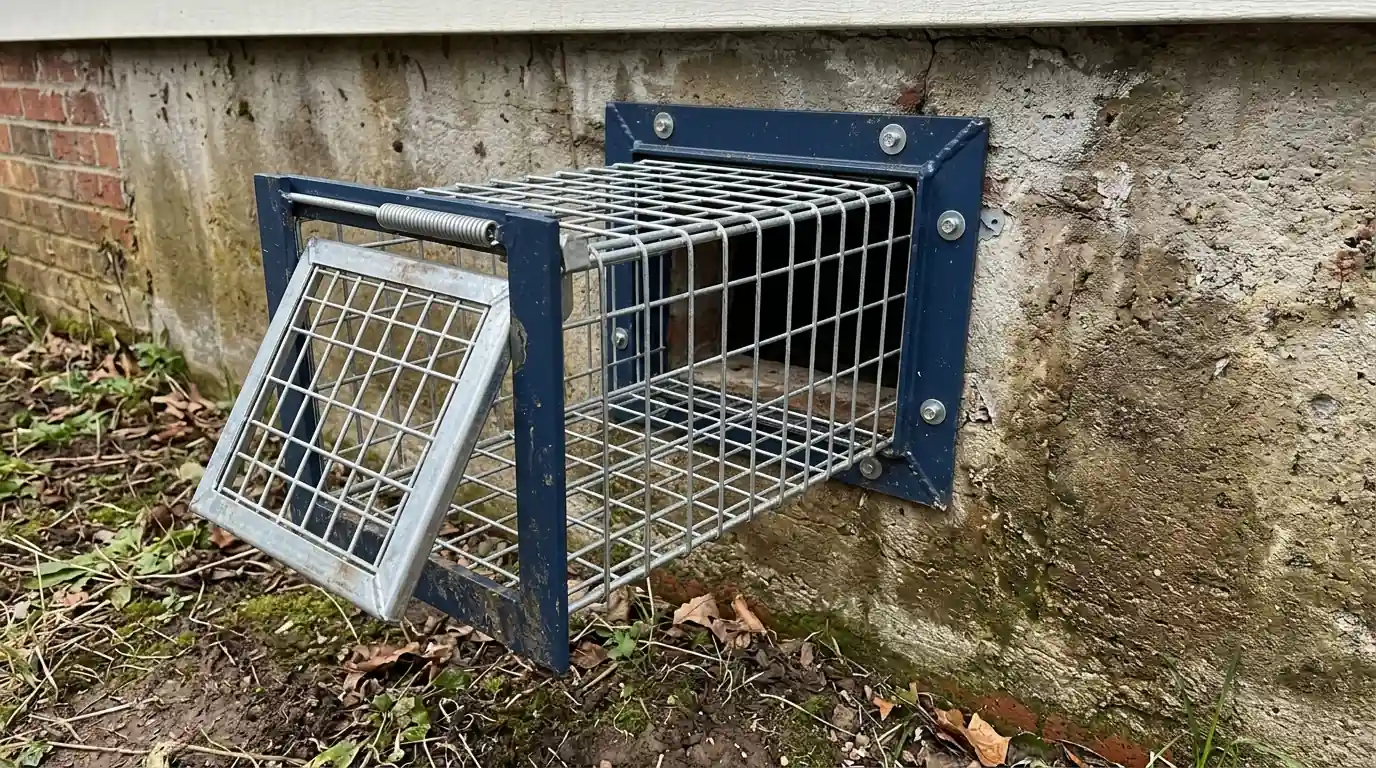
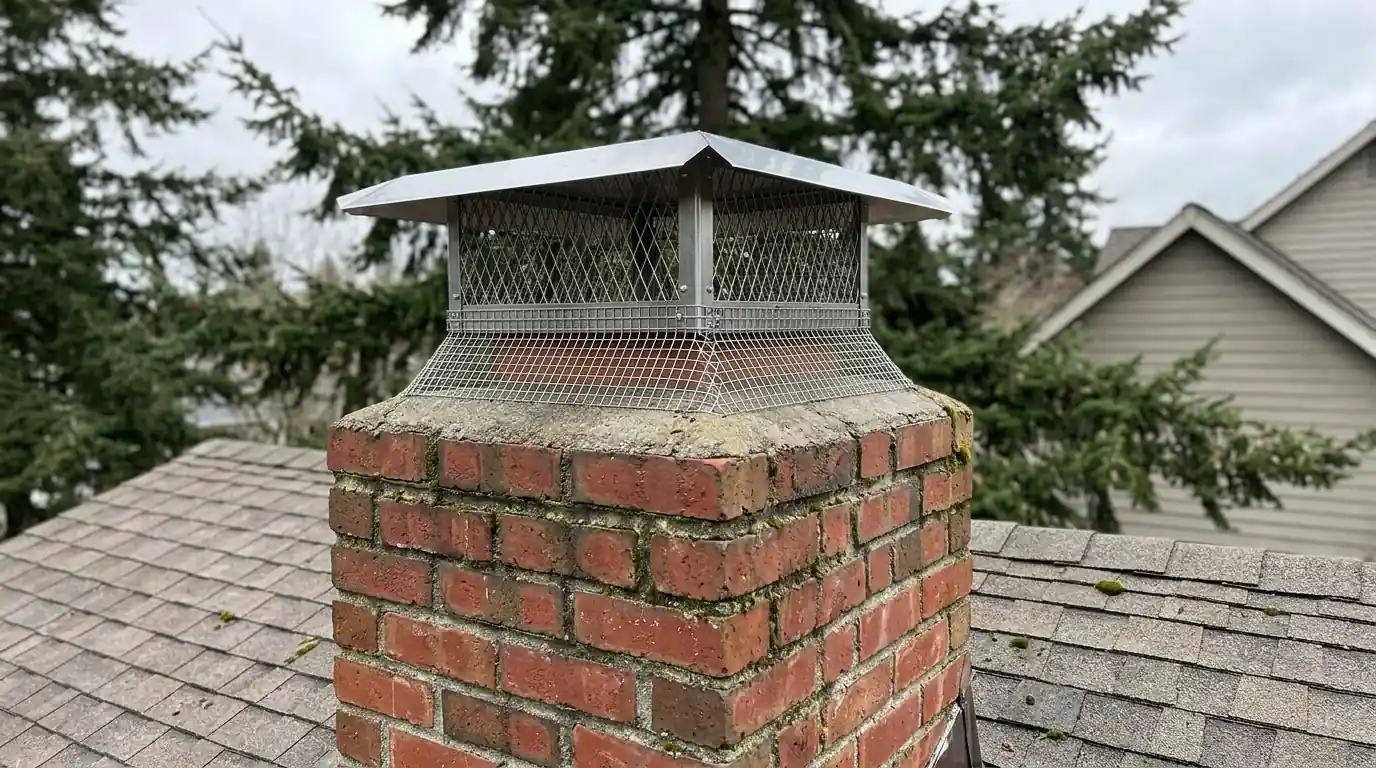
Removal follows the den. Where adults are using a single entry, a heavy-duty one-way door lets them leave on their nightly rounds and not return. Where kits are present, we time the exclusion so the mother relocates her young, or we safely remove the kits and reunite them with her outside; sealing a family in or orphaning young creates a much worse problem. Chimney dens get a chimney-rated approach and a cap afterward.
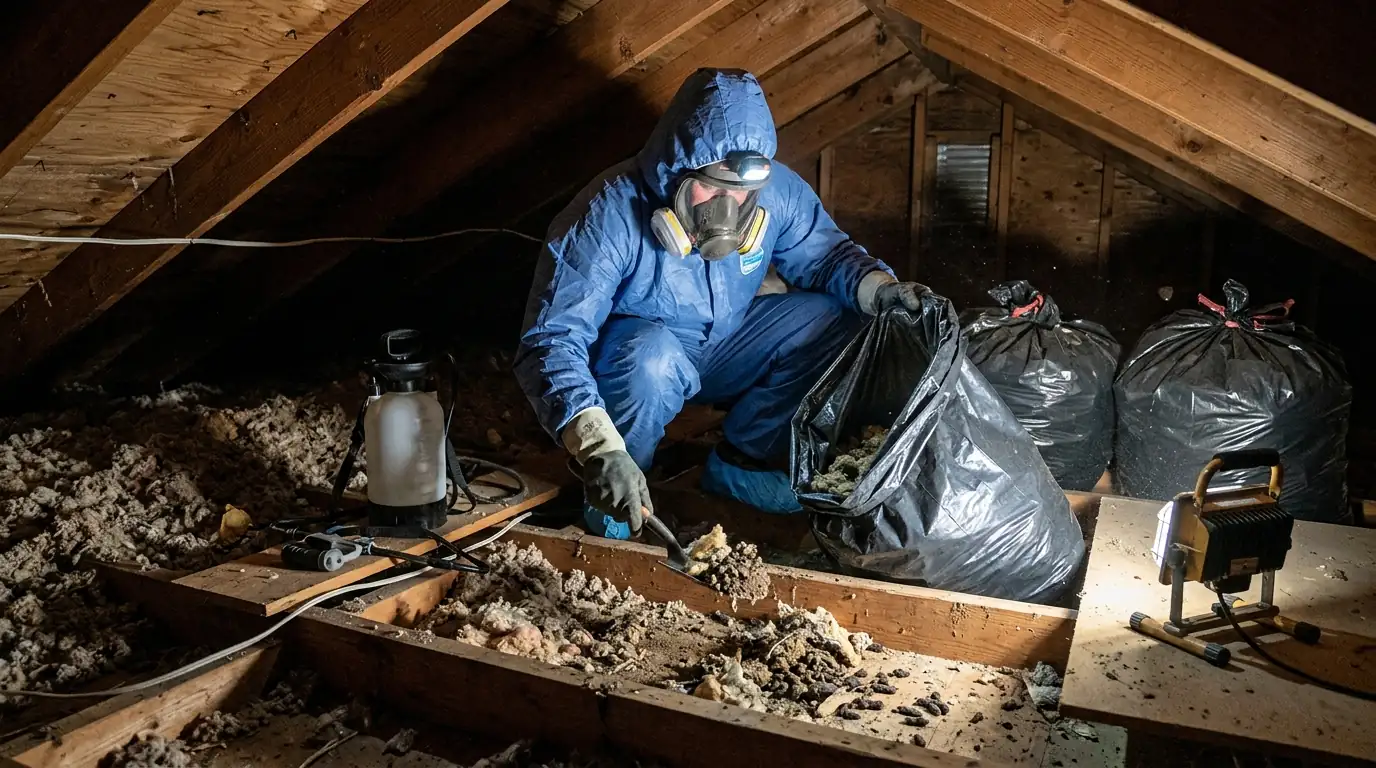
The cleanup matters as much as the eviction. Raccoons use latrines, concentrated toilet sites, and their droppings can carry raccoon roundworm, a parasite whose eggs are hazardous to people and pets. Contaminated insulation and debris are removed under protective protocols, the area is treated, and then the entry is rebuilt with heavy-gauge steel, because raccoons will pry at any weak repair.
Catch it early
Movement that sounds like a person or a large dog overhead, especially late evening and before dawn, is a raccoon signature.
Raccoons pull roof vents, soffit screens and fascia apart by hand; damage looks torn, not gnawed.
Vocal sounds from the attic or chimney, especially in spring, often mean a mother with kits.
Raccoon latrines, piles of large droppings in one area, on decks, roofs or in attics, need careful handling.
Pulled screens and lattice under decks and porches mark a ground-level den.
Raided bins and lawns peeled up for grubs show heavy foraging nearby, often from a den close to the house.
The Seattle angle
Raccoons thrive in Seattle's ravines, greenbelts and lakefront parks, and they move easily into residential neighborhoods along creeks and wooded corridors. Mild winters, abundant water, generous compost and garbage, and thousands of older homes with aging roof vents, chimneys and crawl screens give them everything they need. Under-deck and crawl space dens are common here because so many homes sit over crawl spaces with screened vents that a raccoon can tear open.
Washington wildlife rules and simple humane practice both point the same direction: avoid separating mothers and young, and do not relocate animals carelessly. We work within that framework, which is also the approach that gets raccoons out without creating dead-animal or orphan problems later, and we leave the den site cleaned and sealed so the next raccoon in the neighborhood finds nothing to claim.
How the job runs
Thumping, chattering, torn vents or a raccoon seen entering; urgent cases get same or next day.
Entry and den located, family status confirmed before anything is sealed.
Heavy-duty one-way door or humane removal, timed around young.
Latrines and contaminated material removed and treated under protective protocols.
Heavy-gauge steel, vent guards or chimney cap, and a follow-up to confirm it is empty.
Honest numbers
Raccoon jobs are quoted after inspection because the work varies more than most pest jobs. What sets the number:
The quote separates eviction, cleanup and repair so you can see each piece clearly. Damage repair beyond the entry, such as torn ductwork or insulation replacement, is itemized rather than buried.
Make the visit count
Straight answers
They generally avoid people, but cornered or protective mothers will defend themselves, and they can carry rabies and raccoon roundworm. Do not approach or handle them, and keep pets away from the den area.
Trapping can separate a mother from kits left in the attic and often does not solve the open entry. One-way exclusion with proper timing gets the family out together, and the repair keeps the next raccoon out.
A parasite whose eggs can be present in raccoon droppings and are hazardous to people and pets if ingested. That is why latrine cleanup is done with protective equipment and why we ask you not to clean droppings yourself.
No. Smoke can injure or kill the animals and leave a carcass in the flue. Call us; chimney dens get a dedicated approach and a cap afterward.
Most raccoon families leave within a few nights of a one-way door going on, but timing depends on kits. We confirm the den is empty before the permanent repair.
Not through a properly rebuilt entry. Raccoons test weak repairs by hand, which is why we use heavy-gauge steel and caps. Reducing food sources like open garbage and pet food helps too.
Thumping overhead tonight? A technician is answering now.
Call (206) 944-0849
Talk to a technician
Kits checked first, the family moved out, the den cleaned and the entry rebuilt in steel. Call any hour.
Call (206) 944-0849Answered 24/7 from our Seattle service office.
Find the office
Our service office sits at 1440 5th Ave in Seattle, with the head office over in Aberdeen. Calls route to a person, not a queue, any hour.