A nest over a door or walkway
Traffic within a few feet of a nest triggers defense eventually. This is the classic same-day call and we schedule it that way.
Spiders, Wasps & Seasonal
A nest by a doorway, deck or play area is a same-day problem, and we treat it like one. Paper wasps under the eaves, bald-faced hornets in the hedge, nests in wall voids and sheds: we treat and remove them with proper equipment, at the hours the colony is home, so the stinging stops and stays stopped.
Call (206) 944-0849 All treatments
Reviewed by Marjorie Tidwell, Pest Prevention Writer. Updated 2026-10-05.
In short: Call (206) 944-0849 and describe the nest: where it hangs, roughly how big, and how the insects are behaving. Exposed nests near doors, decks and play areas are usually handled same or next day. We treat at dawn or dusk when the colony is inside, remove the nest where structure allows, and treat the void where it does not, then tell you honestly whether that species would have re-used the site.
What this treatment covers
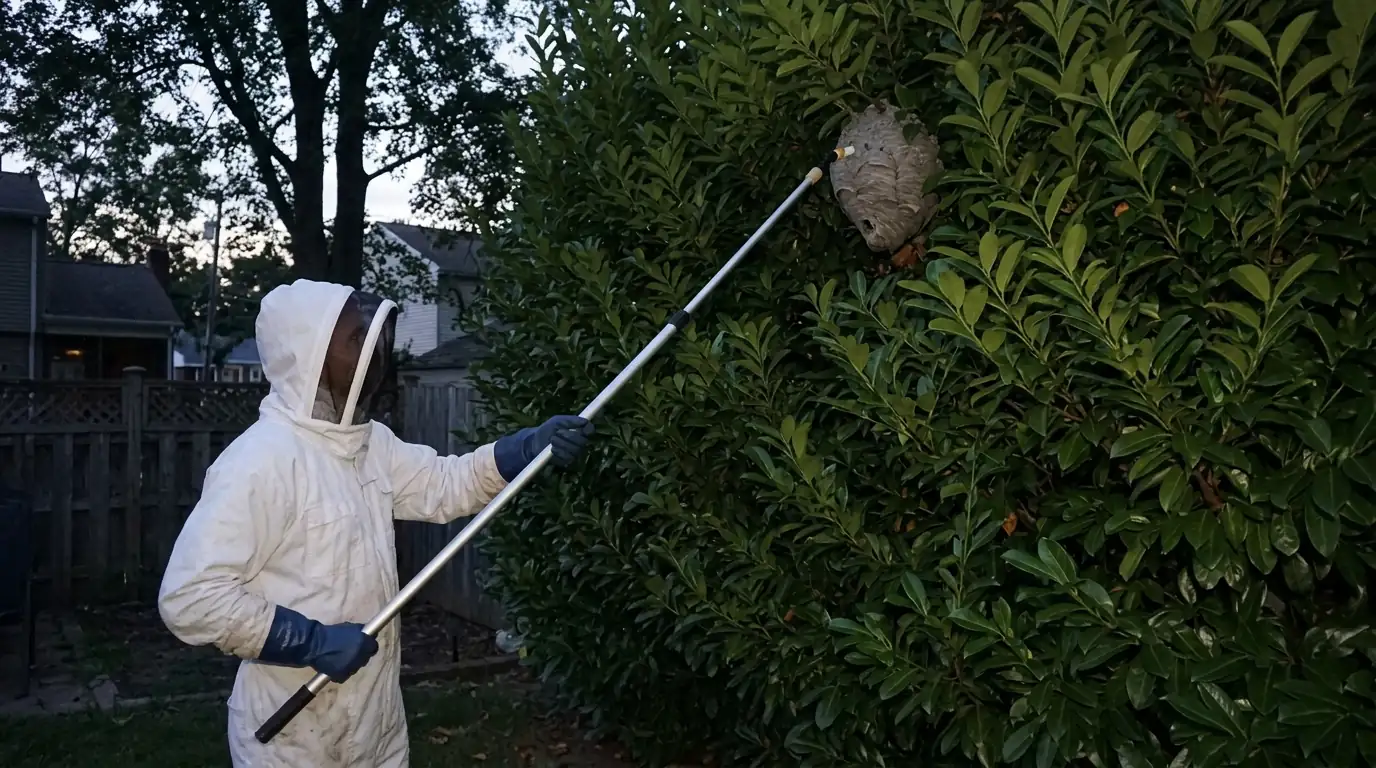
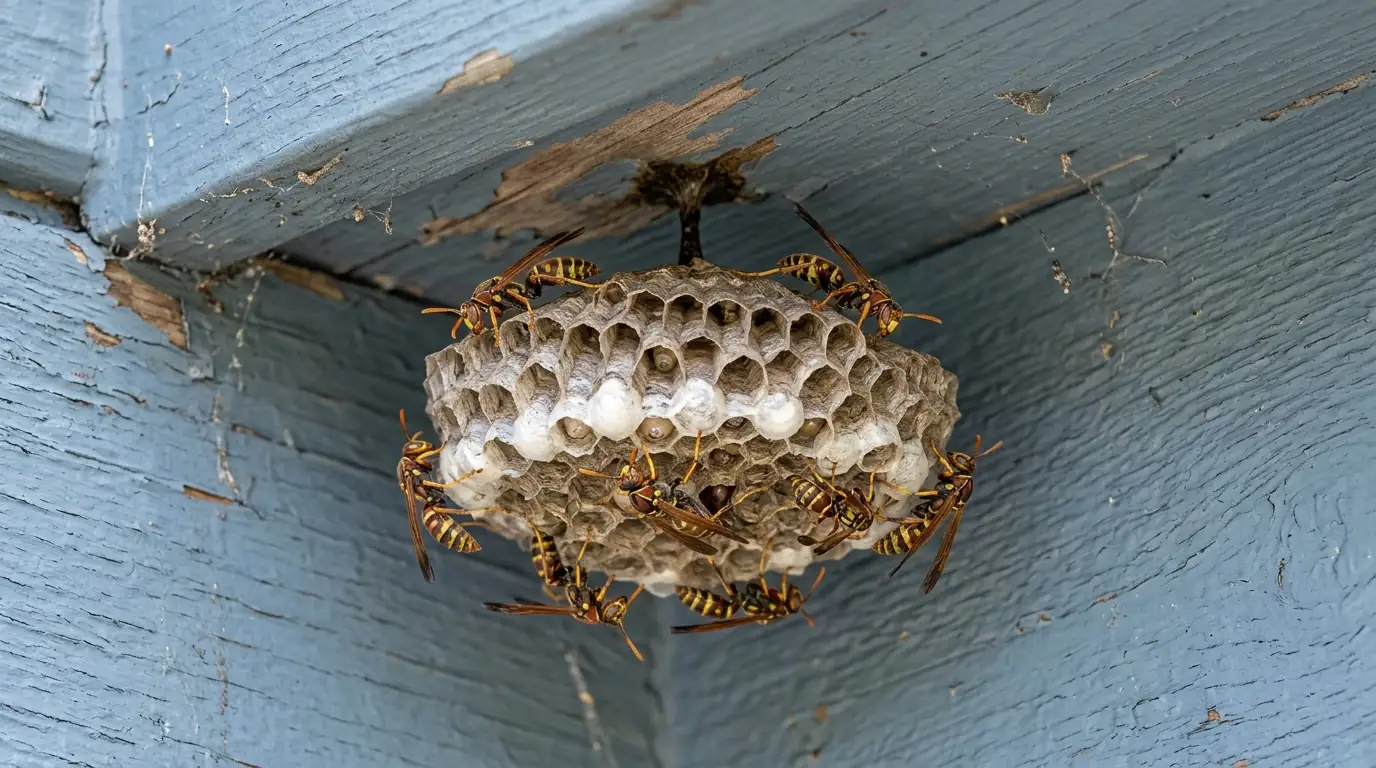
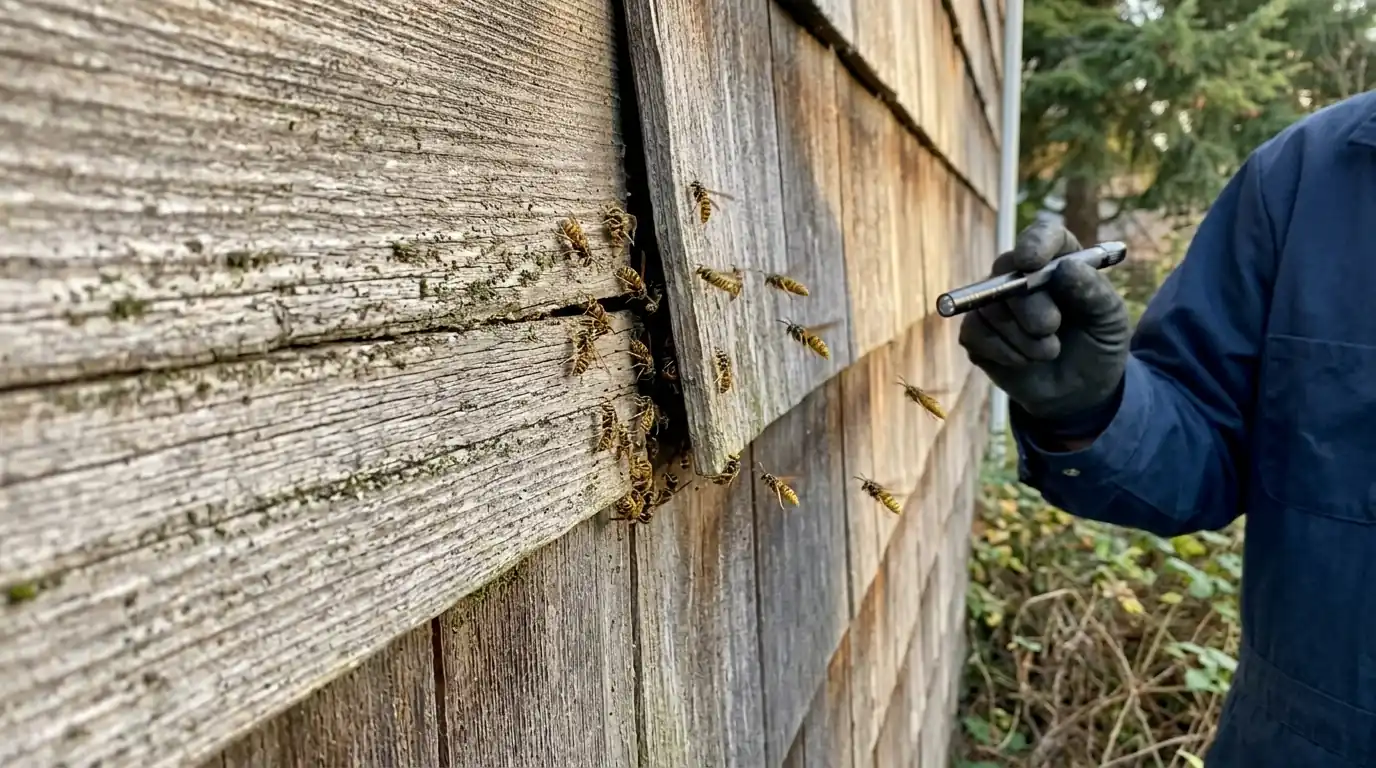
Wasp work is about matching the approach to the architecture. Paper wasp nests, the open honeycomb umbrellas under eaves and deck rails, hold dozens of wasps and come down cleanly after treatment. Bald-faced hornet nests, the gray paper footballs in hedges and trees, hold several hundred aggressive defenders with a long pursuit range, and they are the nests that put do-it-yourselfers in urgent care. Void nests, built inside walls, soffits and attic spaces, are the trickiest: treat the entrance wrong and the colony chews toward the light, meaning into the house.
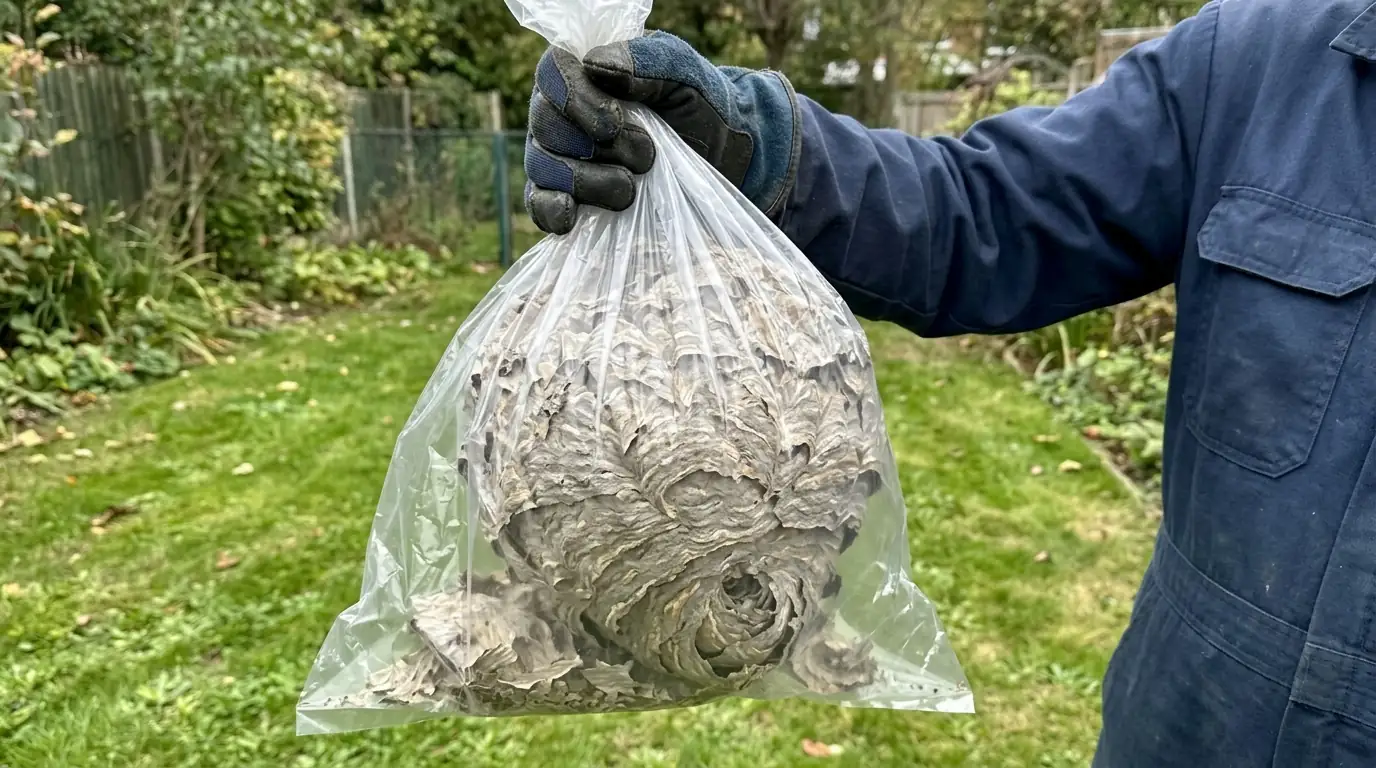
Timing and equipment carry the job. We work nests at dawn or dusk when foragers are home, in full sting suits, with extension tools that treat a hedge nest from outside its defensive radius. Treatment reaches the colony core, the nest is physically removed where it hangs accessible, and void nests get their cavity treated and the entrance left open until the colony is dead, then sealed so the void never hosts again.
The honest footnote we attach to every removal: these species do not re-use nests. Next year's queen starts fresh somewhere new, so the lasting value is in the exclusion and site advice, screened vents, sealed soffit gaps, the eave angles wasps favor, which we deliver with the removal rather than selling you an annual contract on fear.
Catch it early
Traffic within a few feet of a nest triggers defense eventually. This is the classic same-day call and we schedule it that way.
Bald-faced hornets. Hundreds of defenders, a fast strike radius, and the one nest we most urge you not to attempt yourself.
A void colony in the wall or soffit, often far larger than its modest entrance suggests, and the wrong spray drives it indoors.
Indoor appearances usually mean a void colony has broken through or is following light through a ceiling fixture; keep the room closed and call.
Any nest on the property moves to urgent when anaphylaxis is a possibility. Say so on the call and we prioritize accordingly.
Sound in a soffit or attic corner with insect traffic outside marks an established void nest reaching audible size.
The Seattle angle
Puget Sound's mild, damp springs are generous to wasp queens. Each spring, overwintered queens emerge to found new colonies, and a region with abundant eaves, mature hedges and 150 wet days feeding the insect prey they hunt gives most of them a start. Colonies build unnoticed through early summer, which is why the calls concentrate from July onward: an August nest is the same colony you walked past in June, now at a few hundred defenders and maximum attitude. Bald-faced hornets, technically yellowjacket cousins, are the region's marquee builders, hanging their gray paper footballs in laurel hedges, rhododendrons and fruit trees across the city.
Seattle's housing offers the void-nest inventory: pre-1980 soffits, gable vents with aged screens and settled siding gaps give queens cavity options every block. Those are the nests that surprise owners in late summer when a wall starts to hum, and they are also the most preventable, which is why the sealing advice that ships with every removal is the part that pays off next spring.
How the job runs
Where it hangs, how big, how they are acting. Exposed nests near activity get same-day priority.
Species and nest type set the method; void nests get their entrance traced before anything is sprayed.
Dawn or dusk, full gear, treatment delivered to the colony core from outside the defensive radius.
Accessible nests come down; void nests are treated, confirmed dead, then the cavity entrance is sealed.
Late summer often hides a second nest; we check the usual sites and leave you the exclusion list.
Honest numbers
Nest pricing follows risk and access rather than a flat menu, and you get the number before treatment starts. What sets it:
Straightforward exposed nests are the economical end; a large void colony behind siding is the other. Either way the removal is quoted complete, with the dead-colony confirmation and sealing included rather than invoiced as surprises.
Make the visit count
Straight answers
Please do not. Even at night a disturbed colony defends, hornets especially, and the broom puts you inside the strike radius with no exit plan. The store spray cans fare little better against large nests. This is the one pest job where the protective equipment is genuinely the point.
Exposed nests near doors, decks and play areas are usually same or next day, and phones are answered around the clock, so an evening call still lands on tomorrow's early schedule. Sting-allergy households get moved to the front; say so when you call.
That is the one move worse than ignoring it: sealed in, the colony chews toward light and emerges indoors, sometimes through a ceiling fixture. The correct sequence is treat the cavity, confirm the colony is dead, then seal, and we run exactly that order.
Not to the nest; paper wasps and hornets never re-use one. But favorable sites attract new queens, so a sheltered eave or open vent can host a fresh colony. The sealing and site advice we leave behind is what breaks that cycle.
Genuinely, yes: they hunt caterpillars, aphids and flies in quantity, which is why we remove nests by conflict, not by existence. A paper wasp nest high on a shed nobody approaches can often simply stay, and we will tell you when that is the sensible call.
The northern giant hornet turned up in Washington's far northwest corner and became the target of a state eradication effort; no established presence has been found around Seattle. If you see something that truly dwarfs a bald-faced hornet, photograph it safely and report it, and we can help you tell the lookalikes apart.
Nest by the back door? A technician is answering now.
Call (206) 944-0849
Talk to a technician
Right species, right hour, right gear, and the nest leaves in a bag. Call any hour; exposed nests go to the top of the schedule.
Call (206) 944-0849Answered 24/7 from our Seattle service office.
Find the office
Our service office sits at 1440 5th Ave in Seattle, with the head office over in Aberdeen. Calls route to a person, not a queue, any hour.