Clusters on sunny walls
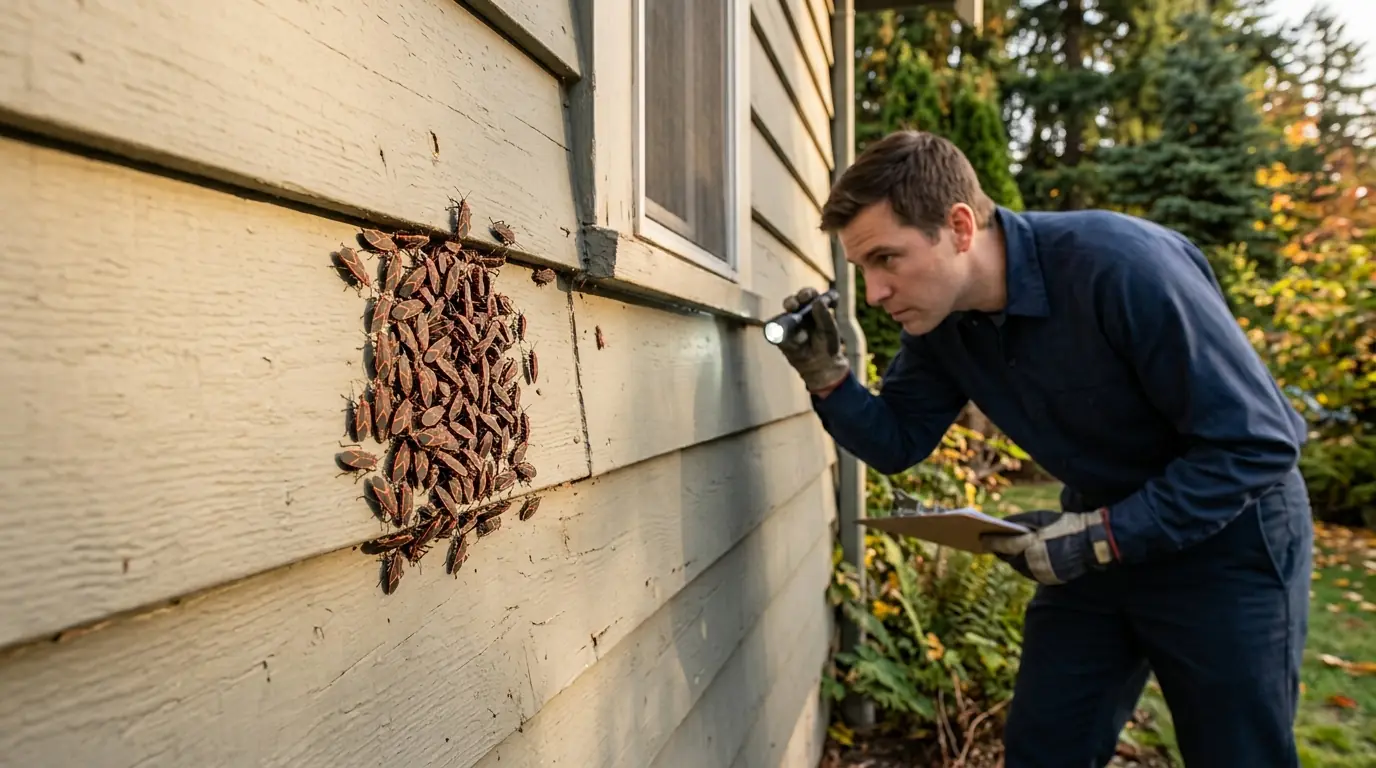
Groups of bugs on south- and west-facing siding on warm fall afternoons.
Spiders, Wasps & Seasonal
Every fall, boxelder bugs and stink bugs look for a warm place to spend the winter, and your walls are it. They do not bite or breed indoors, but they gather by the hundreds on sunny siding and slip into wall voids and attics. We seal the gaps they use, treat the surfaces they gather on at the right time, and clear the ones already inside.
Call (206) 944-0849 All treatments
Reviewed by Marjorie Tidwell, Pest Prevention Writer. Updated 2026-10-05.
In short: Call (206) 944-0849 when you see clusters of red-and-black boxelder bugs or brown shield-shaped stink bugs on south- and west-facing walls, or finding them indoors near windows. The best results come from sealing entry gaps and treating gathering surfaces in late summer and early fall, before they move inside; bugs already in wall voids are treated and removed.
What this treatment covers
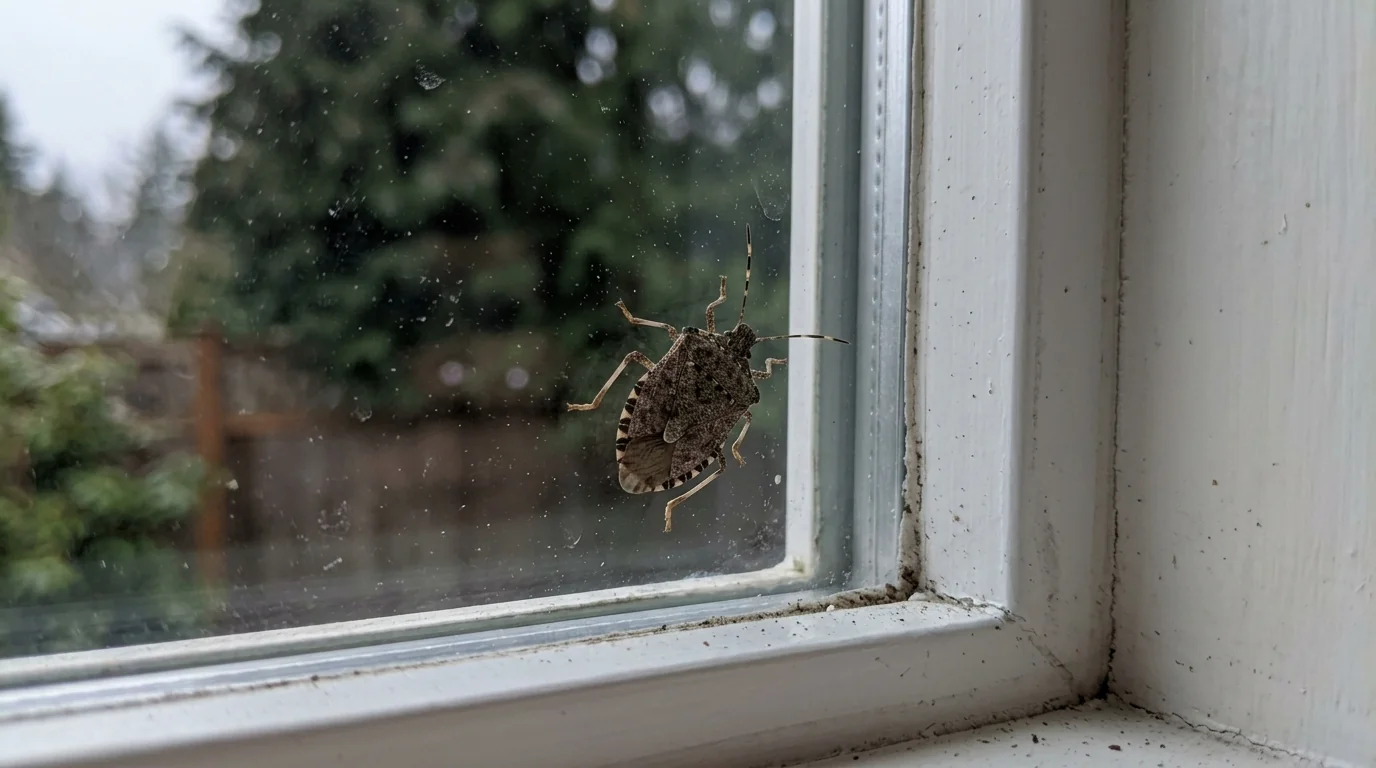
Boxelder bugs are black with red markings and feed mostly on boxelder and maple seeds. Stink bugs, including the brown marmorated stink bug that has been spreading in Washington, are brown and shield-shaped and release an odor when disturbed. Both are overwintering pests: in late summer and fall they gather on warm, sunny walls and then crawl into gaps around windows, siding, soffits and vents to spend winter inside wall voids and attics.
They do not breed indoors and do not damage the structure, but on warm winter days they wake up and wander into living spaces, especially near windows. Squashing stink bugs releases their smell, and vacuuming them can leave odor in the vacuum.
Control is all about timing and sealing. In late summer and early fall we seal gaps around windows, siding, utility penetrations and vents on the sunny sides of the house, and treat the exterior surfaces where bugs gather. Bugs already inside wall voids can be treated, and stragglers are removed with a dedicated vacuum.
Catch it early
Groups of bugs on south- and west-facing siding on warm fall afternoons.
Boxelder bugs gathering on or under boxelder and maple trees.
Stink bugs appearing at windows in winter and spring.
Stink bugs release an odor when crushed or vacuumed.
Accumulations in attic corners or around gable vents.
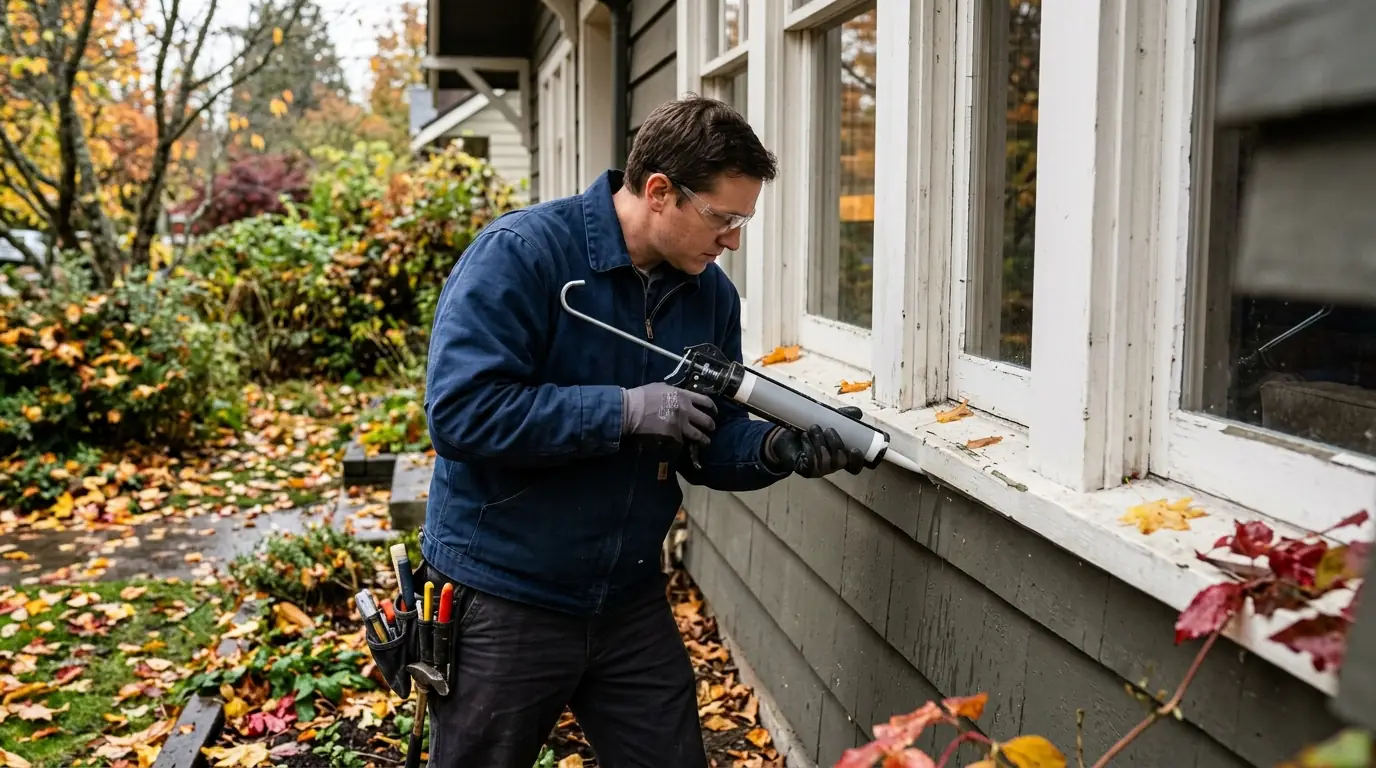
Gaps in window trim and siding are the main entry points.
The Seattle angle
Seattle's late-summer sun warms south- and west-facing siding, and that warmth is what draws overwintering insects to the walls in September and October. Boxelder and maple trees are common in yards and street plantings, which supports boxelder bug populations, and the brown marmorated stink bug has been increasing in parts of Washington.
Older homes with settled siding, aging window trim and original vents give these insects plenty of gaps. Sealing those gaps also helps with cluster flies, spiders and other fall invaders that use the same routes.
How the job runs
Earlier is better; sealing before bugs move in prevents most indoor sightings.
Gaps around windows, siding, vents and utility lines are mapped.
Gaps sealed with appropriate sealants and screens.
Exterior treatment timed to when bugs gather on walls.
Wall void treatment and removal for bugs already inside.
Honest numbers
Pricing follows the sealing work and the size of the exterior surfaces involved. What sets the number:
A written quote covers sealing and treatment. Many owners pair this with fall spider and occasional invader work, since the same gaps serve all of them.
Make the visit count
Straight answers
No. They are a nuisance, not a health risk, and they do not damage the house.
No. They overwinter indoors and leave in spring to feed and breed outside.
They use the same warm walls and gaps. Sealing those gaps is the long-term fix.
Not necessarily. Sealing and timed treatment usually control the problem without removing trees.
No. We can treat wall voids and remove bugs, then seal before next fall.
Late summer or early fall, before they move into the walls.
Often booked together
Bugs piling up on the sunny wall? Seal before they move in.
Call (206) 944-0849
Talk to a technician
Gaps sealed, gathering surfaces treated at the right time, and stragglers cleared. Call in late summer for the best results.
Call (206) 944-0849Answered 24/7 from our Seattle service office.
Find the office
Our service office sits at 1440 5th Ave in Seattle, with the head office over in Aberdeen. Calls route to a person, not a queue, any hour.