Night sightings near the deck
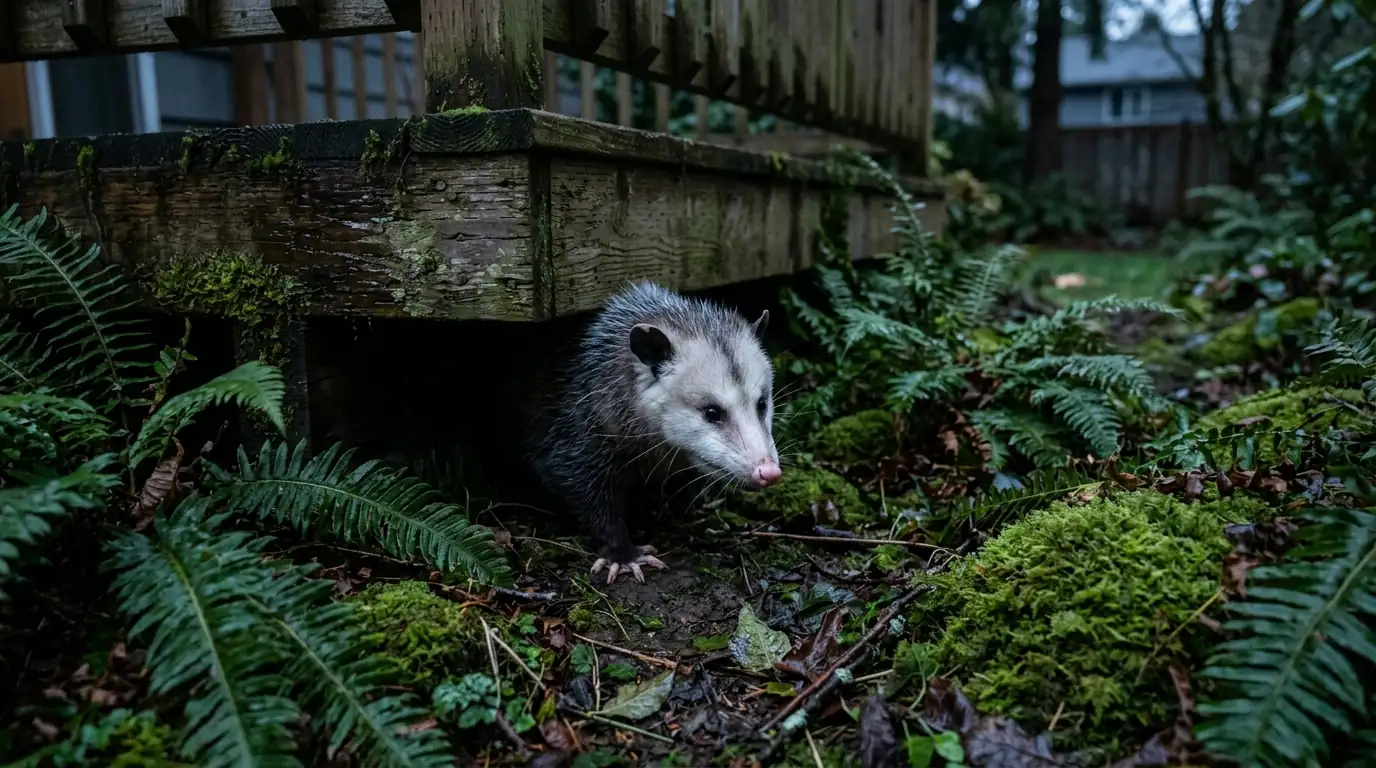
An opossum crossing the yard at the same spot each evening is probably heading to a den under a deck or shed.
Wildlife & Exclusion
Opossums are mostly harmless, but they are messy roommates under a deck or in a crawl space. They move into dens other animals dug or abandoned, drag in debris, leave droppings and attract fleas. We move them out humanely, clean up what they left, and close the opening so the space stays empty.
Call (206) 944-0849 All treatments
Reviewed by Marjorie Tidwell, Pest Prevention Writer. Updated 2026-10-05.
In short: Call (206) 944-0849 if you see an opossum going under the deck, porch, shed or into a crawl space vent. We confirm the den and entry, use one-way exclusion so the animal leaves on its nightly rounds, check for young, clean the den area and seal the opening with buried mesh or steel screen.
What this treatment covers
The Virginia opossum is North America's only marsupial and a common resident of Seattle-area neighborhoods. Opossums are nomadic by nature, moving between dens every few days, but when they find a sheltered, dry space under a deck, porch, shed or inside a crawl space, they can settle in for long stays, especially females with young in their pouch or riding on their backs.
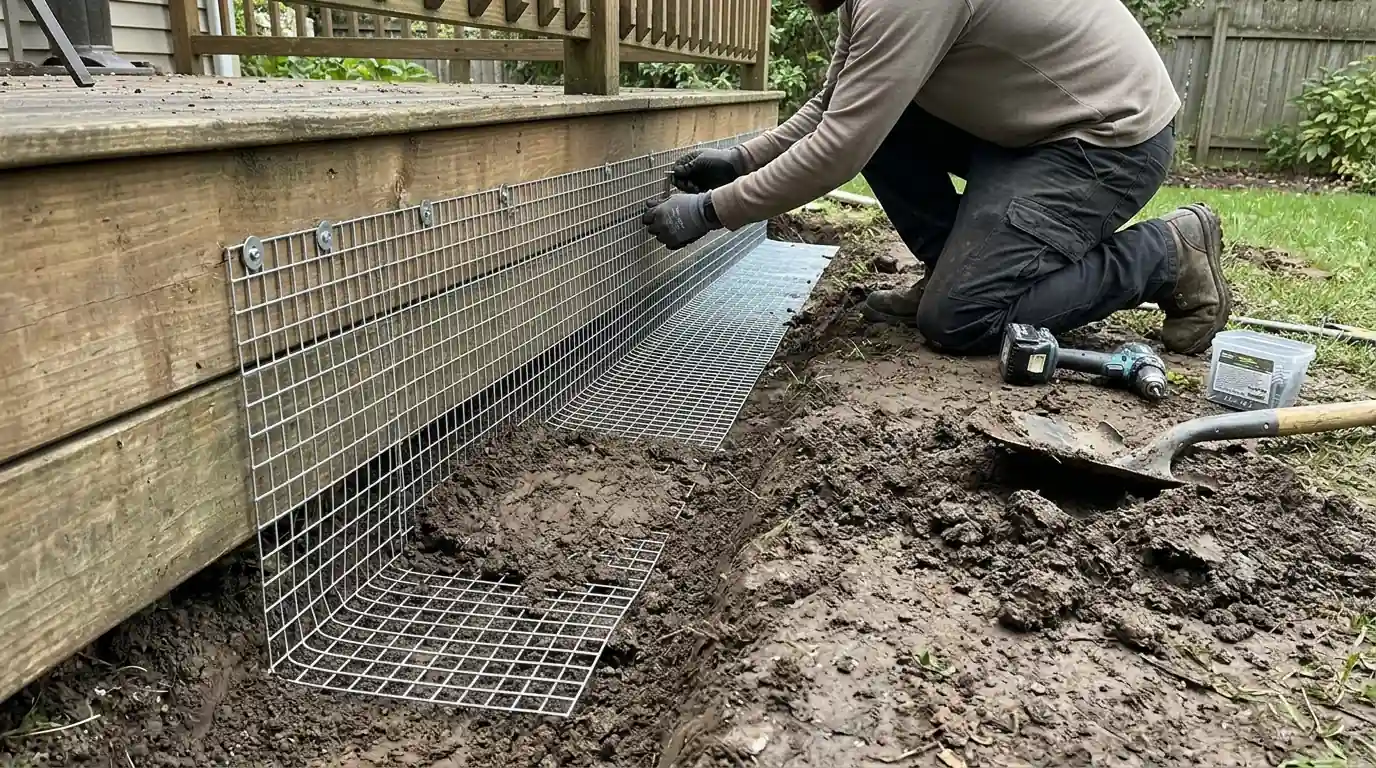
Removal is usually straightforward exclusion. Opossums forage at night, so a one-way door on the den entrance lets them leave and not return. We check for young before sealing, since a mother may leave dependent babies behind if disturbed at the wrong moment. Once the den is confirmed empty, the opening gets a permanent fix: L-shaped buried mesh around deck and shed perimeters to stop digging, and steel screens on crawl vents.
The cleanup and the fleas are why owners call. Opossum dens collect nesting debris, droppings and sometimes a dead animal, and opossums carry fleas that can migrate into the house. Den cleanup and, where needed, flea treatment close out the job properly.
Catch it early
An opossum crossing the yard at the same spot each evening is probably heading to a den under a deck or shed.
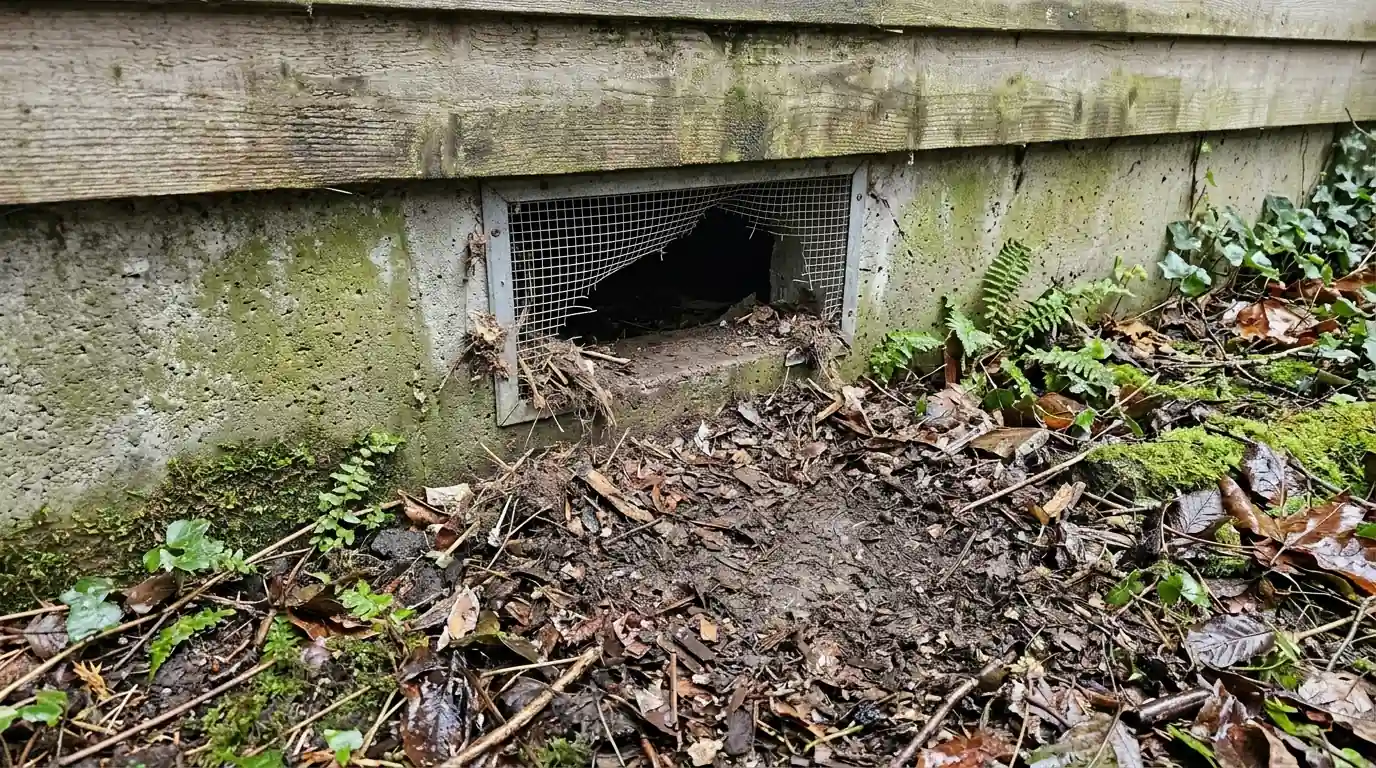
Damaged vents with a matted entrance at ground level often mark an opossum or raccoon den in the crawl space.
Dens collect droppings and debris; a musky smell from vents or under the porch often follows.
Indoor fleas in a pet-free home are a classic sign of wildlife denning below the floor.
Fresh openings along deck skirting or shed edges show where an animal is going under.
Opossums are scavengers; food left out draws them and keeps them nearby.
The Seattle angle
Opossums are common across Seattle and the surrounding cities, using greenbelts, creek corridors and fenced backyards to move between food and shelter. The region's housing gives them easy den options: most Seattle single-family homes sit over crawl spaces with screened vents, and the city's many decks and porches provide dry, protected cavities underneath, exactly what a mother with young looks for.
Because opossums are mostly harmless, the practical goals are humane removal, cleanup and prevention. The same exclusion work that keeps opossums out of a crawl space also blocks rats and raccoons, so we often handle opossum dens as part of a broader exclusion plan for the house.
How the job runs
Where the animal enters and when you see it narrows the den location.
Entry inspected and checked for babies before any exclusion.
One-way door so the opossum leaves on its nightly rounds and cannot return.
Debris and droppings removed; flea risk flagged where the den sits under living space.
Buried L-mesh around decks and sheds, steel screens on crawl vents.
Honest numbers
Opossum jobs are quoted after inspection, mostly on den location and the length of perimeter that needs sealing. The variables:
The quote includes exclusion, confirmation and sealing, with cleanup and flea treatment itemized so you see exactly what each part covers.
Make the visit count
Straight answers
Rarely. They are generally shy and will often freeze or play dead when threatened. They can still bite if handled and carry fleas, so keep pets and kids away and let us handle the removal.
Rabies in opossums is considered rare, partly due to their lower body temperature, but any wild animal acting abnormally should be avoided and reported. Do not handle opossums regardless.
Opossums do move around, but a good den can hold one for a long time, especially a mother with young. Exclusion makes sure it leaves and the opening is closed behind it.
Wildlife denning under the house is one of the most common reasons. Removing the opossum and treating the den area usually solves the source; our flea service handles any indoor population.
They do eat insects and other small animals, which is why many people do not mind them in the yard. The issue is denning under your house, not their presence in the neighborhood.
An L-shaped mesh skirt buried around the perimeter blocks digging. Animals that try to dig hit the buried mesh and give up. It also keeps rats and raccoons out.
Something living under the deck? We will move it out.
Call (206) 944-0849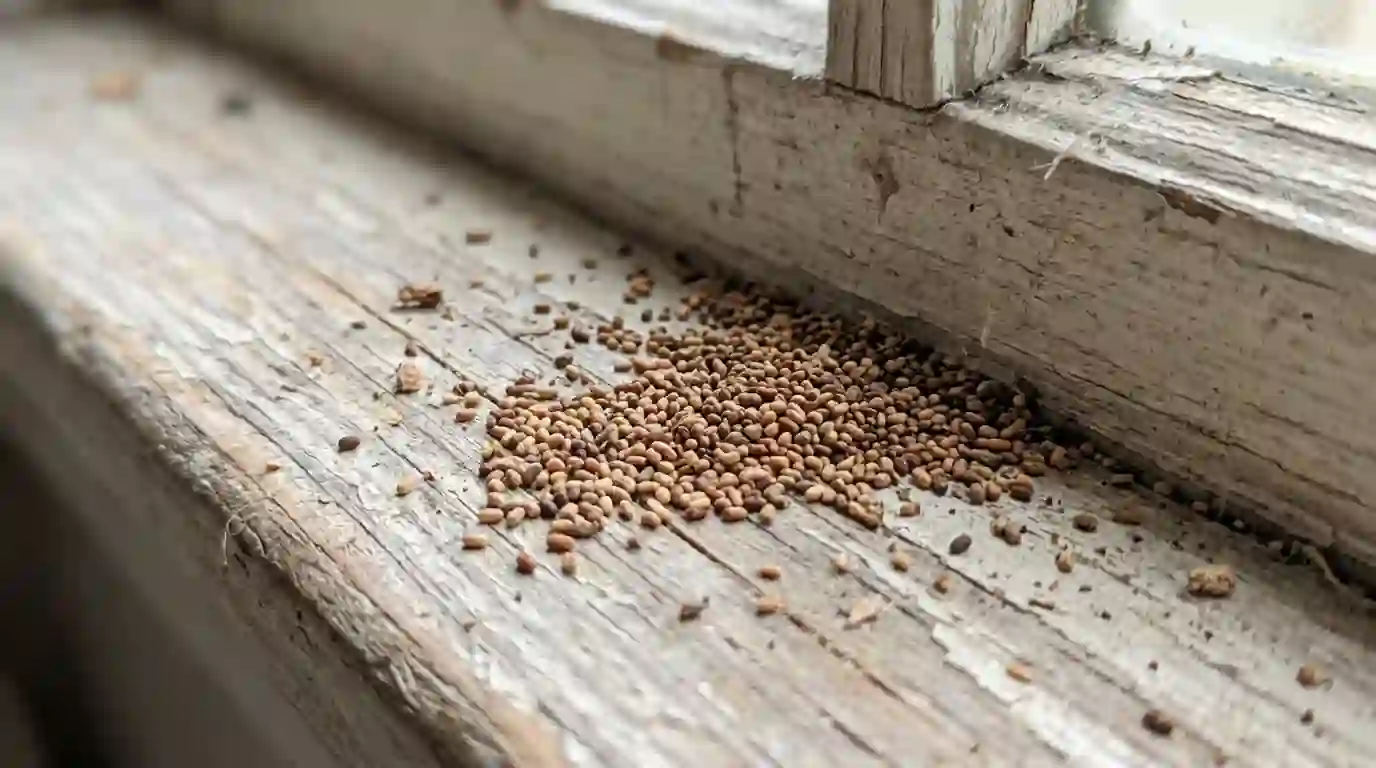
Talk to a technician
Humane exclusion, a young check first, cleanup and sealing that keeps every critter out. Call any hour.
Call (206) 944-0849Answered 24/7 from our Seattle service office.
Find the office
Our service office sits at 1440 5th Ave in Seattle, with the head office over in Aberdeen. Calls route to a person, not a queue, any hour.