Small pellet piles
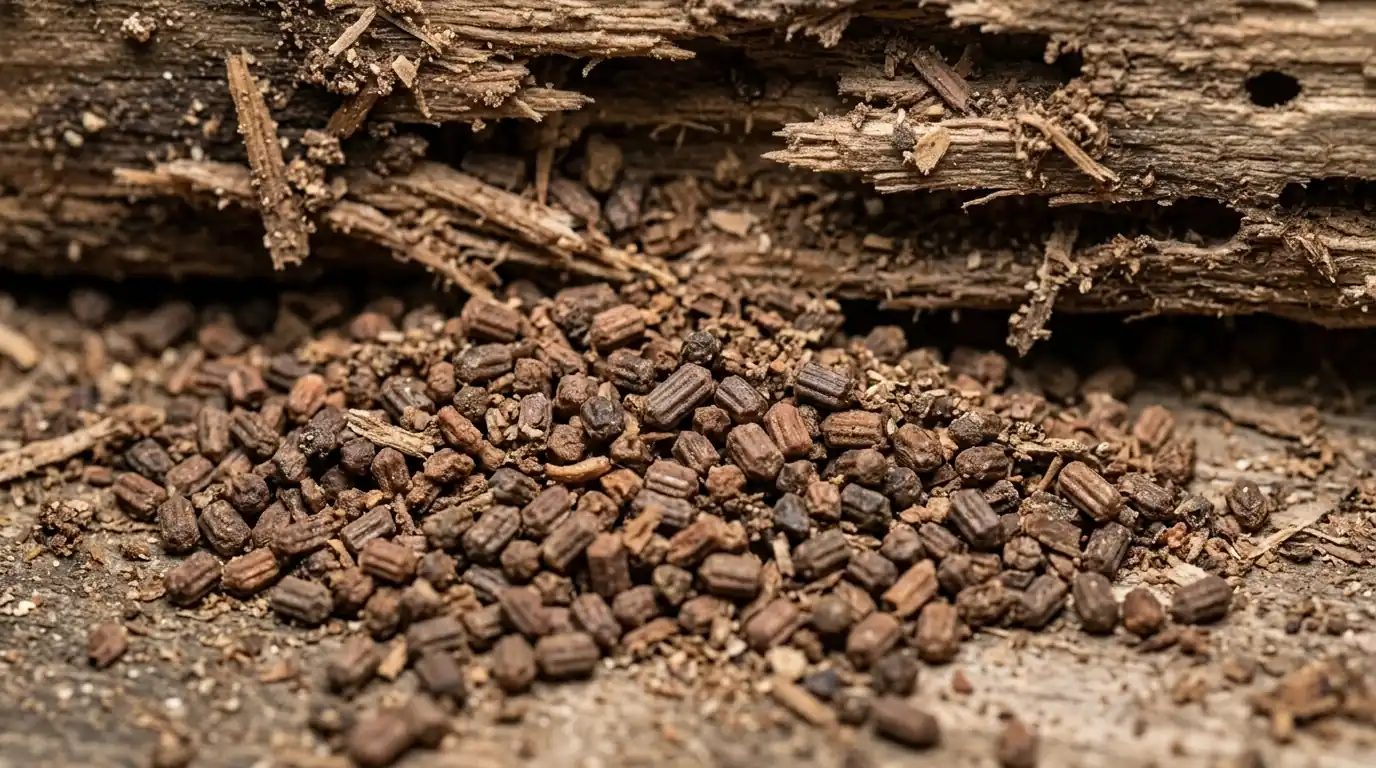
Dampwood termite frass: dry six-sided pellets accumulating below infested wood, distinct from the fibrous sawdust of carpenter ants.
Ants & Wood Destroyers
In western Washington, the wood destroyer list is longer than termites, and a real inspection covers all of it. Dampwood termites, carpenter ants, wood-boring beetles and plain fungal rot all damage Puget Sound structures. A WDO inspection walks the whole building, names what is active, and gives you a written report you can act on or transact with.
Call (206) 944-0849 All treatments
Reviewed by Marjorie Tidwell, Pest Prevention Writer. Updated 2026-10-05.
In short: Call (206) 944-0849 to book a wood-destroying organism inspection. A technician examines the crawl space, attic, exterior envelope and interior wood for termites, carpenter ants, wood-boring beetles and conducive rot conditions, probes and moisture-reads suspect members, and delivers a written, photographed report with findings and recommendations, typically within a day of the visit.
What this treatment covers
A WDO inspection is a systematic survey of everything that eats, excavates or rots the wood in a structure. In western Washington that means four targets. Dampwood termites, the region's main termite, colonize wet wood and betray themselves with distinctive six-sided fecal pellets. Carpenter ants, the state's most common structural pest, leave sawdust-like frass and smooth galleries. Wood-boring beetles, mostly anobiids in this climate, pepper joists with small round exit holes and powdery frass. And fungal rot, which is not an insect at all, softens more Northwest framing than any of them and creates the moisture conditions the insects follow.
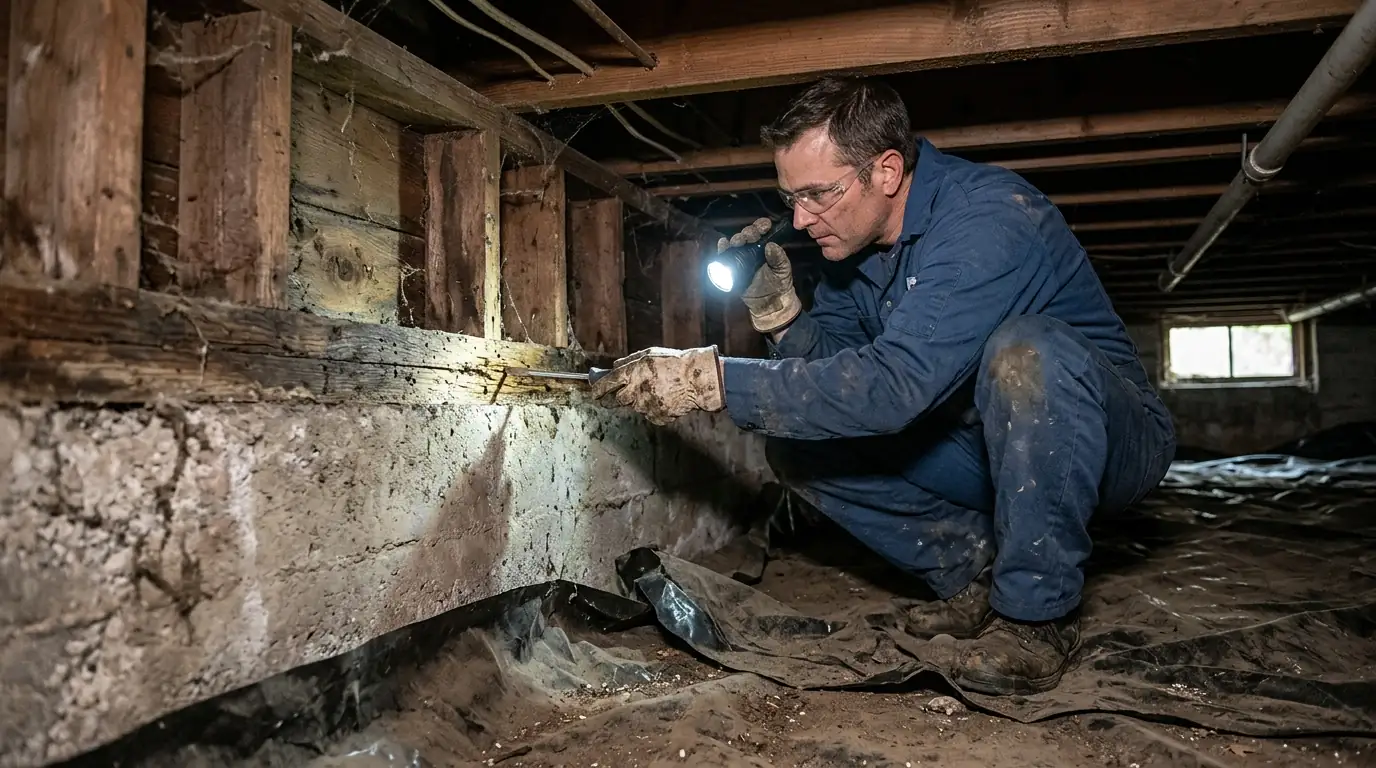
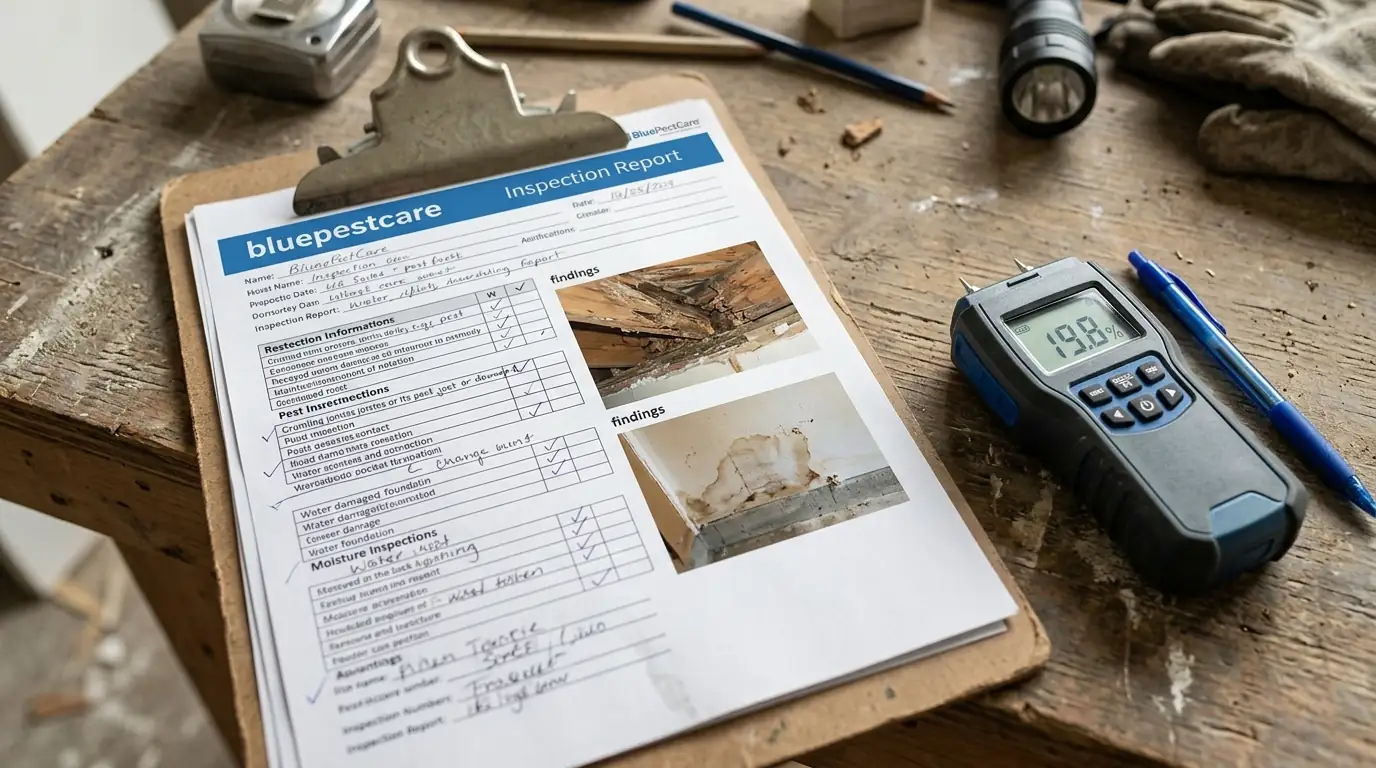
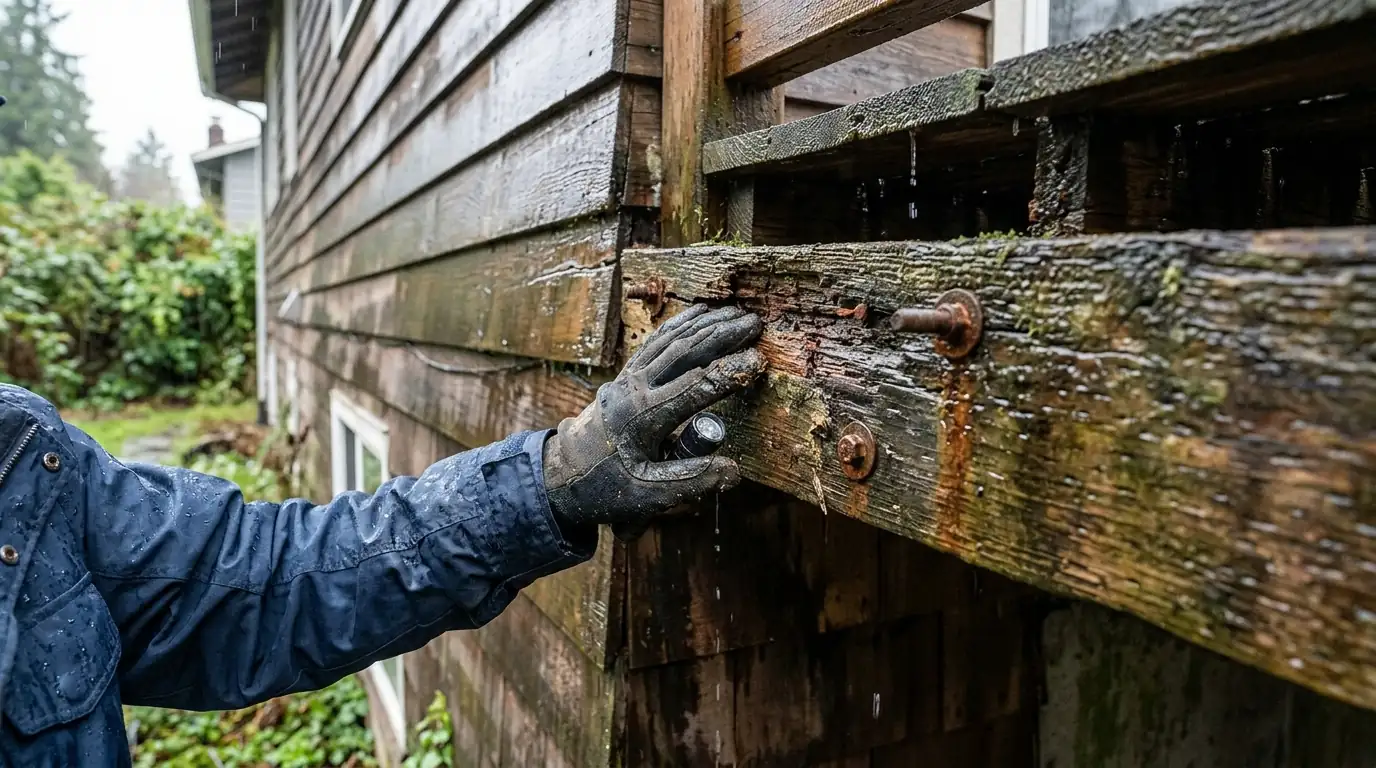
The inspection route is the whole envelope: crawl space joists and sills probed and moisture-read, attic framing and sheathing examined, exterior siding, trim, decks and grade conditions walked, and interior wood checked where access allows. Every finding is photographed and located on a simple diagram, and conducive conditions, earth-to-wood contact, failed gutters, plumbing leaks, blocked vents, are documented with the same seriousness as live activity, because they are next year's infestation.
You receive a written report fit for your purpose: a homeowner's action list if you called about suspect damage, or a thorough, transaction-ready document if a sale is in motion. Where activity is found, the report separates what is active from what is historical, which is the difference between a treatment quote and peace of mind.
Catch it early
Dampwood termite frass: dry six-sided pellets accumulating below infested wood, distinct from the fibrous sawdust of carpenter ants.
Carpenter ant frass and workers mean active excavation somewhere in the moisture-affected wood.
Beetle exit holes, often with fine powder, mark emerged adults; the question the inspection answers is whether larvae remain.
A screwdriver sinking into a sill, post base or deck connection finds rot or galleries either way, and both belong in the report.
Winged insects at windows in spring or fall, or discarded wings on sills, mean a mature colony of something nearby.
Buying or selling an older Seattle home without a current WDO report is negotiating blind in a city where most houses have crawl spaces.
The Seattle angle
Seattle's wood-destroyer profile is unusual and worth understanding before paying for the wrong worry. Subterranean termites, the species that drives the termite industry in most states, are comparatively rare west of the Cascades; the termite you meet here is the dampwood, a larger insect that only colonizes wood already wet. That inverts the usual logic: in this city, the moisture is the infestation's cause, not just its accelerant, and an inspection that skips moisture mapping has missed the point. Carpenter ants, meanwhile, out-damage termites locally, which is why a termites-only inspection is the wrong product for this region.
The structures themselves argue for periodic inspection. Roughly 62 percent of the city's single-family homes stand over vented crawl spaces whose sills and joists live closest to ground moisture, the housing stock is largely pre-1980, and the climate delivers around 150 wet days a year. An inspection every few years, and always at purchase, is how owners here stay ahead of a problem that compounds quietly.
How the job runs
Tell us why: suspect damage, a transaction, or due diligence. The report format follows the purpose.
Crawl space, attic, exterior and accessible interior wood, in that order, with probing and moisture readings.
Every find is identified to organism and judged active or historical, which is the decision that matters.
Photos and a location diagram tie each finding to the structure; conducive conditions get equal billing.
Written report within a day, recommendations ranked, and treatment quoted only where activity earns it.
Honest numbers
Inspection pricing is flat-rate by structure rather than by findings, so the report has no incentive problem. What sets the rate:
If the inspection finds nothing active, the report says so plainly and the engagement ends there; a clean report is a perfectly good outcome and most of them are. Where activity exists, the treatment quote arrives itemized and separate, so the inspection stands on its own.
Make the visit count
Straight answers
Yes, but mostly dampwood termites, which need wet wood, rather than the subterranean species common elsewhere; subterraneans are rare west of the Cascades. The practical translation: your termite risk here is a moisture question, and the inspection reads both together.
Depth on one subject. A general home inspector notes suspect wood and recommends a WDO specialist; this inspection is that specialist step, with organism-level identification, active-versus-historical judgment and probing a generalist will not do.
The economics run the other way: the inspection is flat-rate and most reports close with monitoring advice, not work orders. Where we do find activity, the photos and locations are in the report, so you can verify or second-opinion everything.
Freshness indicators: frass color and accumulation rate, pellet moisture, gallery surface condition, live insects or larvae, and seasonal timing. Historical damage in dry wood with no fresh sign is noted as exactly that, and it usually needs a repair conversation, not a pesticide.
A clearance re-inspection after treatment is cheap certainty, and it doubles as a check that no second organism was riding the same moisture. Wet wood rarely hosts only one problem.
Every three to five years is a sensible cadence for pre-1980 homes over crawl spaces, annually if there is a history of activity, and always at purchase. The inspection costs a fraction of the smallest repair it prevents.
Buying, selling or just suspicious? Book the inspection.
Call (206) 944-0849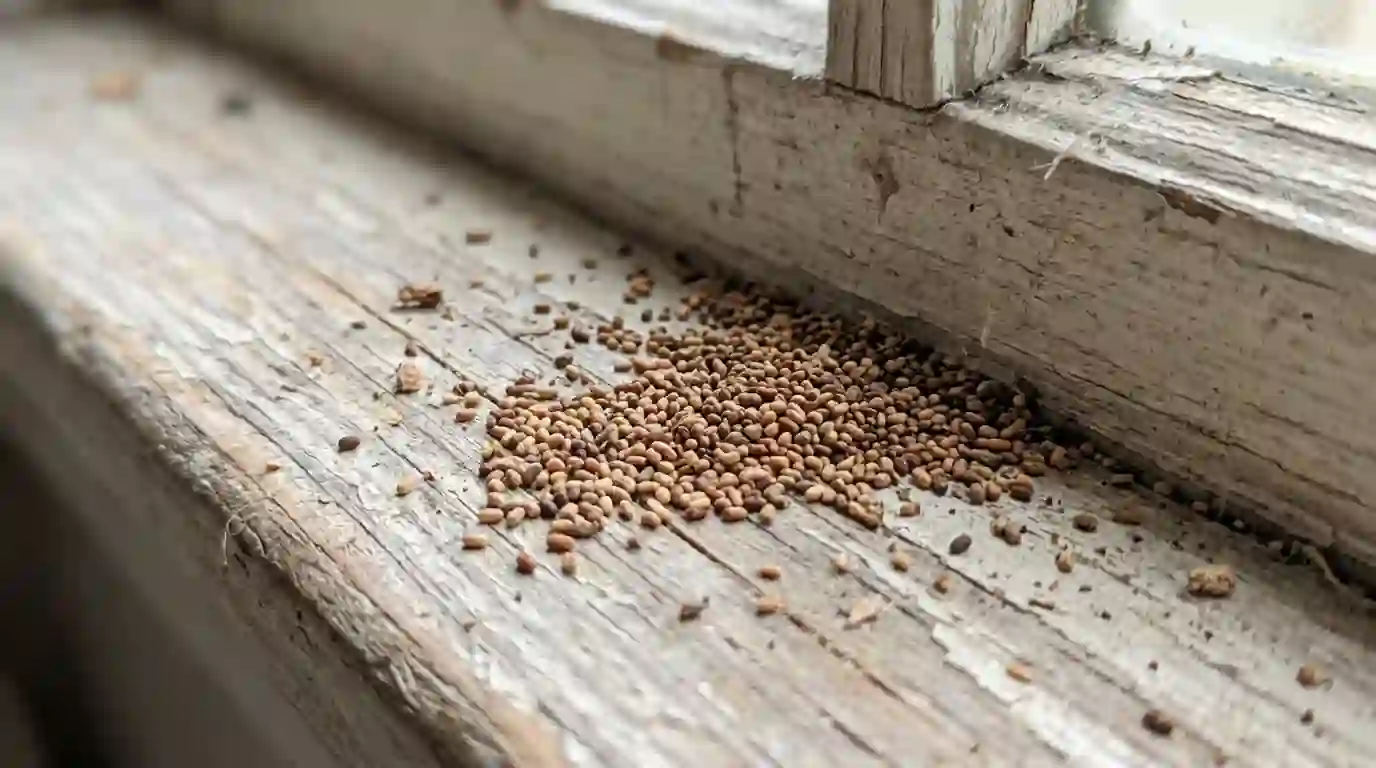
Talk to a technician
One visit, every wood destroyer, a written photographed report within a day. Call to put a date on the calendar.
Call (206) 944-0849Answered 24/7 from our Seattle service office.
Find the office
Our service office sits at 1440 5th Ave in Seattle, with the head office over in Aberdeen. Calls route to a person, not a queue, any hour.