Small moths in lazy flight
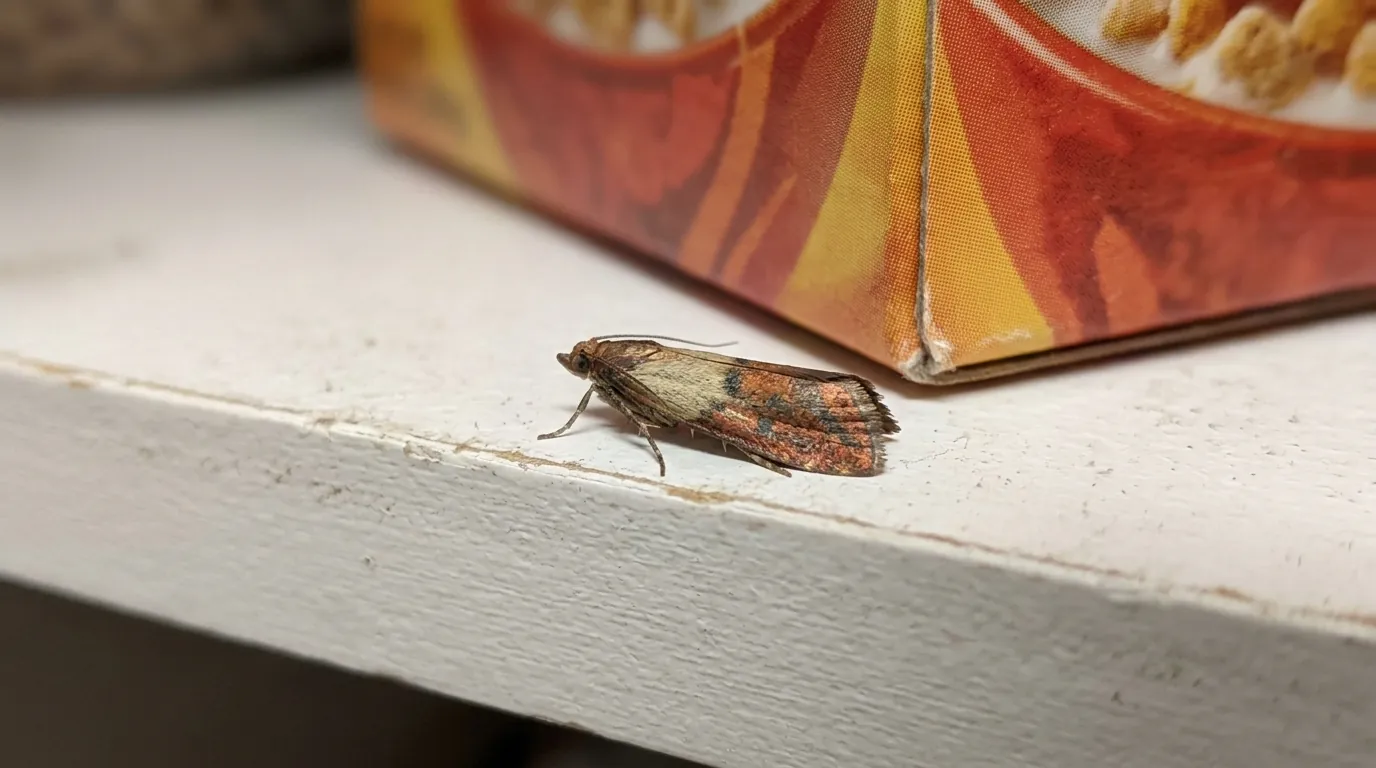
Indian meal moths, coppery wing-tips, flying loops at dusk near the kitchen; each female lays hundreds of eggs on or near food.
Spiders, Wasps & Seasonal
If small moths are flying lazy loops in the kitchen, the infestation is already in a package. Indian meal moths, flour beetles and weevils arrive hidden in dry goods and spread shelf by shelf. We find every infested package, break the breeding cycle with traps and targeted treatment, and reset your pantry so it stays clean.
Call (206) 944-0849 All treatments
Reviewed by Marjorie Tidwell, Pest Prevention Writer. Updated 2026-10-05.
In short: Call (206) 944-0849 if you are seeing small moths in the kitchen, webbing in flour or cereal, or tiny beetles in grains. We inspect every dry-goods package including the unopened ones, remove and document the infested stock, place pheromone traps that break the moth breeding cycle, treat shelf cracks and crevices without spraying food zones, and set up the sealed-storage reset that prevents round two.
What this treatment covers
Pantry infestations are grocery-borne: Indian meal moth eggs, flour beetle adults or weevil-infested kernels ride home inside a package, mature on the shelf, and spread to neighbors, and by the time adult moths are visible the population spans multiple products. The defining mistake of home treatment is incompleteness, finding three infested bags and missing the fourth, because one surviving package restarts the whole cycle; the defining feature of ours is that every dry-goods package gets opened or examined, including sealed ones, since larvae chew through cardboard, foil and thin plastic with ease.
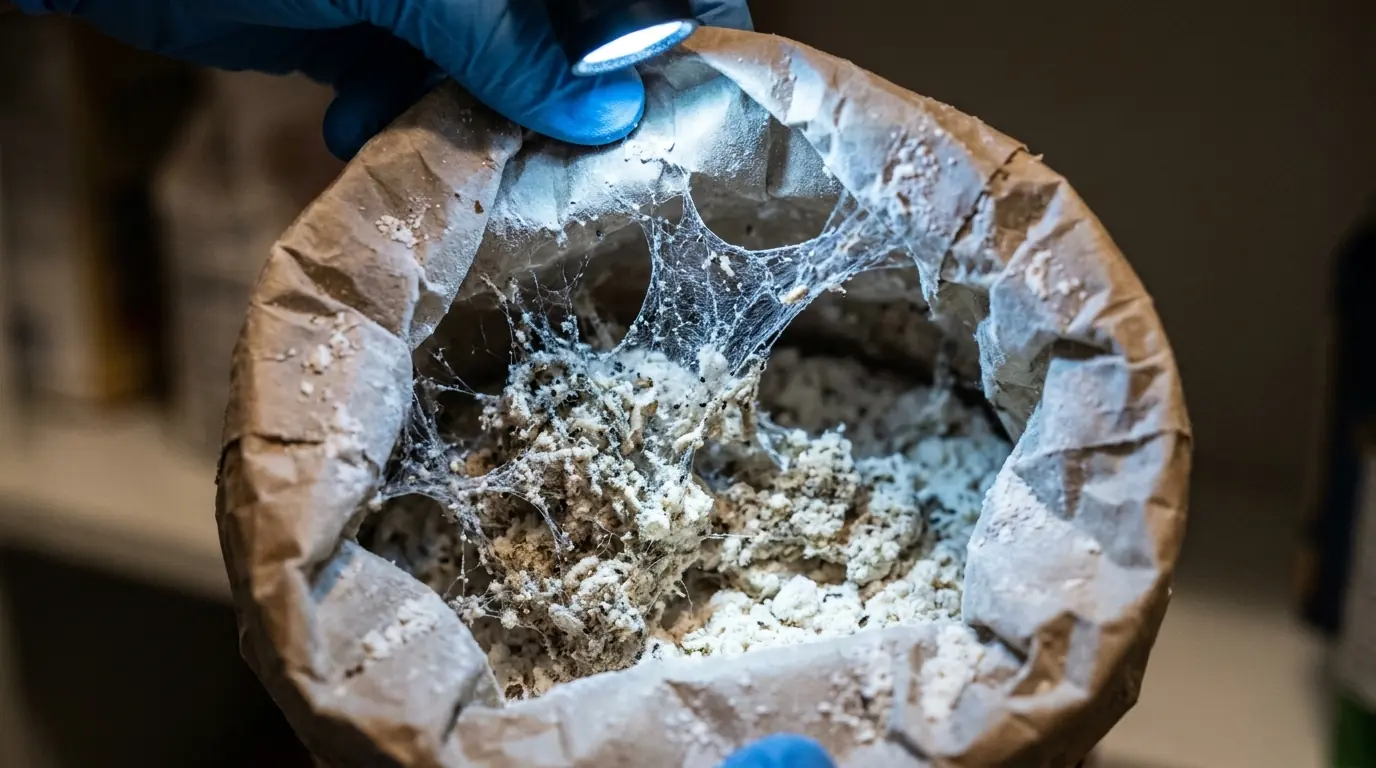
Identification guides the hunt. Indian meal moths leave silk webbing and clumped grains, with wandering larvae that pupate in ceiling corners and cupboard-door hinges far from the food; flour and grain beetles concentrate in processed products; granary and rice weevils develop invisibly inside whole kernels, which is why the sealed bag of rice can be the hidden source. Infested stock is bagged and removed, borderline items get the freezer protocol, and shelf cracks, hinge gaps and the crevices where pupae hide get vacuumed and treated with crack-and-crevice precision, never with sprays across food surfaces.
Pheromone traps then shoulder the cleanup: lures that intercept male meal moths break the breeding chain and double as monitors telling us the kitchen has gone quiet. The reset finishes it, airtight storage for vulnerable staples, first-in-first-out rotation, and the bay-leaf-grade folklore separated from what actually works, in writing.
Catch it early
Indian meal moths, coppery wing-tips, flying loops at dusk near the kitchen; each female lays hundreds of eggs on or near food.
Silk mats binding cereal, flour, nuts or pet food into clumps are larval feeding sign, and that package is the epicenter.
Caterpillars wandering walls and ceiling corners are meal moth larvae leaving food to pupate; their trails point back to the shelf.
Reddish-brown beetles in flour, baking mixes or cereal mark a flour beetle population cycling through processed goods.
Weevils develop inside whole grains; emergence holes in rice, popcorn or beans reveal the infestation that sealed bags hid.
Bulk bags of kibble and seed are the most common overlooked source, seeding kitchen reinfestations from one room away.
The Seattle angle
Seattle's food culture feeds this pest profile in the most literal way. This is a bulk-bin and big-pantry city: grains, flours, nuts, dried fruit and specialty baking goods bought in quantity and stored long, often from bins whose turnover and sourcing vary, and every one of those habits raises the odds that an infested lot comes home. Mild indoor temperatures year-round keep development ticking through winter months that would pause it in colder climates, and the well-sealed modern kitchen holds the stable conditions stored-product insects prefer.
The garage and pantry overflow typical of Seattle households adds the second front: bulk pet food, birdseed for the year-round feeder culture, and emergency staples stored and forgotten are the reservoir packages our inspections find most often, quietly reseeding kitchens that were cleaned perfectly. It is why the hunt here never stops at the kitchen door, and why the sealed-storage reset covers the garage shelf too.

How the job runs
Moths, webbing, beetles or holed grain; keep suspect packages, do not toss them yet.
Kitchen, pantry, garage and pet food, opened and sealed alike, until the source list is complete.
Infested stock bagged out with a written loss list; borderline items get the freezer protocol.
Shelf cracks, hinges and pupation corners vacuumed and treated with precision, food zones left unsprayed.
Pheromone monitors break the breeding cycle and prove the quiet; sealed storage closes the loop.
Honest numbers
Pantry work prices in the low-to-middle of the published $95 to $550 Seattle one-time band for most kitchens. What moves it:
The loss list is the real cost driver in heavy infestations, and we document it cleanly for your own accounting. Our quote covers the hunt, treatment, traps and reset, written before a single package is opened.
Make the visit count
Straight answers
They are a contamination problem, not a toxicity one: webbing, larvae and frass spoil food rather than poison it, and nobody is harmed by the moth that flew past dinner. The urgency is economic, every week of breeding widens the loss list.
Two answers. Most arrive already inside a purchased package, egg or larva, with sealing irrelevant; and meal moth larvae chew through cardboard, foil liners and thin plastic, so a shelf infestation spreads into 'sealed' neighbors. Only hard containers, glass, thick plastic, gasket lids, actually stop them.
Freezing works: several days at household freezer temperatures kills all stages, and it is exactly our protocol for borderline and high-value items like specialty flours. The judgment call is contamination, since webbing and frass make food unappetizing even sterile, and the triage sorts that honestly.
No, and anyone selling them that way is optimistic. Traps intercept male moths, which suppresses breeding and, crucially, tells us whether the kitchen has gone quiet; they do nothing against the larvae in an unfound package. Hunt first, trap second.
Because the bulk pet food, birdseed and long-term staples stored there are the most common source packages in this city, and a kitchen cleaned perfectly gets reseeded from one room away. The hunt follows the food, wherever the household keeps it.
It can, which is why the reset matters more than the treatment: vulnerable staples decanted into hard sealed containers, first-in-first-out rotation, and a monitor trap kept in place. Run that system and the next infested package you bring home dies alone in its jar instead of taking the shelf.
Webbing in the flour this morning? The hunt starts with a call.
Call (206) 944-0849
Talk to a technician
Every package checked, the breeders removed, traps proving the quiet, and a pantry that stays clean. Call and keep the evidence bagged.
Call (206) 944-0849Answered 24/7 from our Seattle service office.
Find the office
Our service office sits at 1440 5th Ave in Seattle, with the head office over in Aberdeen. Calls route to a person, not a queue, any hour.