Big fast spiders every fall
Giant house spiders, palm-sized leg spans, sprint across floors in late summer seeking mates. Harmless, numerous, and controllable.
Spiders, Wasps & Seasonal
Every September the giant house spiders start sprinting across Seattle living rooms, and the phone lights up. Most of what you are seeing is harmless but unwelcome. We de-web the structure, treat the perimeter and harborage zones, seal the entry gaps, and give you a straight read on the one or two species actually worth caution here.
Call (206) 944-0849 All treatments
Reviewed by Marjorie Tidwell, Pest Prevention Writer. Updated 2026-10-05.
In short: Call (206) 944-0849 and tell us what you are seeing and where. We identify the species, remove webbing and egg sacs across the structure, apply targeted treatment to the perimeter and harborage areas like crawl spaces and garages, and seal the gaps spiders follow indoors. Fall treatments cut indoor sightings sharply within a week or two.
What this treatment covers
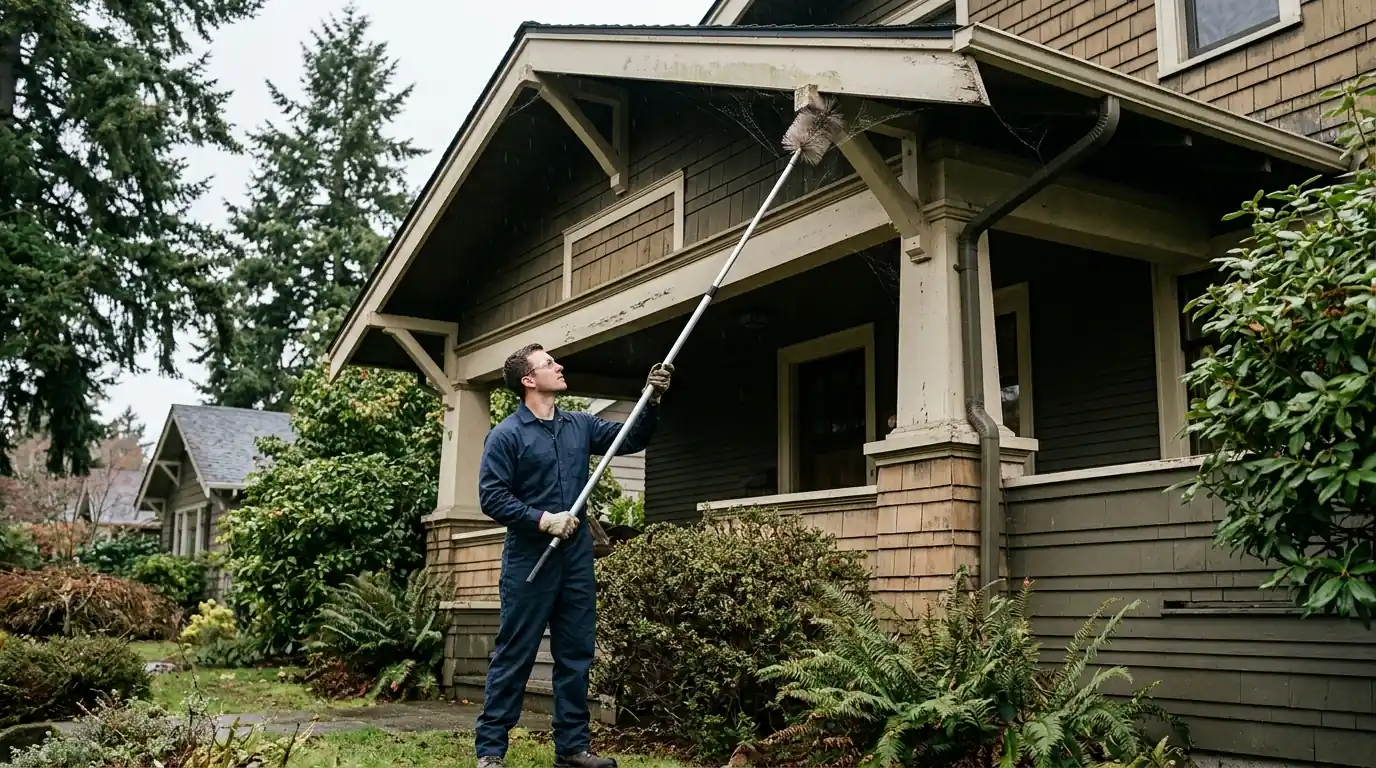
Honest spider control starts with how spiders work: they go where prey insects are and where structure offers undisturbed harborage. Treating them means attacking all three legs. De-webbing comes first, a physical sweep of eaves, soffits, window frames, deck undersides, fence lines and the crawl space entry, removing webs and the egg sacs that each hold dozens to hundreds of spiderlings; it is unglamorous and it is the single highest-value step on the visit.
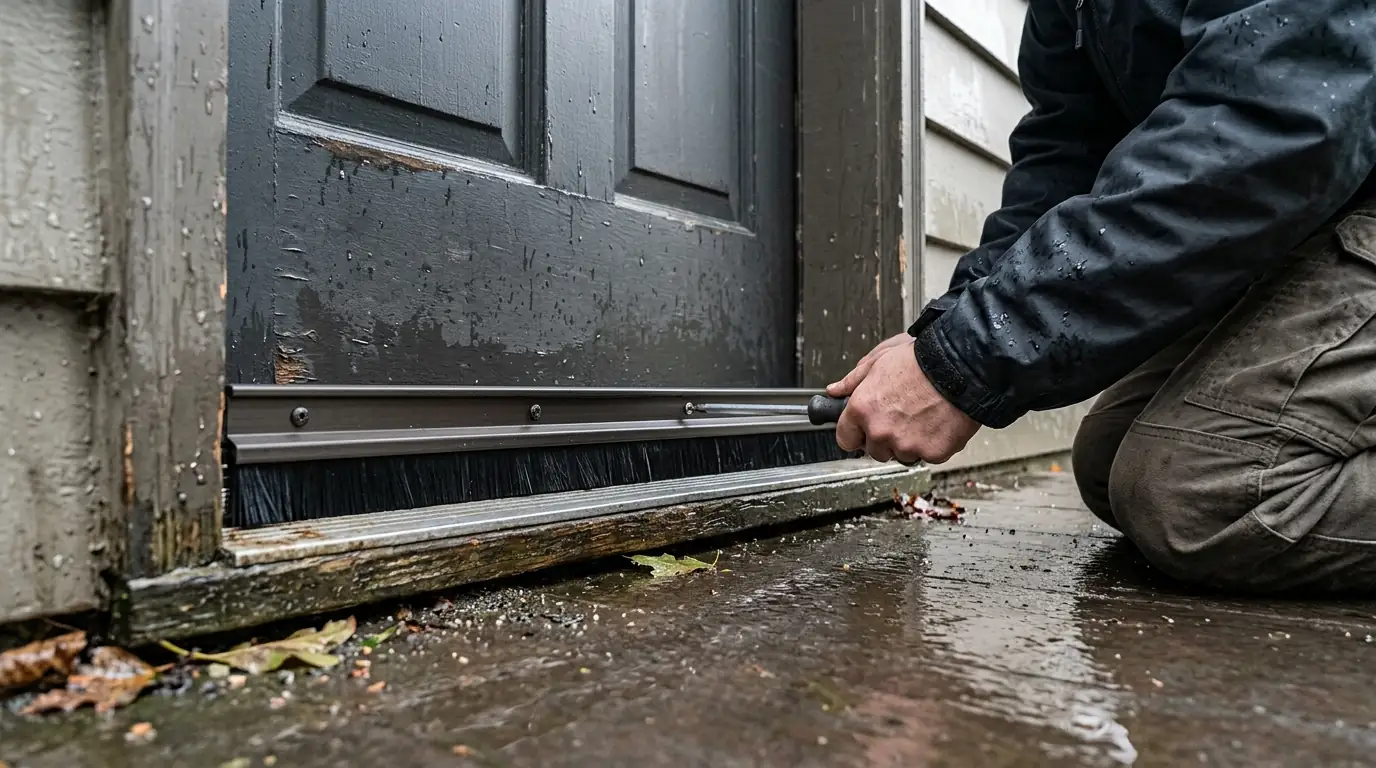
Targeted treatment follows: applications along the foundation, into weep gaps and harborage voids, and in the crawl space and garage where hunting species rest by day. Because spiders feed on other insects, our perimeter work also suppresses the prey base, which is why spider jobs quietly double as general insect control. Finally, exclusion: door sweeps, screen gaps and the quarter-inch openings around penetrations get sealed, because the autumn indoor surge is literally spiders walking in.
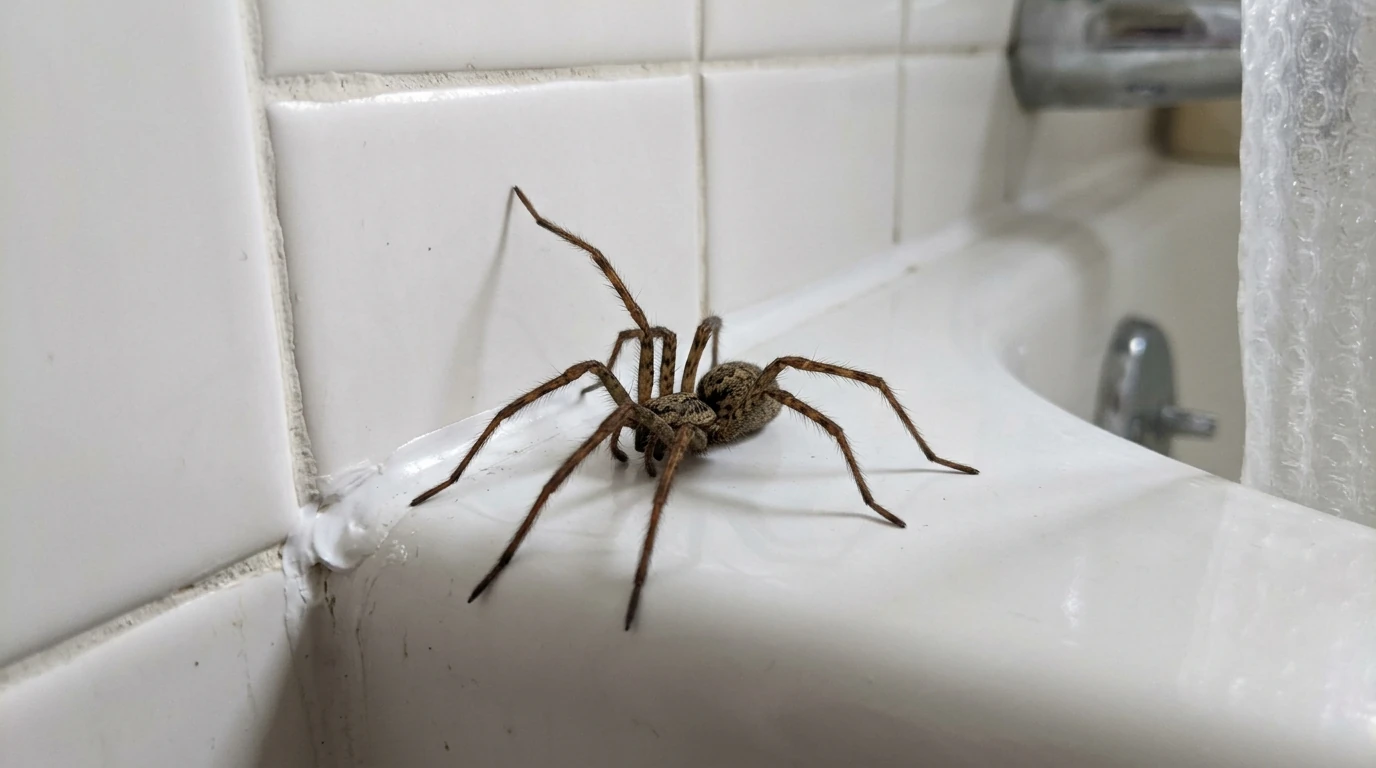
On species, we deal in facts rather than fear. The big fast one in your bathtub is the giant house spider, alarming and harmless; the hobo spider, long accused of necrotic bites, has been largely cleared by current research and is no longer classed as medically significant; black widows occur but are uncommon on the wet side of the state; and the brown recluse does not live in western Washington at all, whatever the internet says.
Catch it early
Giant house spiders, palm-sized leg spans, sprint across floors in late summer seeking mates. Harmless, numerous, and controllable.
Orb and cobweb builders re-webbing eaves and porch lights nightly mean a strong prey base; the light is feeding the food chain.
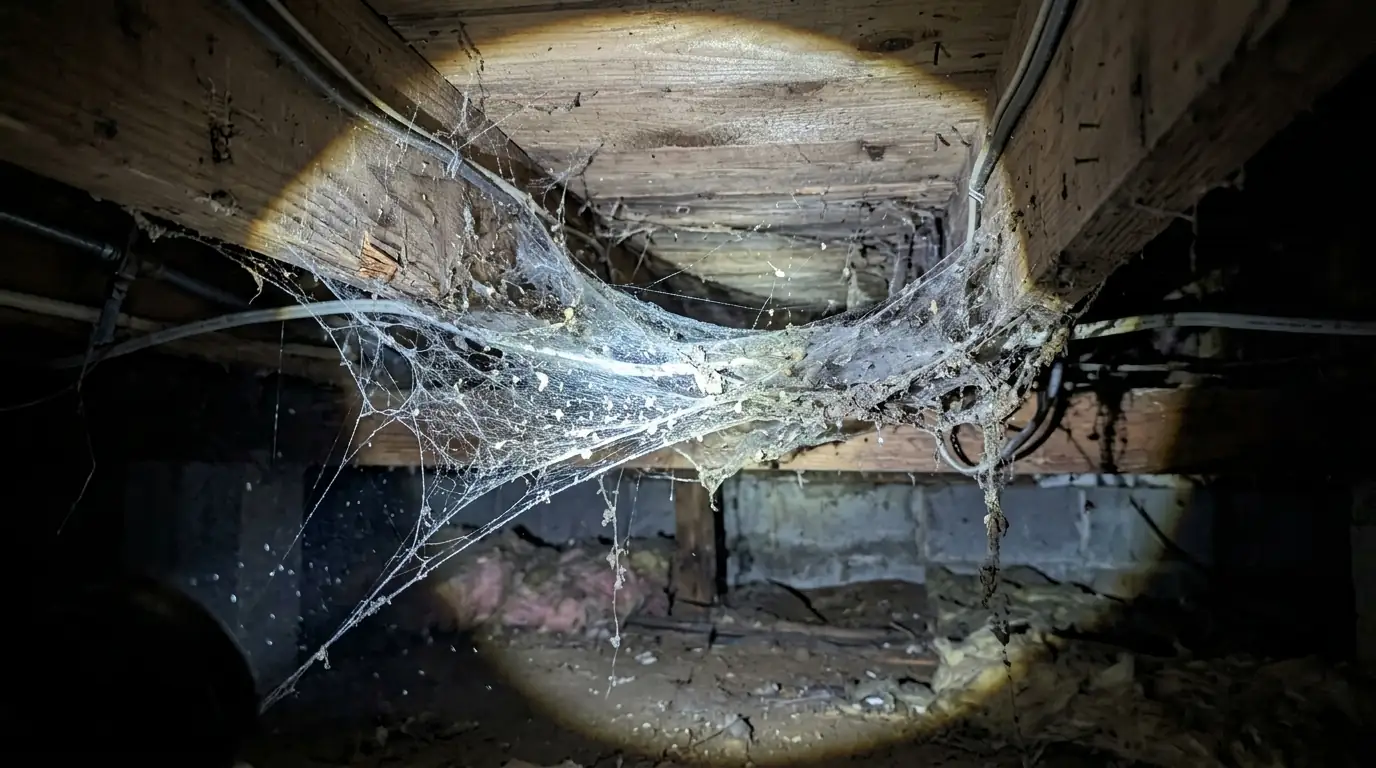
Dense sheet webbing at the crawl entry or across joist bays marks heavy harborage one level below the living space.
Silken sacs the size of a pea hold the next hundred spiders; finding several means next season is already scheduled.
Widows do occur in sheltered, dry spots; do not handle it, note the location, and let us confirm the identification.
Most 'spider bites' here are other causes entirely. Catch or photograph any spider involved and we will identify it honestly.
The Seattle angle
Seattle's signature spider event is seasonal and predictable. Giant house spiders and their relatives mature in late summer, and from roughly August through October the males abandon their webs to roam for females, which is when a hand-sized spider crosses your living room at speed. They did not invade that week; they had been living quietly in the crawl space, garage or wall voids all along, which is why the roughly 62 percent of city homes sitting over crawl spaces report the sprint so reliably, and why our fall treatments focus on those harborage zones rather than just the baseboards where you saw one.
The climate stocks the pantry. A region with around 150 wet days a year carries a dense year-round insect prey base, so Puget Sound structures support more resident spiders than drier metros, concentrated wherever moisture gathers insects: foundation plantings, porch lights, downspout splash zones. The silver lining is medical: the wet side of the Cascades hosts no brown recluse and few widows, so Seattle spider control is a comfort-and-numbers service, and we price and pitch it that way.
How the job runs
What it looks like, where and when. Fall sprint calls get scheduled ahead of the peak when possible.
Species confirmed, then the full de-web: eaves, frames, decks, fences, crawl entry, egg sacs included.
Perimeter, voids, crawl space and garage applications where spiders rest and prey insects gather.
Door sweeps, screen repairs and gap sealing close the routes of the autumn surge.
You get the honest schedule: for most homes one late-summer treatment a year does the job.
Honest numbers
Spider work prices within the general one-time band, published locally at roughly $95 to $550 with an average near $170, and most single-family jobs land low-to-middle in it. What moves the number:
Properties backing greenbelts or water, where webbing rebuilds fast, sometimes choose quarterly service, and the comparison below is honest about when that is worth it.
| One-time fall treatment | Quarterly plan | |
|---|---|---|
| Best for | Most homes: one well-timed visit before the sprint | Greenbelt and waterfront lots that re-web fast |
| Visits | One, in late summer | Four, with de-webbing each visit |
| Coverage | Season-long reduction in sightings | Year-round suppression of spiders and prey |
| Typical cost | Low-middle of the $95 to $550 band | Commonly $95 to $185 per visit |
Make the visit count
Straight answers
No. They are fast and genuinely large, which is a bad combination for the nerves, but they are not medically significant and they bite people about as readily as they file taxes. Control is about numbers and comfort, and both respond well to treatment.
That reputation has not survived the research. Current evidence cleared the hobo spider of the necrotic bites once attributed to it, and it is no longer considered medically significant. Western Washington's genuinely cautious list is short: the uncommon black widow, in dry sheltered spots.
No. The brown recluse does not occur in western Washington, and essentially every local 'recluse bite' story involves either a misidentified spider or a wound with another cause. If anyone shows you one here, bring it to us; it will be something else.
Not well. Web-building spiders touch treated surfaces lightly, which is why de-webbing, egg sac removal, prey suppression and sealing carry so much of the result. A spray-only service is selling you the least effective quarter of the job.
Usually three reasons stacked: a crawl space or garage offering harborage, exterior lighting feeding a prey base, and vegetation or clutter against the walls bridging spiders in. The inspection reads your property's version and the treatment targets it.
Late summer, just ahead of the August-to-October sprint, is the highest-value single visit: it removes the year's egg sacs and intercepts the roamers. Spring treatment helps web-heavy exteriors; year-round plans suit only the heaviest properties.
Fall sprint season already? Book before the peak.
Call (206) 944-0849
Talk to a technician
One de-web, one treated perimeter, sealed doors and an honest species read. Call any hour and we will time it right.
Call (206) 944-0849Answered 24/7 from our Seattle service office.
Find the office
Our service office sits at 1440 5th Ave in Seattle, with the head office over in Aberdeen. Calls route to a person, not a queue, any hour.