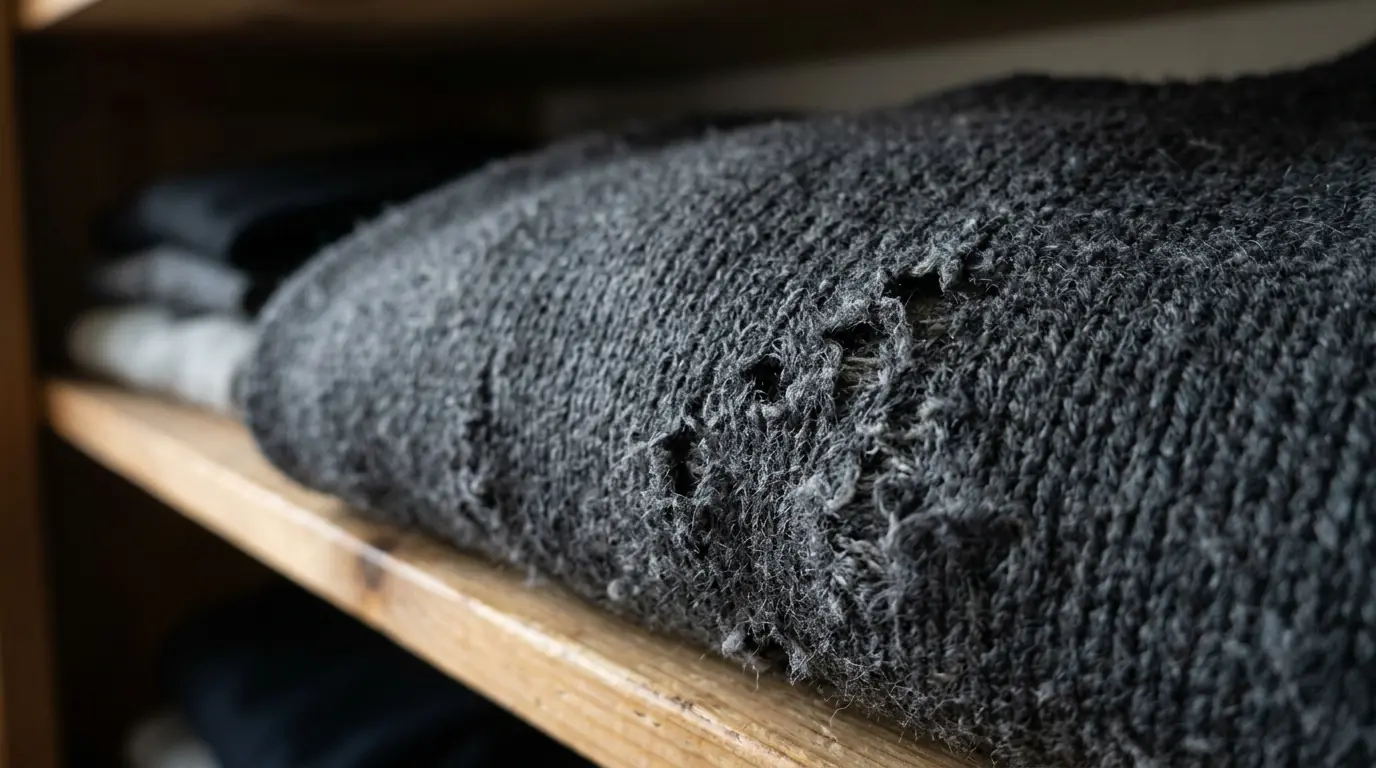
Small irregular holes in wool
Holes in sweaters, scarves and blankets, often in hidden areas like underarms and folds, point to larval feeding.
Interior Infestations
The small moth fluttering in the closet is not the one eating your sweater; its larvae are. Webbing clothes moths and casemaking moths feed on wool, cashmere, silk, fur and feathers in dark, quiet storage. We locate every larval site, treat it directly, and set up monitoring and storage that keep them from coming back.
Call (206) 944-0849 All treatments
Reviewed by Marjorie Tidwell, Pest Prevention Writer. Updated 2026-10-05.
In short: Call (206) 944-0849 if you are finding small holes in wool or silk, silky webbing or tiny cases in closets and drawers, or small buff-colored moths that flutter rather than fly to lights. We inspect closets, drawers, rugs and upholstery to find feeding larvae, treat each site, help you triage infested items, and place pheromone monitors to confirm the cycle has stopped.
What this treatment covers
Clothes moths are a separate problem from pantry moths and from carpet beetles, though all three are often confused. Webbing clothes moths spin silky tunnels and mats where larvae feed; casemaking clothes moths carry a small portable case made of fibers from the fabric they are eating. Both target keratin, the protein in wool, cashmere, silk, fur, feathers and felt, and both prefer fabric that is stored undisturbed and slightly soiled.
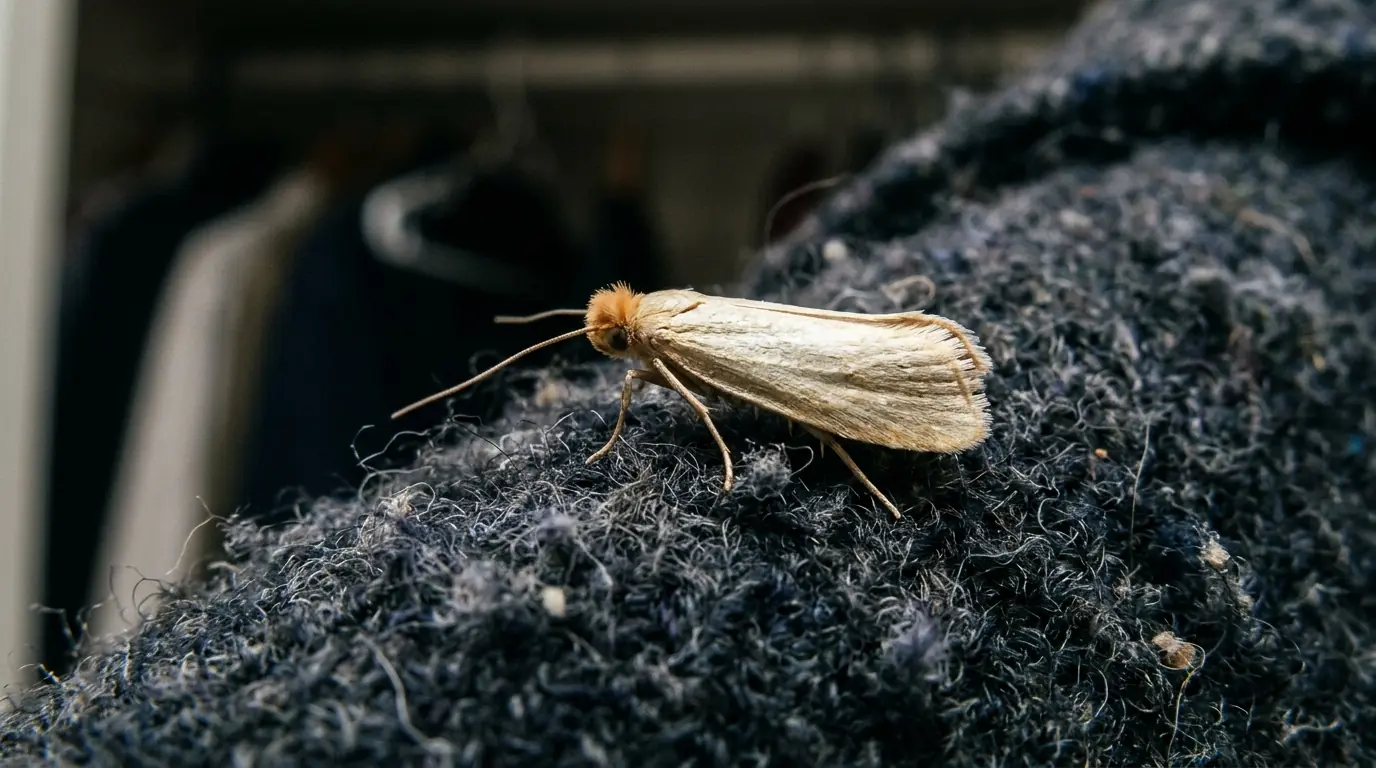
Adult clothes moths are small, about a quarter inch, and buff or golden. They avoid light and tend to flutter low in closets rather than flying to lamps, which is a useful way to tell them from pantry moths. Seeing adults means larvae are already feeding somewhere nearby, often in a sweater stored at the back of a shelf, a wool rug under a sofa, or a felt piano hammer.
Treatment starts with a careful inspection of closets, drawers, storage boxes, rugs, upholstery and anything wool or feather-filled. Infested items are triaged: many can be saved by dry cleaning, hot washing where safe, or freezing; badly damaged pieces may need to go. Larval sites are treated directly, and pheromone traps monitor male moths so we know when activity has stopped. Storage changes finish the job.
Catch it early
Holes in sweaters, scarves and blankets, often in hidden areas like underarms and folds, point to larval feeding.
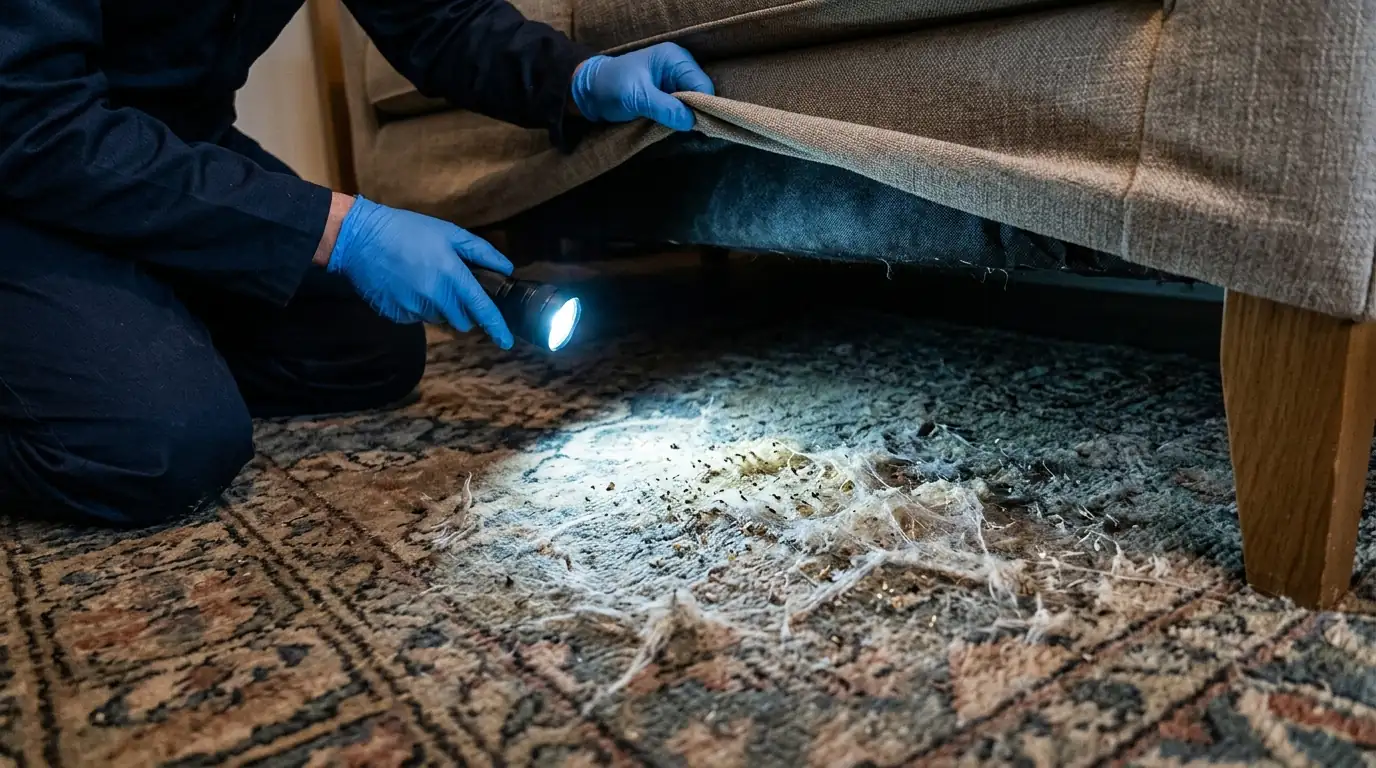
Fine silk mats on fabric or in rug pile are a webbing clothes moth signature.
Small tube-like cases made of fabric fibers mean casemaking clothes moth larvae.
Adults flutter low in closets and corners rather than flying to lamps.
Damage under furniture or along edges where rugs are rarely moved.
Holiday sweaters, heirloom blankets and stored furs are the most common targets.
The Seattle angle
Seattle is a wool-wearing city: sweaters, coats and blankets come out for much of the year and are often stored for long stretches in between. Clothes moths thrive on exactly that pattern, especially when garments go into storage after being worn and not cleaned. The region's mild indoor temperatures allow development to continue year-round instead of stalling in winter.
Older homes with wool rugs, felt-lined furniture, closets that are rarely opened and attic storage add to the risk. The good news is that clothes moths are very controllable once the larval sites are found, and simple storage habits keep them from returning.
How the job runs
Photos of holes, webbing or cases help us confirm it is clothes moths.
Closets, drawers, rugs and upholstery checked for larvae and damage.
We help sort what can be cleaned, frozen or treated, and what is lost.
Direct treatment where larvae feed, plus cracks and edges where they hide.
Pheromone traps confirm the cycle is broken; storage protocol prevents return.
Honest numbers
Clothes moth jobs are quoted after inspection, because one closet is a very different job from a house full of wool rugs and storage. What sets the price:
The written quote covers inspection, treatment and monitoring. Professional cleaning of garments or rugs, if needed, is separate and can be done by a cleaner of your choice.
Make the visit count
Straight answers
No. Pantry moths feed on stored food; clothes moths feed on wool and other animal fibers. They need different treatments.
Mothballs only work in sealed containers at high concentrations and leave strong fumes. Cleaning, sealed storage and treating larval sites work better.
Cedar has a mild effect at best and fades over time. Sealed, clean storage is more reliable.
Many can be saved by dry cleaning, washing where safe, or freezing. Holes will remain but the larvae and eggs will be killed.
Clothes moths leave silky webbing or fiber cases; carpet beetles leave bristly shed skins. Identification decides the treatment.
Treatment kills active larvae quickly; monitoring over several weeks confirms no new generation.
Holes in the good sweater? Call before more go.
Call (206) 944-0849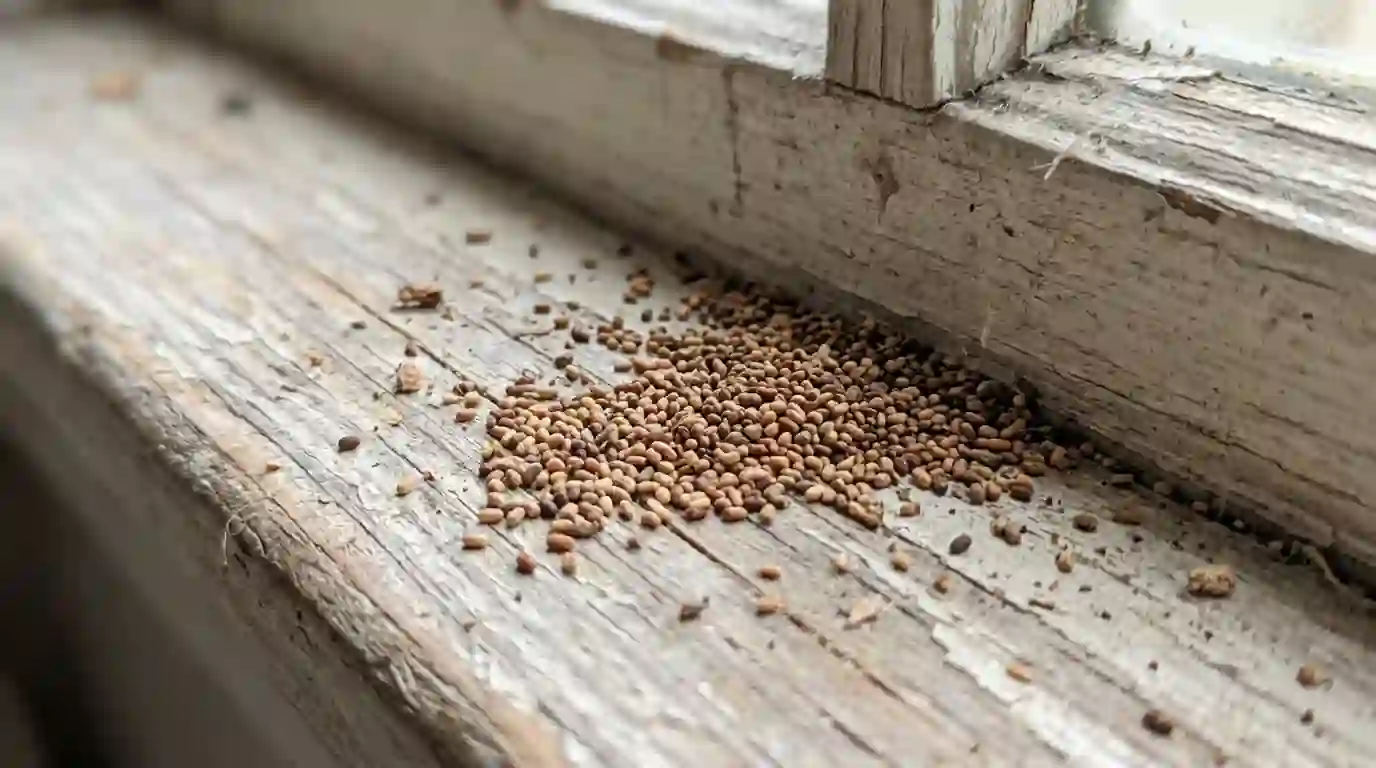
Talk to a technician
Larval sites found, treated and monitored, with a storage plan that keeps moths out. Call and tell us what you found.
Call (206) 944-0849Answered 24/7 from our Seattle service office.
Find the office
Our service office sits at 1440 5th Ave in Seattle, with the head office over in Aberdeen. Calls route to a person, not a queue, any hour.