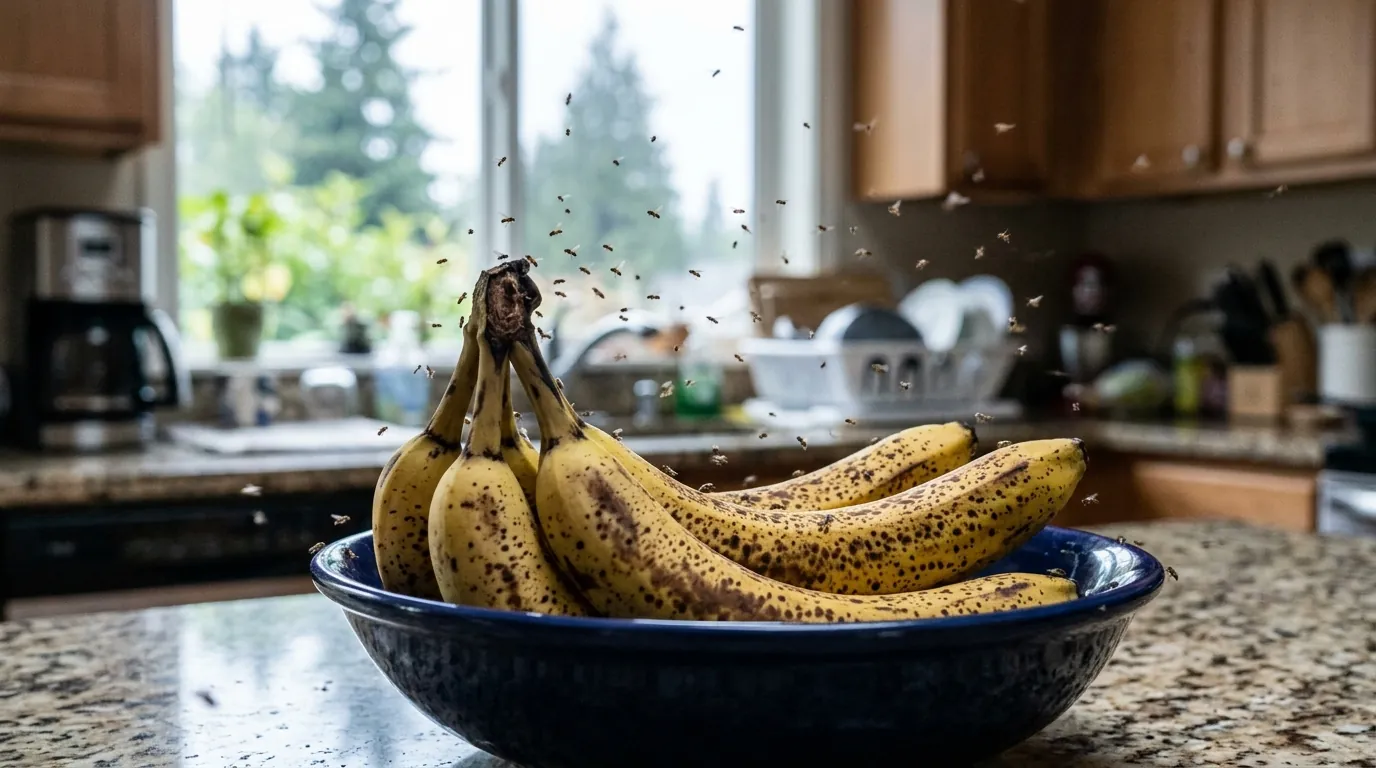
Tiny tan flies hovering over fruit
Fruit flies, breeding in fermenting produce, bin films or a hidden spill; the cloud marks the kitchen, the nursery hides nearby.
Interior Infestations
Every fly problem is a breeding-site problem wearing wings. Fruit flies, drain flies, house flies, cluster flies and fungus gnats each breed somewhere specific, and swatting the fliers while the site keeps producing is a treadmill. We identify the species, find the site, and remove it.
Call (206) 944-0849 All treatments
Reviewed by Marjorie Tidwell, Pest Prevention Writer. Updated 2026-10-05.
In short: Call (206) 944-0849 and describe the fly: tiny and hovering near fruit, fuzzy on the bathroom wall, fat and buzzing at windows, or small ones rising from houseplants. The species tells us where it breeds. We locate and eliminate the site, treat drains with bio-enzyme cleaners where they are the nursery, handle structural attractants, and the adult cloud dies off within days of losing its source.
What this treatment covers
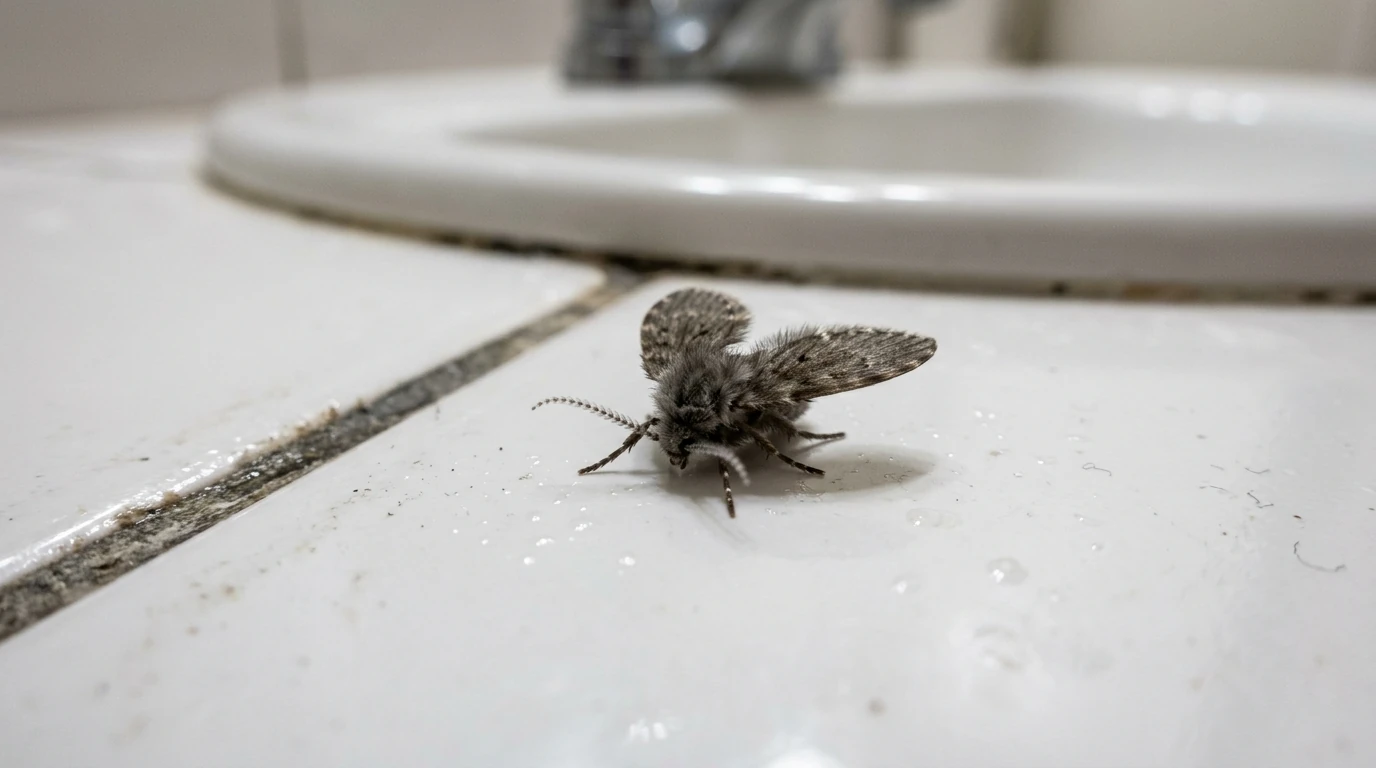
Fly control is diagnostic work. Fruit flies breed in fermenting organic material: the soft spot in a banana, the recycling bin's syrup film, the forgotten potato, a wine spill under the fridge. Drain flies, fuzzy and moth-like on bathroom walls, breed exclusively in the organic gel film inside drains, overflow channels and rarely used traps. House flies arrive from garbage, compost and animal waste outdoors; fungus gnats rise from chronically wet houseplant soil; and cluster flies, the fat sluggish ones at windows in fall and late winter, are not breeding indoors at all, but overwintering in wall voids and attics after a summer spent parasitizing earthworms in the lawn.
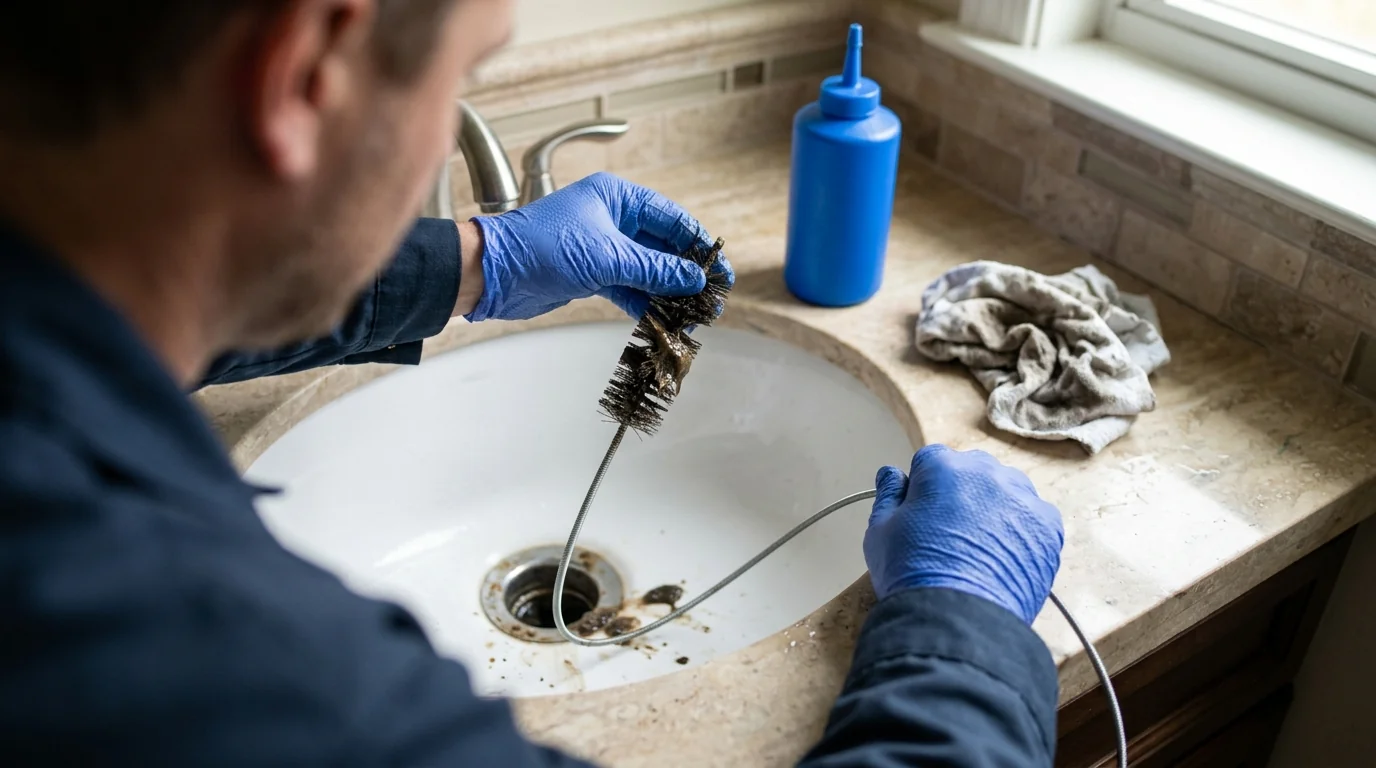
Each diagnosis has its own fix, and almost none of them is spraying the air. Fruit fly work is a source hunt through produce, drains, bins and spill shadows, finished with traps that mop up the orphaned adults. Drain flies get the drain's biofilm removed, mechanically brushed and treated with bio-enzyme cleaners that digest the gel, because bleach poured down a pipe streams past the film and fixes nothing. House fly pressure is sanitation and exclusion: lids, screens, door discipline. Fungus gnats are a watering-schedule conversation with a soil treatment. Cluster flies get their entry gaps sealed in late summer, before the autumn move-in, which is the only time sealing beats them.
The adult cloud, whichever species, collapses on its own within days of the nursery closing; traps and targeted knockdown just speed the ending. That is why our fly visits look like plumbing-adjacent detective work, and why the results hold.
Catch it early
Fruit flies, breeding in fermenting produce, bin films or a hidden spill; the cloud marks the kitchen, the nursery hides nearby.
Drain flies, breeding in the gel film of a drain or overflow channel, often one specific fixture a sock test will name.
Cluster flies overwintering in your walls, emerging confused on warm days; an autumn-entry story, not a sanitation one.
Fungus gnats, breeding in constantly moist potting soil; the watering schedule is the infestation.
House flies commuting from an outdoor source: garbage, compost, or animal waste within a couple hundred feet.
A sudden bloom of large flies in one closed room can mean a dead animal in the void; that is a different service and a faster call.
The Seattle angle
Seattle's admirable waste habits come with a fly tax. Universal curbside compost bins, backyard compost culture and serious recycling mean every block maintains managed fermentation, and in the mild wet months those bins run warm enough to breed fruit flies and house flies steadily; bin hygiene and lid discipline are genuinely half of residential fly control here. Indoors, the climate's gift to drain flies is humidity: traps and overflow channels in Puget Sound bathrooms rarely dry out, so the biofilm nursery, once established, runs year-round.
Cluster flies write the calendar's bookends. Late each summer they probe south- and west-facing walls for entry gaps, overwinter in the voids of the city's older housing stock, and stagger out at windows on warm winter and spring days, baffling homeowners who know their kitchen is spotless. The fix is architectural and seasonal, sealing the sun-side gaps before Labor Day, and it pairs naturally with the rodent exclusion work those same pre-1980 walls usually need anyway.
How the job runs
Size, behavior and room narrow the species on the phone, and the species names the site type.
Produce, bins, spill shadows, drains, soil or voids, until the actual breeding site is in hand.
Removal, drain biofilm treatment, soil correction or void work, matched to the species.
Traps and targeted knockdown collapse the orphaned cloud in days.
Screens, lids, thresholds and the cluster fly sealing calendar keep the next generation outside.
Honest numbers
Fly work prices low-to-mid in Seattle's published $95 to $550 one-time band, because the visit is diagnosis and source work more than product volume. The variables:
If the hunt points to a dead animal in a void or wildlife in the crawl space, we will say so immediately and quote that service instead; flies are sometimes the messenger, and we treat the message honestly.
Make the visit count
Straight answers
Somewhere fermentation is hiding: the recycling bin's film, a juice spill under an appliance, the garbage disposal splash guard's underside, a bag of onions going soft in the pantry, even a drain. Clean counters are not the habitat; a tablespoon of ferment is. The hunt finds it.
Because bleach is a liquid and the nursery is a gel. Poured bleach channels through the biofilm and down the pipe in seconds, touching a fraction of the film where larvae live. The fix is mechanical brushing plus bio-enzyme treatment that digests the gel itself, and it is why the problem survives everyone's bleach phase.
Cluster flies, waking from overwinter inside your wall voids on warm days and heading for light. They entered through sun-side gaps last September, they are not breeding indoors, and the cure is sealing those gaps in late summer plus treating the voids they currently occupy.
House flies are legitimate mechanical disease carriers, moving from waste to food surfaces, which is why food businesses are regulated on them. Fruit and drain flies are lower risk but still track drain and ferment bacteria around kitchens. Either way the fix is the same source work.
They harvest adults, which helps the mop-up and the monitoring, and we use traps for exactly that. What they cannot do is out-produce an active breeding site; a drain film or ripe bin makes flies faster than any ribbon catches them. Source first, traps second.
Sudden one-room blooms of large flies, especially with an odor or near a wall the pets watch, often mean an animal died in the void and the first fly generation just emerged. That is our dead animal removal service, and it is worth calling the same day.
Cloud over the fruit bowl again? The nursery is nearby.
Call (206) 944-0849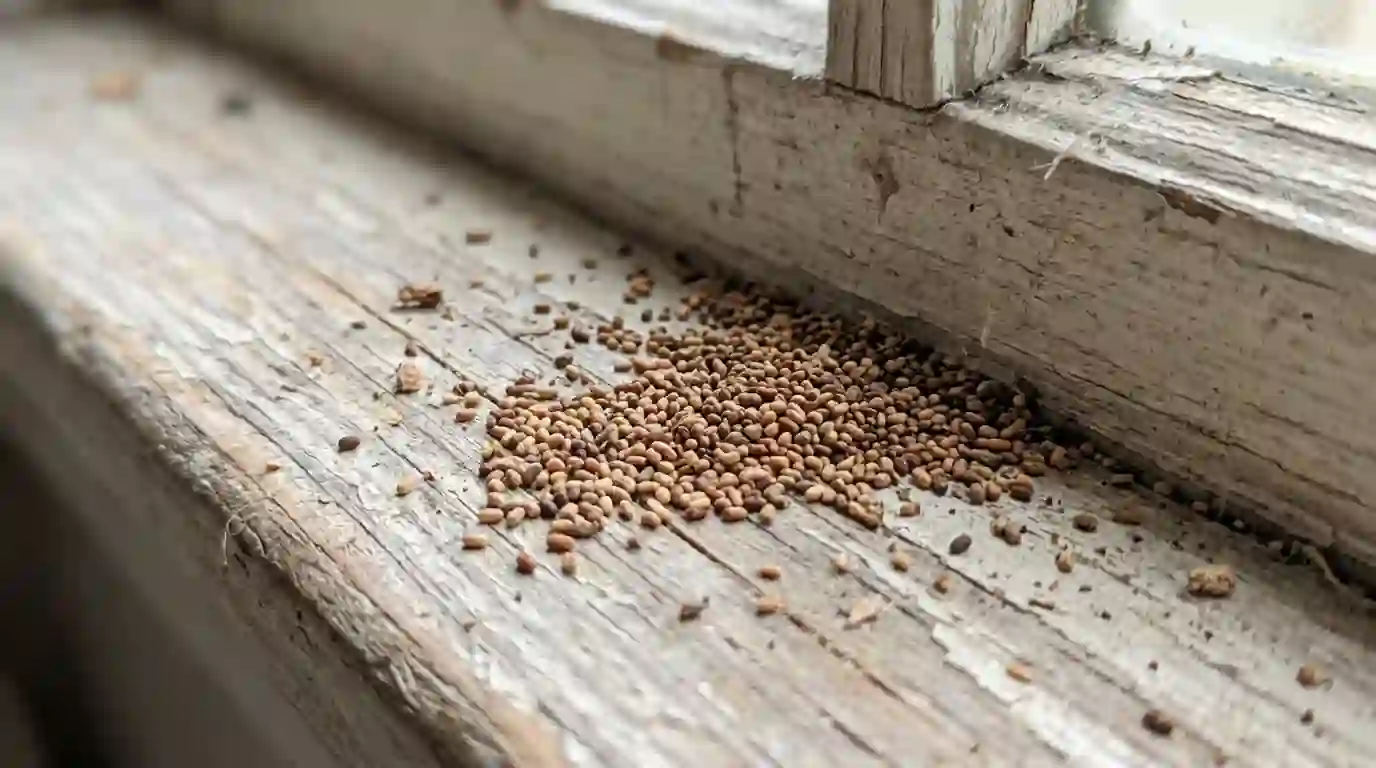
Talk to a technician
Species named, nursery found and removed, drains treated right, routes sealed. Call and describe the fly; we will tell you where it is breeding.
Call (206) 944-0849Answered 24/7 from our Seattle service office.
Find the office
Our service office sits at 1440 5th Ave in Seattle, with the head office over in Aberdeen. Calls route to a person, not a queue, any hour.