Chirping from a vent
Birds chirping inside a dryer, bath or kitchen vent mean a nest is blocking the duct.
Wildlife & Exclusion
A nest in the dryer vent is a fire risk; a flock on the roofline is a mess. Both have clean fixes. Starlings, house sparrows and pigeons nest in vents, eaves, signs and ledges across Seattle. We remove nests lawfully, clean and sanitize droppings, and install vent guards, spikes, netting and deterrents that keep birds off the building.
Call (206) 944-0849 All treatments
Reviewed by Marjorie Tidwell, Pest Prevention Writer. Updated 2026-10-05.
In short: Call (206) 944-0849 if birds are nesting in dryer or bath vents, under eaves, in gutters, or roosting on ledges and signs. We identify the species, remove nests where it is lawful to do so, clean and sanitize the droppings, and install vent guards, spikes, netting or slope deterrents so birds cannot return to the same spot.
What this treatment covers
Bird control starts with species, because the law depends on it. Most native birds are protected under federal law, so their active nests cannot be disturbed, while non-native species such as European starlings, house sparrows and feral pigeons are not covered in the same way. The inspection identifies who is nesting, and the plan respects that: active nests of protected species are left until the young fledge, then removed and the site closed.
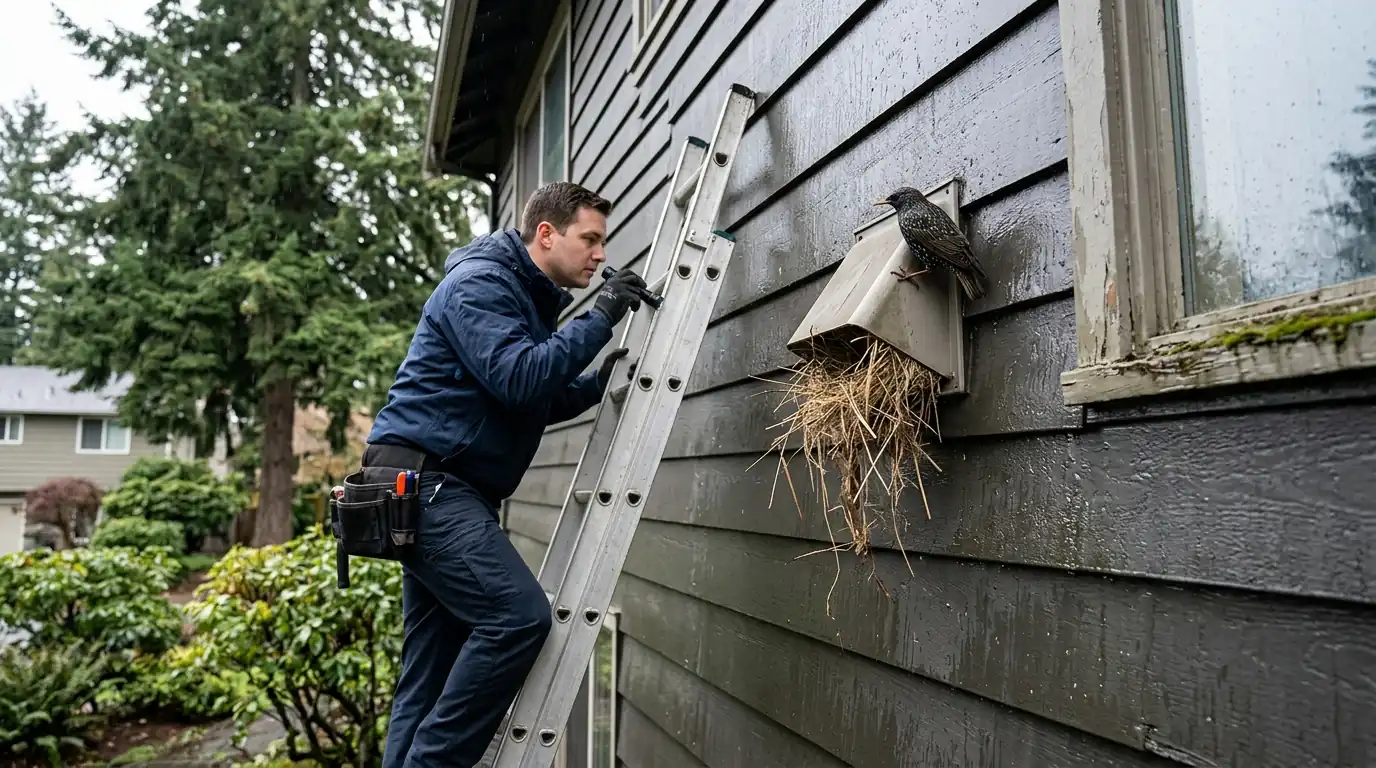
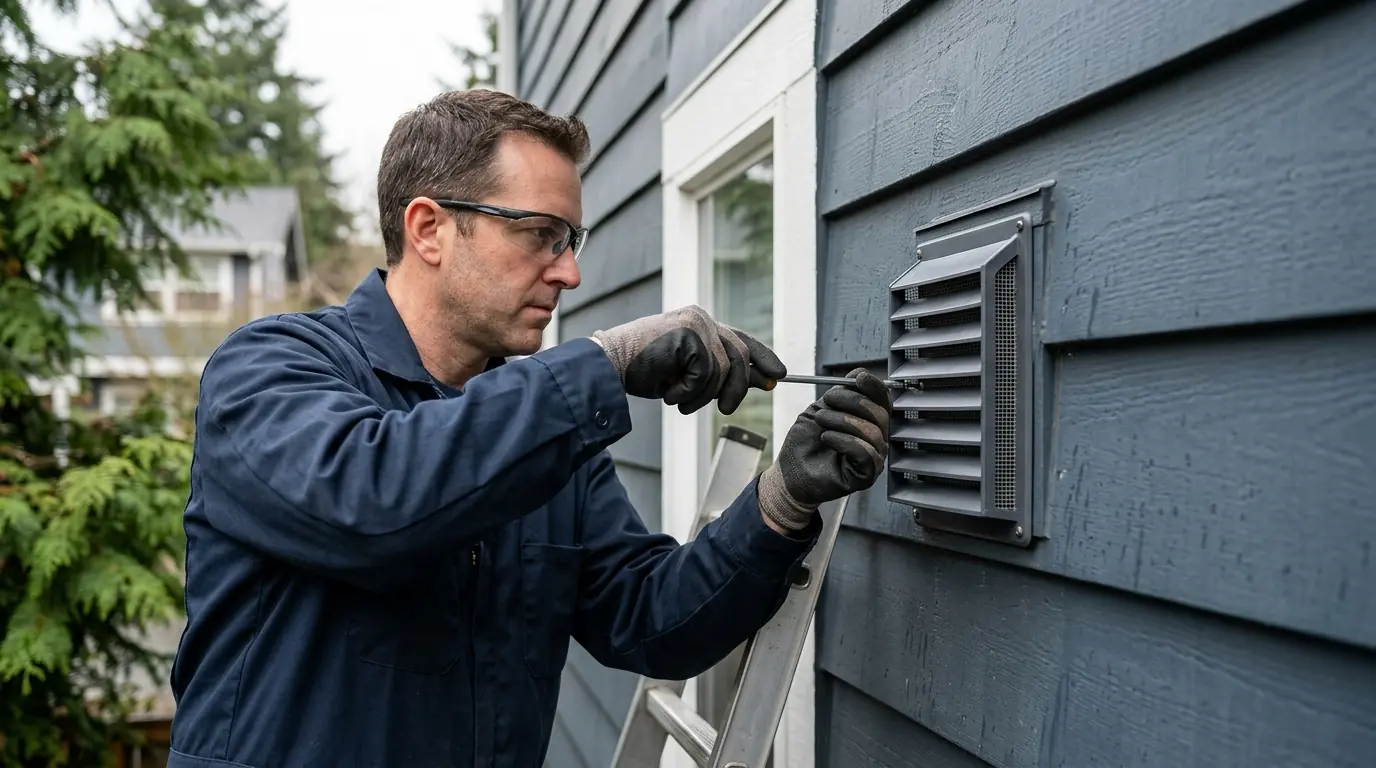
The most urgent calls involve vents. Birds love dryer, bath fan and kitchen exhaust vents, and nests there block airflow; a blocked dryer vent is a recognized fire risk and can push moisture into walls. We clear the nest and debris from the duct and install a bird-proof vent guard that still allows full airflow.
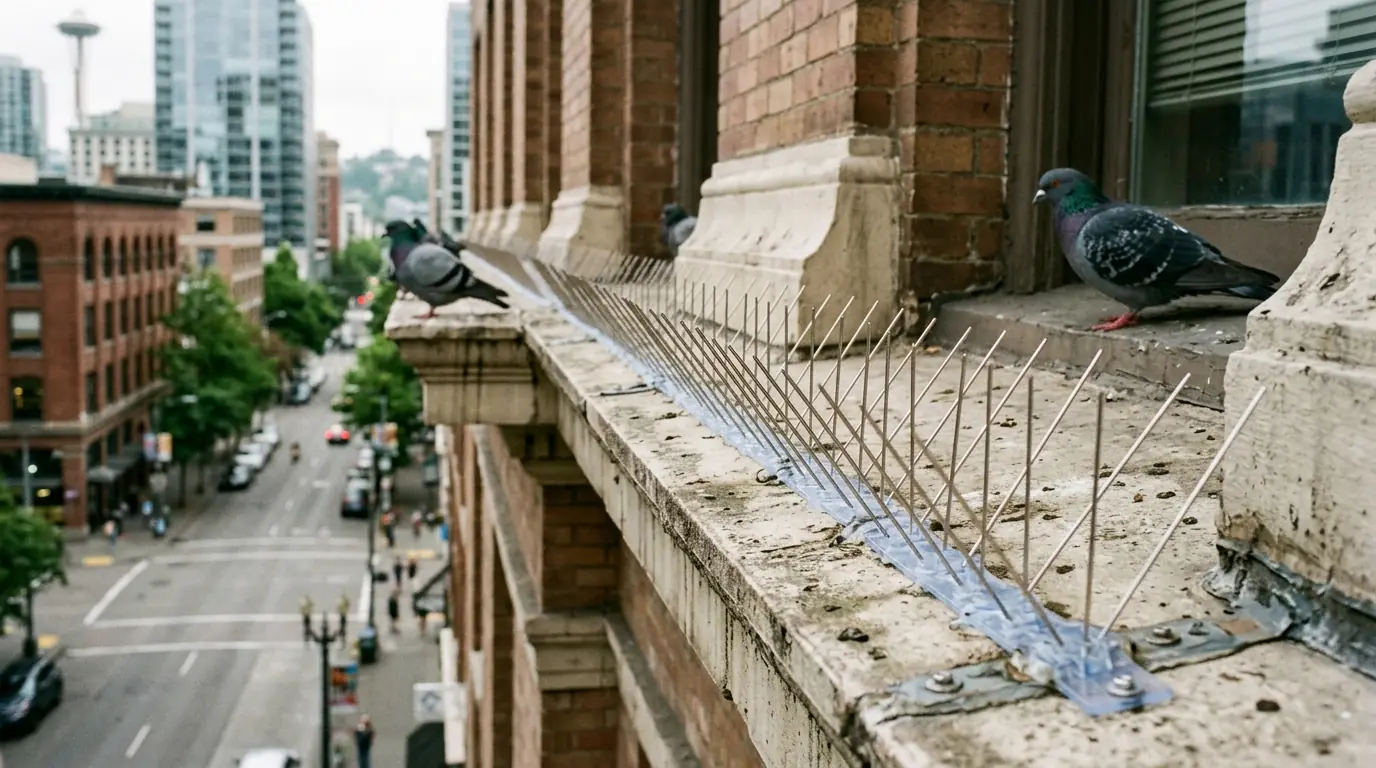
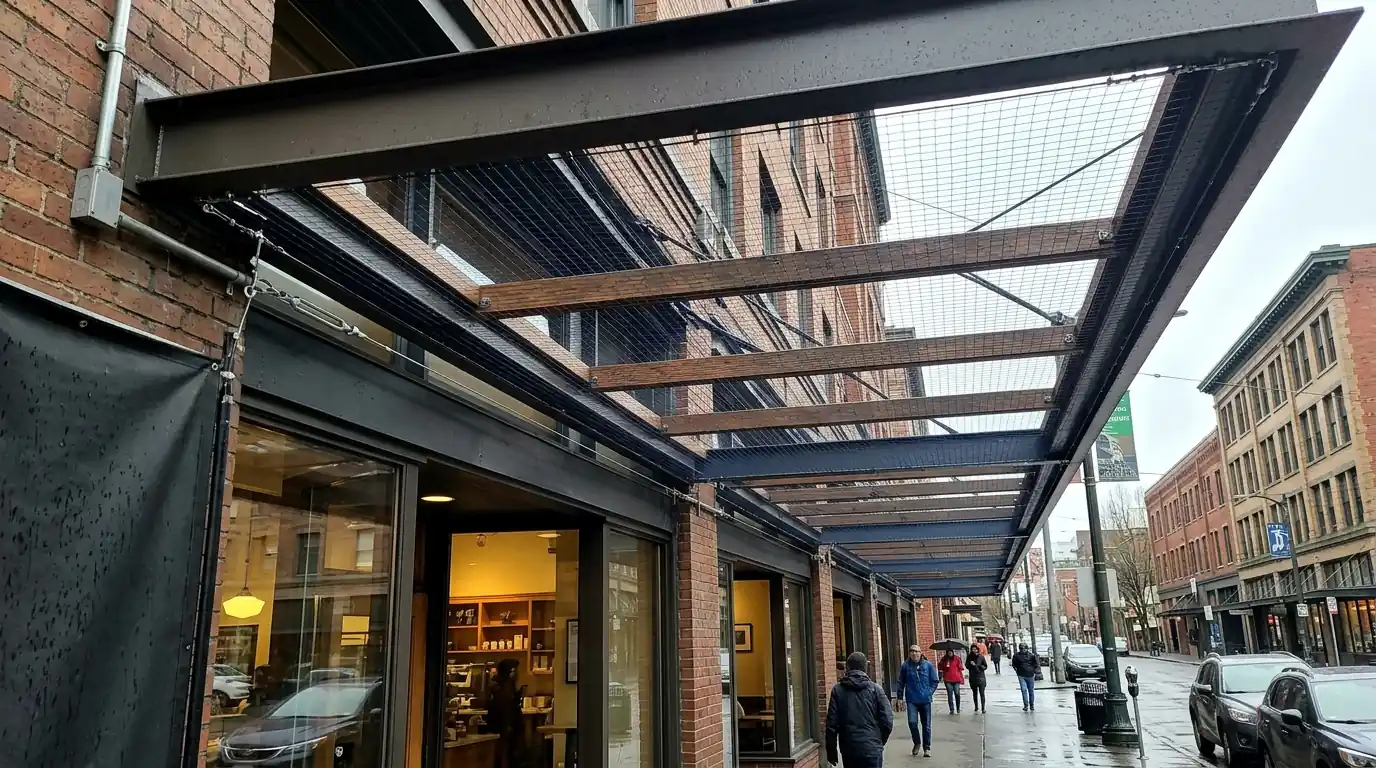
For roosting and ledge problems, the solution is deterrence: low-profile spikes on ledges and beams, netting to block recesses and under-eave spaces, slope covers on flat surfaces and gutter guards where birds nest in gutters. Droppings are cleaned and sanitized, since pigeon and starling droppings can carry pathogens and damage surfaces.
Catch it early
Birds chirping inside a dryer, bath or kitchen vent mean a nest is blocking the duct.
Grass, twigs or feathers sticking out of a vent flap are a clear sign of nesting.
A blocked dryer vent slows drying and raises fire risk; nests are a common cause.
Repeated dropping piles under eaves, beams or signs mark a roost.
Birds flying in and out of soffit gaps or gable vents are nesting inside the structure.
Flocks on commercial signs, awnings and ledges create droppings damage and health concerns.
The Seattle angle
European starlings and house sparrows, both introduced species, are among the most common birds nesting in Seattle structures, favoring dryer vents, gable vents and soffit gaps. Pigeons roost on downtown ledges, bridges, signs and storefronts, which is why commercial properties near our 5th Avenue office generate much of our netting and spike work.
Seattle's rain adds a twist: droppings that stay damp are slippery, stain surfaces and break down building materials faster, and nests in vents trap moisture. Because many birds are protected, the honest process is to identify the species, respect active nests where the law requires, and then close the site so the problem does not repeat next spring.
How the job runs
Vent, eave, gutter, ledge or sign; vent nests get priority.
Protected or not, active nest or not; the plan follows the law.
Lawful nest removal, duct clearing, dropping cleanup and sanitizing.
Vent guards, spikes, netting, slope covers or gutter guards.
Follow-up confirms birds are no longer using the site.
Honest numbers
Bird work is quoted on what needs to be done and how high it is. What sets the number:
Residential vent jobs are usually straightforward; large netting or commercial ledge work is quoted on footage. Every quote is written before work starts.
Make the visit count
Straight answers
Not always. Many native birds and their active nests are protected under federal law. Non-native species like starlings, house sparrows and pigeons are handled differently. We identify the species first and follow the rules.
It blocks airflow, which makes the dryer run hot and can create a fire risk while pushing moist air into the wall. Clearing the duct and installing a guard fixes both problems.
No. Bird spikes are blunt and simply prevent birds from landing. They are a deterrent, not a trap.
Accumulated pigeon and starling droppings can carry pathogens and fungal spores, especially when dry and disturbed. We clean them with protective equipment and sanitize the area.
That is why we guard all similar vents and close nearby gaps at the same time. Birds return to sites that worked; deterrents make the whole building unattractive.
Yes. Netting, spikes and ledge deterrents on signs, awnings and storefronts are common work for us, and our commercial program can include ongoing monitoring.
Chirping in the dryer vent? Stop using it and call.
Call (206) 944-0849
Talk to a technician
Lawful nest removal, clean ducts, guards, spikes and netting that last. Call any hour and tell us where they are.
Call (206) 944-0849Answered 24/7 from our Seattle service office.
Find the office
Our service office sits at 1440 5th Ave in Seattle, with the head office over in Aberdeen. Calls route to a person, not a queue, any hour.