Droppings the size of raisins
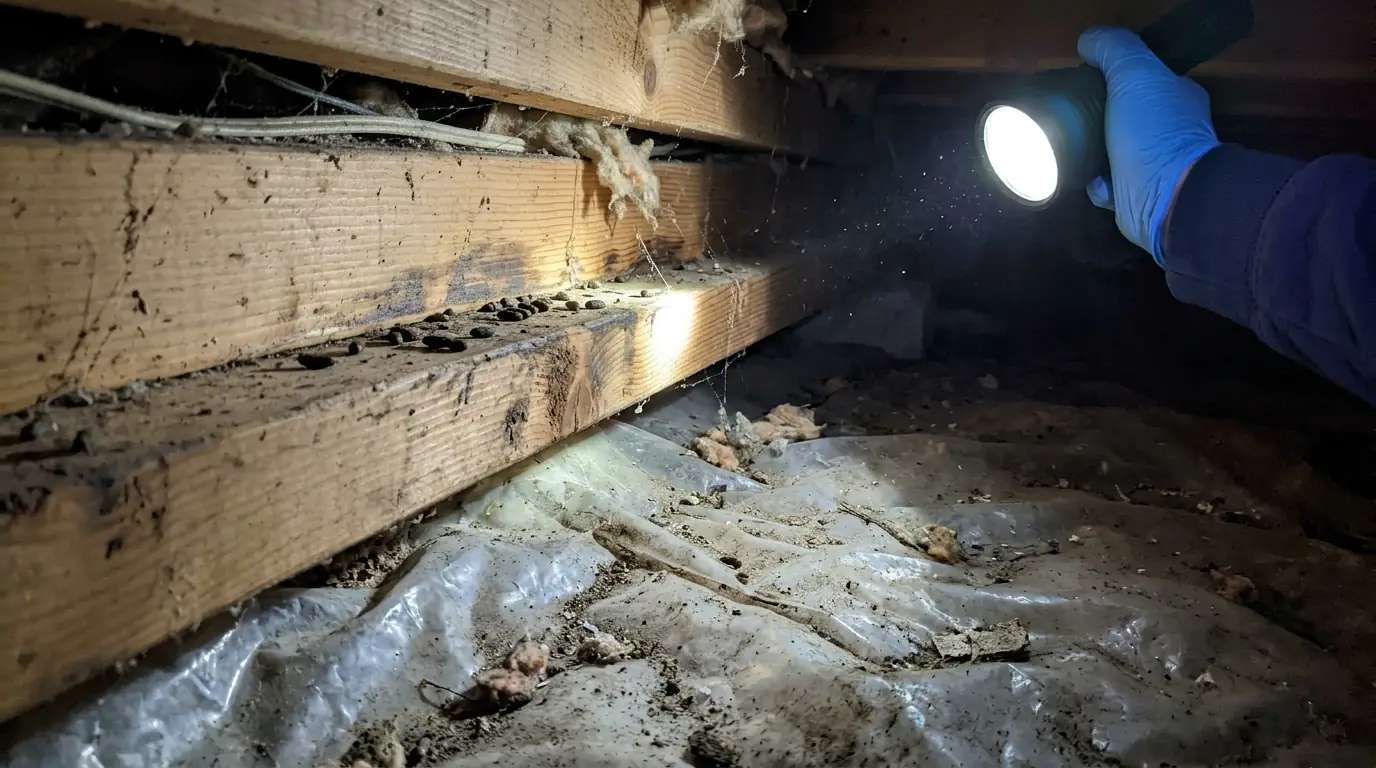
Rat droppings run 12 to 19 millimeters, blunt or spindle-shaped. Mouse droppings are rice-grain small. Fresh ones are dark and soft; that means current activity.
Rodents
Seattle ranked 12th among U.S. metros on Orkin's 2023 rat and mouse list, and the fall surge is real. When the rain starts, Norway rats move into crawl spaces and roof rats run the fence lines into attics. We trap what is there and close the route it used, so this is the last season you deal with it.
Call (206) 944-0849 All treatments
Reviewed by Marjorie Tidwell, Pest Prevention Writer. Updated 2026-10-05.
In short: Call (206) 944-0849, describe the noise or droppings, and we schedule an inspection of the crawl space, attic and foundation line, usually same or next day for active rats. Trapping starts at the first visit, entry points get sealed with steel, and a follow-up confirms the activity has stopped.
What this treatment covers
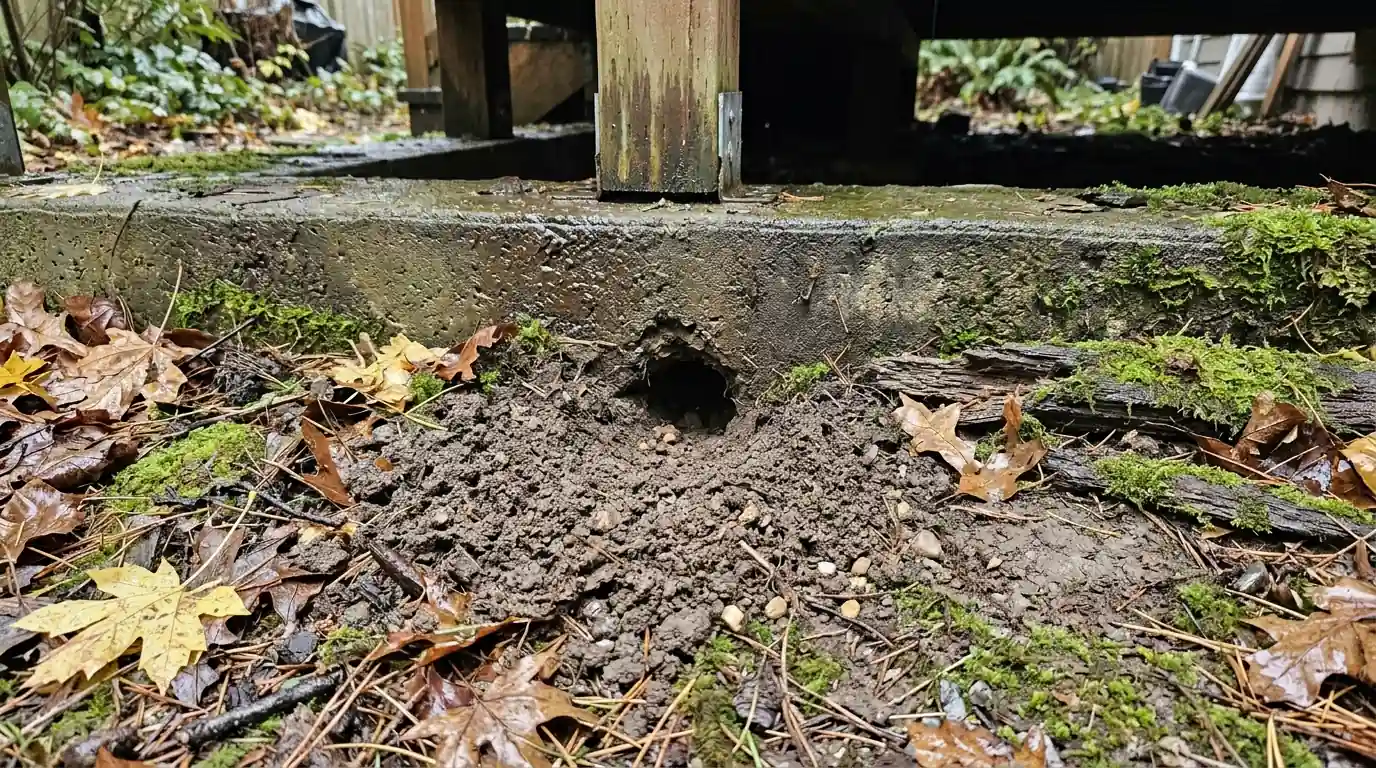
Rat work in Seattle fails when it stops at the trap. The two species here behave differently: Norway rats burrow and live low, nesting in crawl spaces, under decks and along foundation lines, while roof rats climb, traveling power lines, fence tops and tree limbs into attics and wall voids. The inspection tells us which one you have, because trap placement, bait choice and the entry points worth checking are different for each.
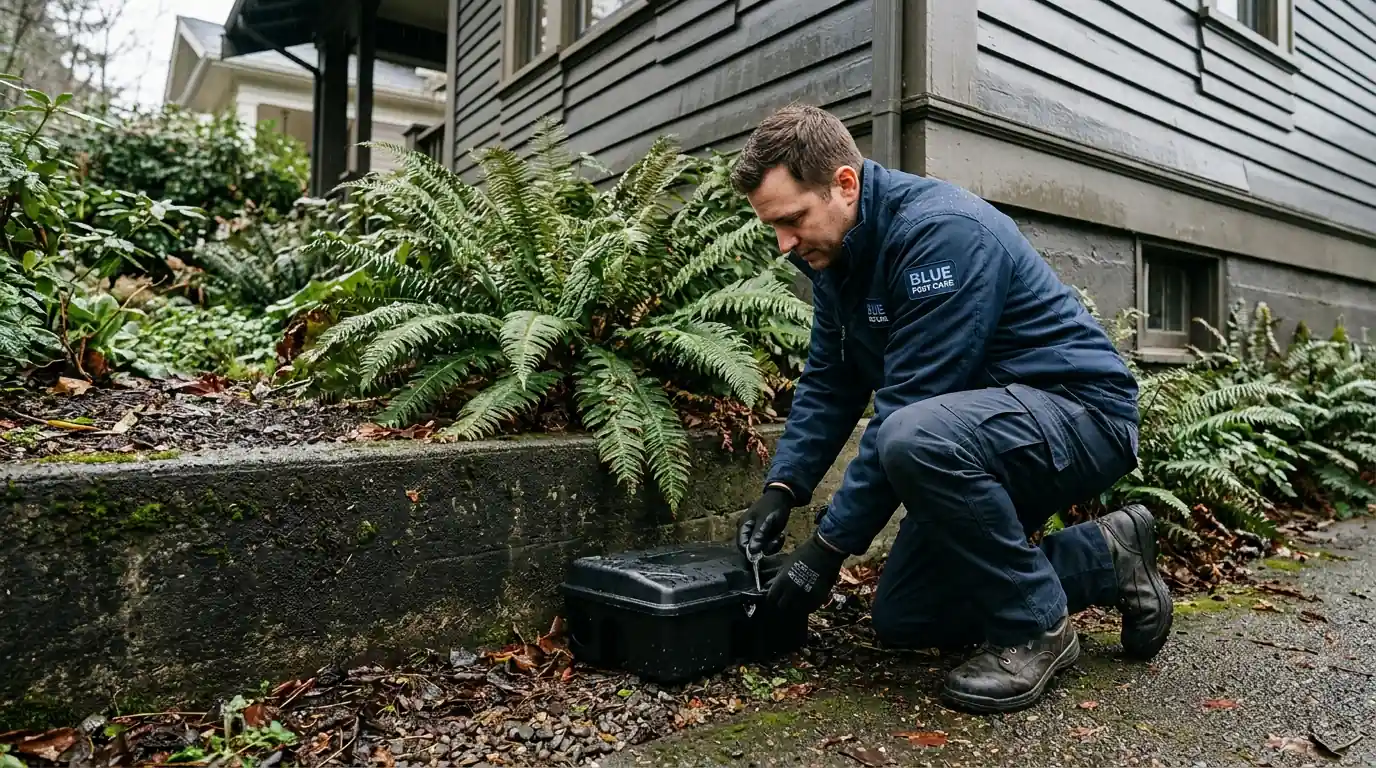
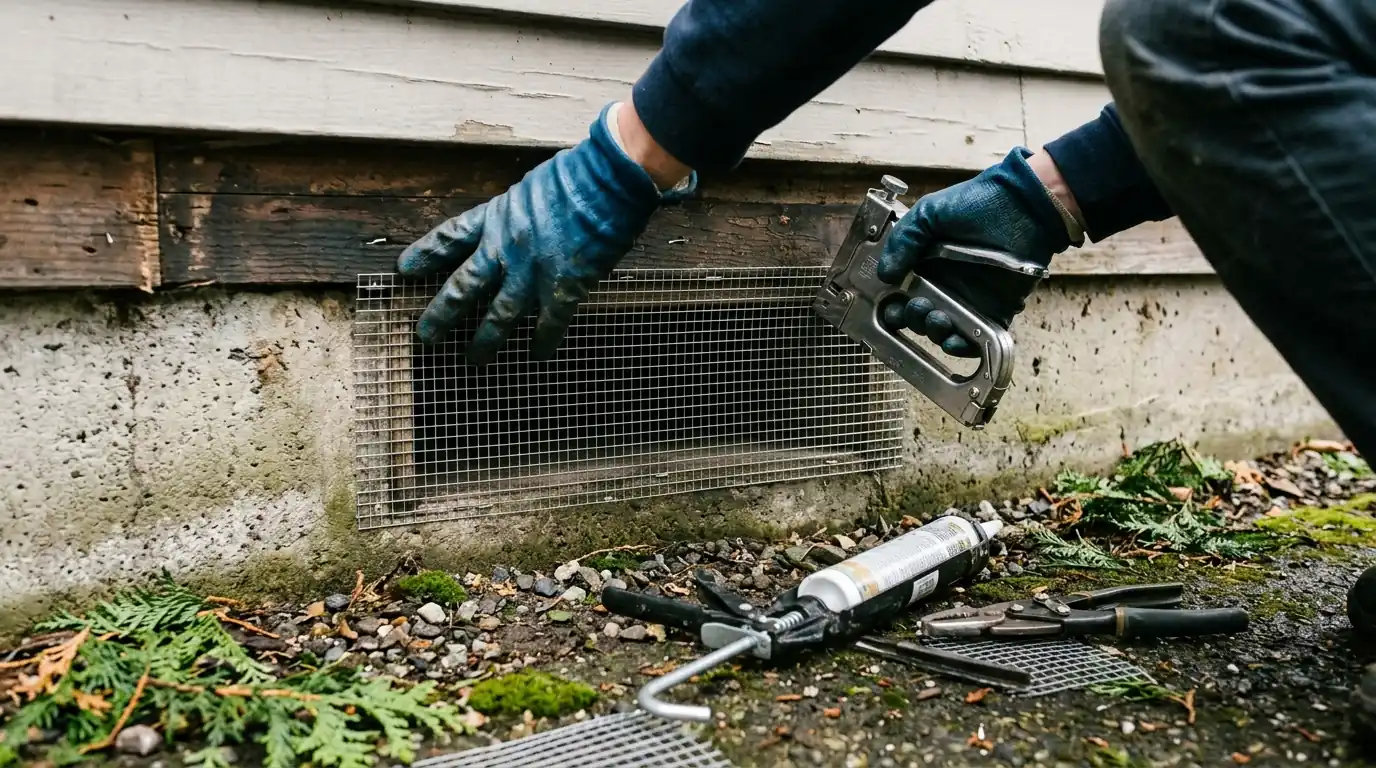
Our treatment runs snap traps and secured stations on the runways the inspection actually finds, not a generic ring around the house. Droppings, rub marks and gnawing tell us where the traffic is. Then the exclusion work starts: a rat passes through a gap the size of a quarter, so foundation vents, pipe penetrations, garage door corners and rooflines get steel mesh and sealant rated for gnawing pressure.
Rodenticide has a place, but in Seattle yards with owls, dogs and cats we lead with trapping and secured stations, and we will explain exactly what is placed, where and why before anything goes down.
Catch it early
Rat droppings run 12 to 19 millimeters, blunt or spindle-shaped. Mouse droppings are rice-grain small. Fresh ones are dark and soft; that means current activity.
Rats are most active in the two hours after sunset. Scurrying above the ceiling points to roof rats; sounds below the floor point to Norway rats in the crawl space.
Norway rats dig 2 to 4 inch openings with packed soil fans, typically under decks, sheds and foundation plantings.
Fresh gnawing shows pale, rough edges on joists, stored boxes and irrigation lines. Rats gnaw constantly to wear their teeth down.
Oily smudges along beams, pipes and entry holes mark a repeated runway; the darker the mark, the longer it has been used.
A dog or cat staring at a wall, kickboard or heater vent is often responding to movement you cannot hear yet.
The Seattle angle
The pattern repeats every year: the first sustained October rain floods burrows and thins outdoor food, and the calls start inside a week. Seattle gives rats more indoor options than most cities because roughly six in ten single-family homes sit over a vented crawl space, and much of the housing stock predates 1980, so original vents, settled gaps and aging screens are everywhere. The neighborhoods north of the Ship Canal, from Ballard through Fremont and Wallingford to the U District and Ravenna, generate a steady share of our rat calls, with mature trees and old fences handing roof rats an elevated highway.
The American Housing Survey has put rat sightings at about 5.6 percent of Seattle homes, among the highest shares of any U.S. metro surveyed. None of that is a reason to panic; it is a reason to treat the entry points as seriously as the animals. A house sealed with steel at the quarter-size gaps does not re-infest just because the neighbor's greenbelt is busy.
How the job runs
Describe the sounds, sightings or droppings. We tell you honestly whether it needs a same-day visit or a scheduled one.
Crawl space, attic and full perimeter. We photograph droppings, rub marks and entry points and confirm the species.
Snap traps and secured stations go on the active paths the inspection found, placed away from kids and pets.
Quarter-size and larger gaps get gnaw-resistant mesh and sealant: vents, pipe gaps, rooflines, garage corners.
A follow-up counts captures, checks for fresh sign and removes trapped animals. Quiet is the deliverable.
Honest numbers
Published Seattle figures put most residential rat jobs between about $199 and $630, with an average near $412. Where your job lands depends on a handful of things we can only price honestly after the inspection:
Full exclusion work is quoted separately when the gap count is high; published Seattle exclusion jobs commonly run $209 to $627, and whole-home seals $500 to $2,000. You get one firm written number before any work starts, and the quote visit is part of the inspection.
| One-time rat service | Quarterly plan | |
|---|---|---|
| Best for | A single active problem you want gone | Homes near greenbelts that re-infest each fall |
| Visits | Initial plus 1 to 2 follow-ups | Four scheduled visits a year, re-service between if needed |
| Exclusion | Quoted and done once | Checked and touched up every visit |
| Typical cost | About $199 to $630 per published Seattle ranges | Commonly $95 to $185 per visit |
Make the visit count
Straight answers
Phones are answered 24/7 and active-rat calls are treated as urgent, which usually means same-day or next-day scheduling. If you are hearing them nightly, say so on the call and we prioritize accordingly.
Not as a default. Inside living spaces we rely on snap traps, which kill quickly and leave no animal dying in a wall. Where rodenticide is justified it goes in tamper-resistant exterior stations, and we walk you through placement and risks first.
Yes, it changes the whole job. Norway rats burrow low, so we focus on foundations, crawl spaces and ground-level gaps. Roof rats enter high, so rooflines, vent screens and overhanging limbs matter more. Treating one like the other is how problems linger.
Not through the holes we sealed. Steel mesh and proper sealant hold up to gnawing, and the follow-up confirms nothing new has opened. Homes backing greenbelts with heavy pressure sometimes choose the quarterly plan, but a well-sealed house is the real fix.
It happens occasionally with poisoned animals, which is one reason we lead with trapping. If an animal does die in a void, our dead animal removal service locates and removes it and treats the odor.
You can stay home throughout. Rat droppings do carry disease risk, so avoid sweeping or vacuuming them dry; if the accumulation is significant we will recommend crawl space or attic cleanup and explain exactly what that involves.
Hearing them tonight? A technician is answering right now.
Call (206) 944-0849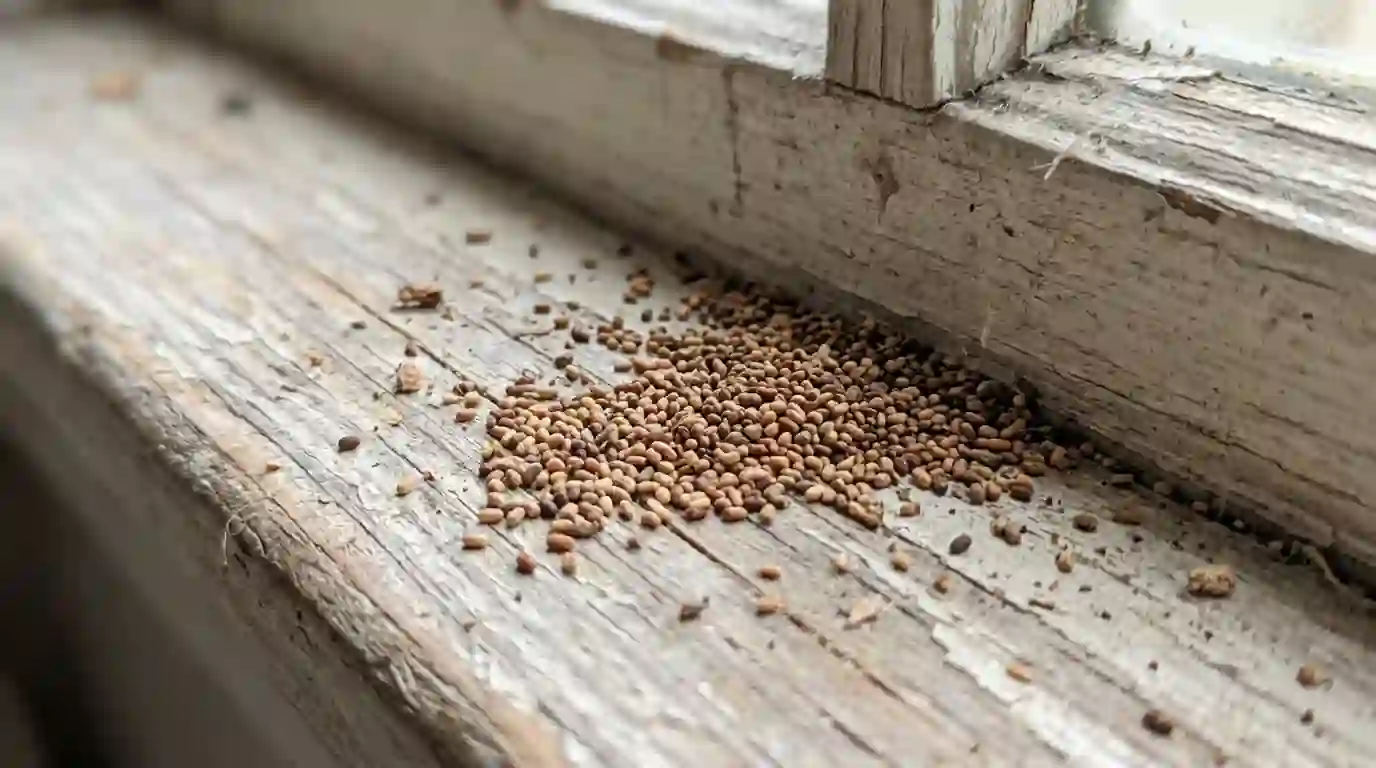
Talk to a technician
Describe what you are hearing, get a straight answer on urgency, and book the inspection that ends it. Trapping plus steel, not spray and pray.
Call (206) 944-0849Answered 24/7 from our Seattle service office.
Find the office
Our service office sits at 1440 5th Ave in Seattle, with the head office over in Aberdeen. Calls route to a person, not a queue, any hour.