Bites ringing the ankles
Flea bites concentrate low, ankles and calves, often three in a row, from larvae-stage adults emerging at floor level.
Interior Infestations
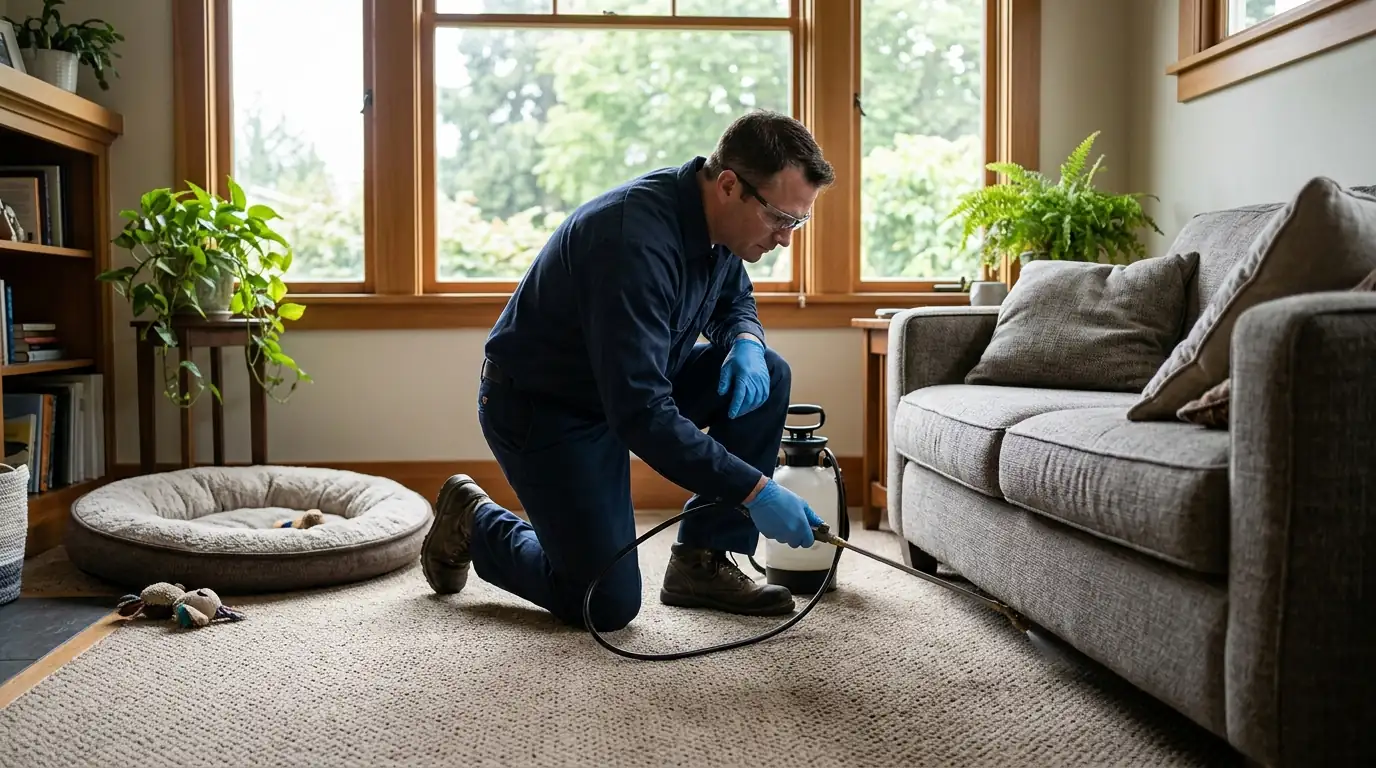
Adult fleas on your pet are five percent of the problem; the other ninety-five percent is living in your carpet. Eggs, larvae and pupae stocked into carpets, pet bedding and floor cracks keep an infestation running for months after the pet is treated. We treat the environment with growth regulators and targeted applications, synced with your vet's work on the animal.
Call (206) 944-0849 All treatments
Reviewed by Marjorie Tidwell, Pest Prevention Writer. Updated 2026-10-05.
In short: Call (206) 944-0849 if ankles are getting bitten, the pet will not stop scratching, or fleas are jumping from the carpet. We treat carpets, pet rest areas, furniture bases and floor cracks with insect growth regulators plus targeted adulticides, set the vacuuming protocol that accelerates the kill, and time it with your veterinarian's on-animal treatment. Expect a sharp drop within days and closure across the pupal window.
What this treatment covers
Flea control fails when it only chases adults, because the population's center of gravity is developmental: females on the pet rain eggs wherever the animal rests, those eggs hatch into larvae that burrow into carpet base, pet bedding and floor cracks to feed on organic debris, and the larvae spin cocoons in which pupae can wait for weeks, insulated from most insecticides, until vibration and warmth announce a host. That pupal reservoir is why homes feel reinfested two weeks after a treatment that killed every visible flea, and why our program is built around it.
The environmental treatment pairs insect growth regulators, which sterilize the developmental stages and break the cycle, with targeted adulticides along the pet's rest map: bedding zones, carpet runs, under-furniture shadows, the base of the cat tree, the car if the dog rides. Vacuuming is engineered into the protocol, before treatment to lift debris and stimulate pupae, and daily afterward, because vacuum vibration tricks cocooned adults into emerging onto treated fibers; the bag or canister goes straight outside each time.
The pet side belongs to your veterinarian, and we are direct about that lane: modern vet-prescribed flea products are excellent, and our job is the ninety-five percent of the population living in your floors while theirs handles the five percent on the animal. Treated home plus treated pet, started the same week, is the combination that actually ends it.
Catch it early
Flea bites concentrate low, ankles and calves, often three in a row, from larvae-stage adults emerging at floor level.
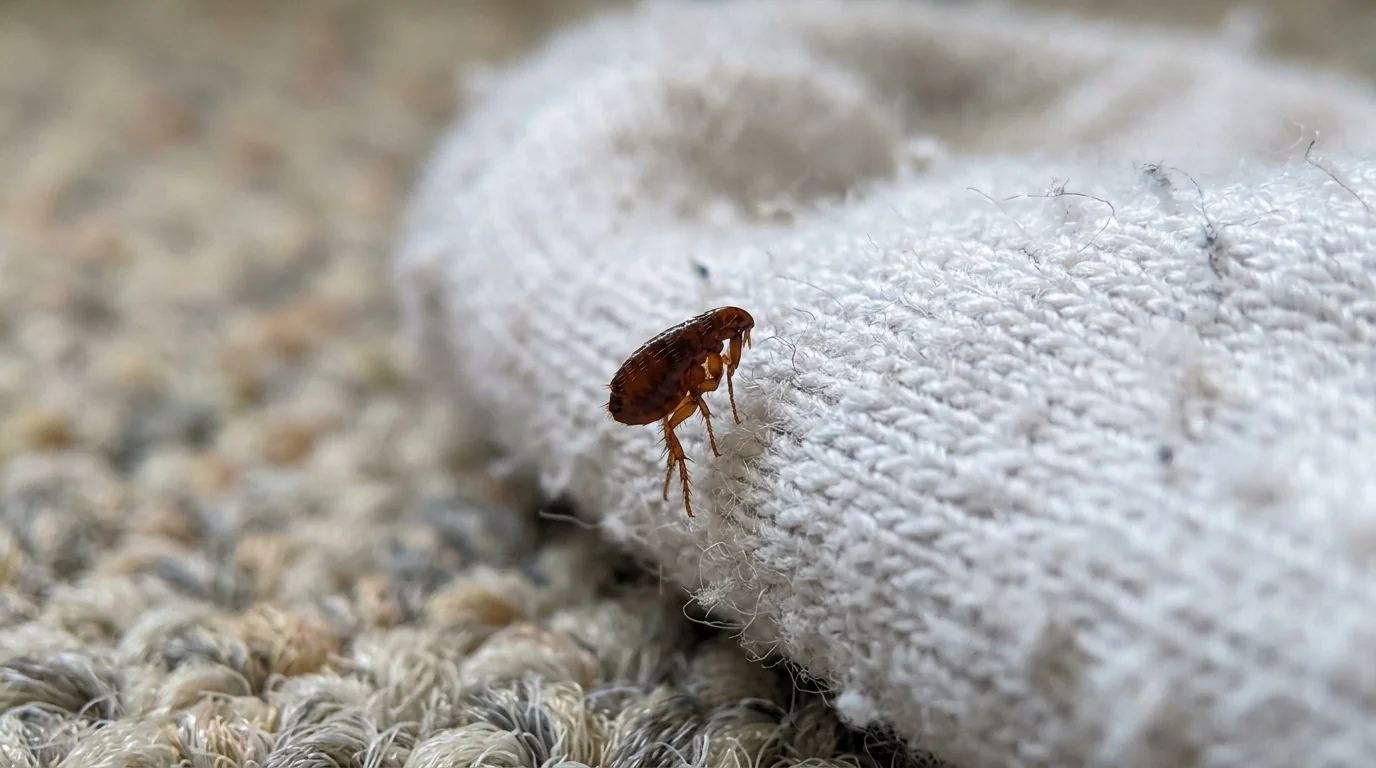
Walk carpeted rooms in long white socks; fleas show as moving dark specks within minutes in an active house.
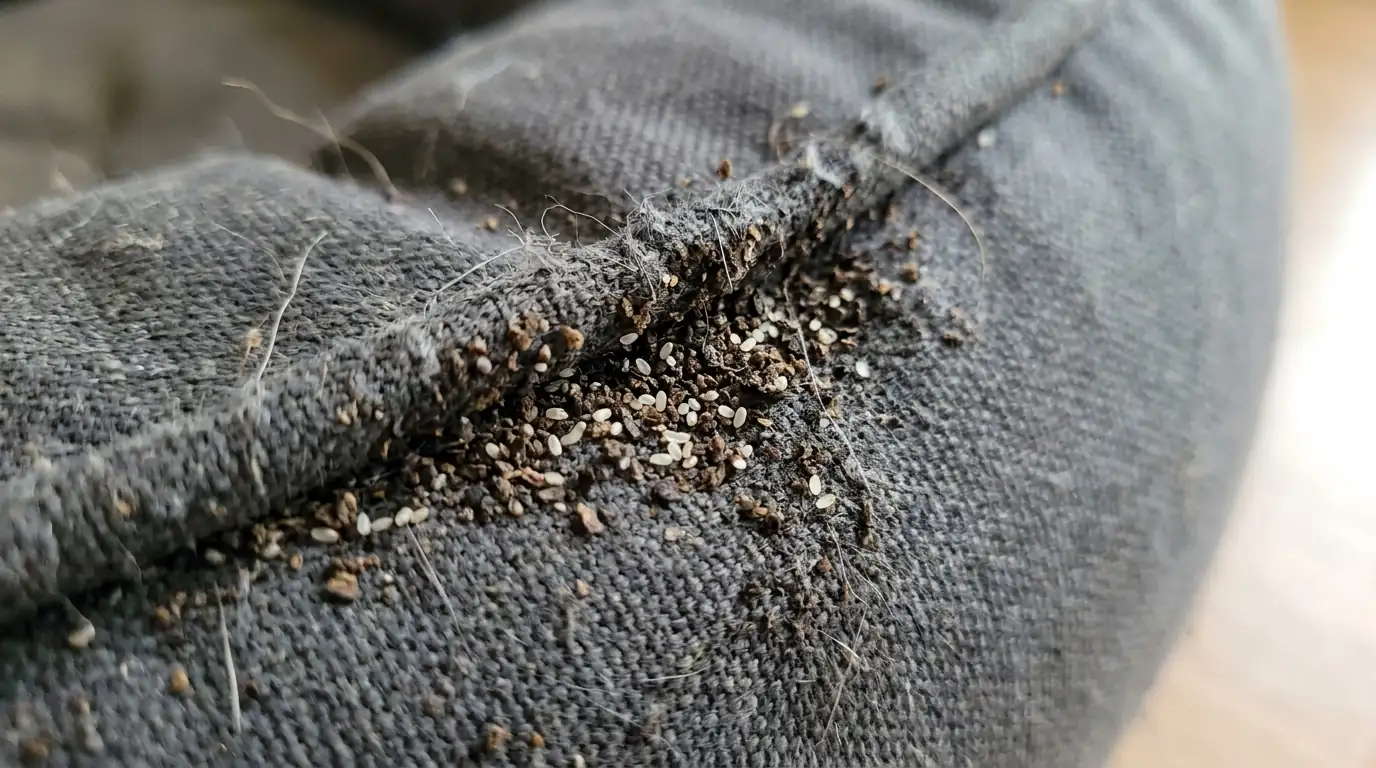
Flea dirt, digested blood specks, and white eggs together in bedding seams confirm the nursery is running.
A treated pet still scratching weeks later usually means environmental reinfestation, the pupal reservoir at work.
Vacated homes and new move-ins meet starving emerged adults; a pet-free flea bloom is a classic rental turnover story.
Raccoons, opossums or feral cats denning in the crawl space seed flea populations that migrate up into pet-free homes.
The Seattle angle
Seattle's flea pressure is a climate story: the maritime mild winter rarely delivers the sustained freeze that knocks outdoor flea stages back in continental cities, so the cycle idles year-round and surges through the warm months, with late summer the reliable peak. A dog-dense city with high park and trail usage keeps pets sampling shared flea habitat daily, and the shaded, moist yards typical of Puget Sound landscaping hold exactly the humidity larvae need to survive outdoors between hosts.
The structural wrinkle is underneath: the crawl spaces beneath most Seattle houses are favorite denning spots for raccoons, opossums and neighborhood cats, and a wildlife family below the floor can stock a flea population that finds its way up vents and gaps into homes with or without pets. When an infestation's rest map does not match the household pet, the crawl space is our next stop, and wildlife exclusion becomes part of the honest fix.
How the job runs
Where the pet sleeps and lounges, where bites happen, when it started.
You vacuum to our checklist before arrival; it lifts debris and primes the pupae.
IGR across carpets and rest zones, adulticide on hot spots, bedding and bases handled.
Your vet's on-animal product starts the same week; we coordinate the timing gladly.
Daily vacuuming walks the pupal hatch onto treated fiber; a follow-up closes stubborn counts.
Honest numbers
Flea work typically lands mid-band in Seattle's published $95 to $550 one-time range. What moves your number:
Vet costs for the on-animal side are separate and worth every penny; our quote covers the environment completely, follow-up included where the density calls for it, written before treatment starts.
Make the visit count
Straight answers
Because the carpet is still hatching. The pupal reservoir laid down before the vet visit emerges for two to four weeks, and those new adults bite ankles while they hunt for the now-protected dog. Environmental treatment plus the vacuum protocol is the missing half.
Because it is genuinely a weapon. Vacuum vibration mimics a host and triggers cocooned adults to emerge, straight onto IGR-treated fibers; the suction also removes eggs, larvae and the debris larvae eat. Daily vacuuming during the window can cut the cycle time nearly in half.
Applied and dried, yes, and placement respects feeding areas and perches. One pointed caution that matters more: never use a dog flea product on a cat, as permethrin-based dog treatments are seriously toxic to cats. That is vet-lane advice we repeat because the ER cases are real.
They bite people happily but cannot sustain on us; human flea infestations are not the worry. The human-relevant risks are the bites themselves, allergic reactions, and the diseases and tapeworms fleas can carry to pets, which is the health case for treating properly rather than coexisting.
Three usual answers: a previous resident's pet left a stocked carpet that is now hatching onto you, wildlife is denning in the crawl space or attic, or a regular visitor's animal seeds the rest map. The inspection reads which story is yours, and the fix follows it.
Foggers share the fogger problem: the mist settles on surfaces but barely penetrates carpet base and under-furniture shadow where the population lives, and it never touches pupae. They are the most purchased and least effective tool in the flea aisle, and targeted application replaces them outright.
Ankles under attack? The carpet is the battlefield.
Call (206) 944-0849
Talk to a technician
Growth regulators, targeted treatment, the vacuum protocol and your vet on the same team. Call today and the knockdown starts this week.
Call (206) 944-0849Answered 24/7 from our Seattle service office.
Find the office
Our service office sits at 1440 5th Ave in Seattle, with the head office over in Aberdeen. Calls route to a person, not a queue, any hour.