Musty or ammonia smell indoors
Odor rising through floor registers or at floor level is crawl space air moving into the house, carrying whatever is down there with it.
Rodents
Most Seattle homes sit over a crawl space, and after rodents move through one, what they leave behind matters. Droppings, urine-soaked insulation and a shredded vapor barrier do not fix themselves. We remove the contamination safely, sanitize, and rebuild the barrier and insulation so the space under your floors is clean air, not a liability.
Call (206) 944-0849 All treatments
Reviewed by Marjorie Tidwell, Pest Prevention Writer. Updated 2026-10-05.
In short: Call (206) 944-0849 for a crawl space assessment. We photograph the contamination, quote removal, sanitizing and restoration as one written number, then suit up: soiled insulation and droppings come out under HEPA filtration, the space is treated with disinfectant, and new vapor barrier and insulation go back in. Typical homes take one to two days.
What this treatment covers
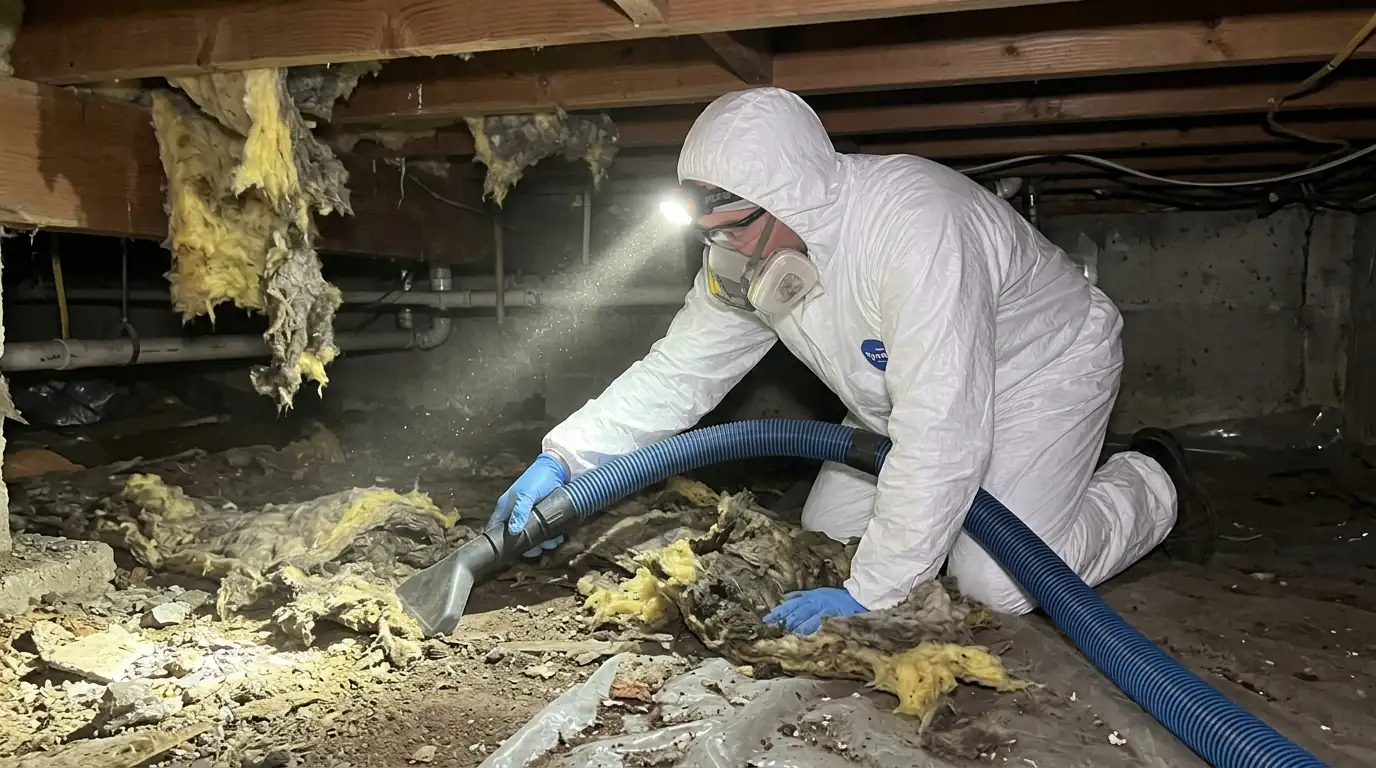
A crawl space cleanup is really three jobs in sequence. Removal comes first: rodent droppings, nesting material, urine-saturated insulation and any torn vapor barrier are bagged out under controlled conditions, with HEPA-filtered equipment and never dry sweeping, because disturbed rodent waste is an airborne health risk, including hantavirus where deer mice have been present.
Sanitizing comes second. Exposed soil, framing and the remaining structure get treated with an antimicrobial disinfectant that neutralizes the bacteria and viruses rodent waste carries, along with deodorizing where urine has soaked framing. This is also when we flag anything the contamination was hiding: moisture problems, minor rot, plumbing drips, the things that invited trouble in the first place.
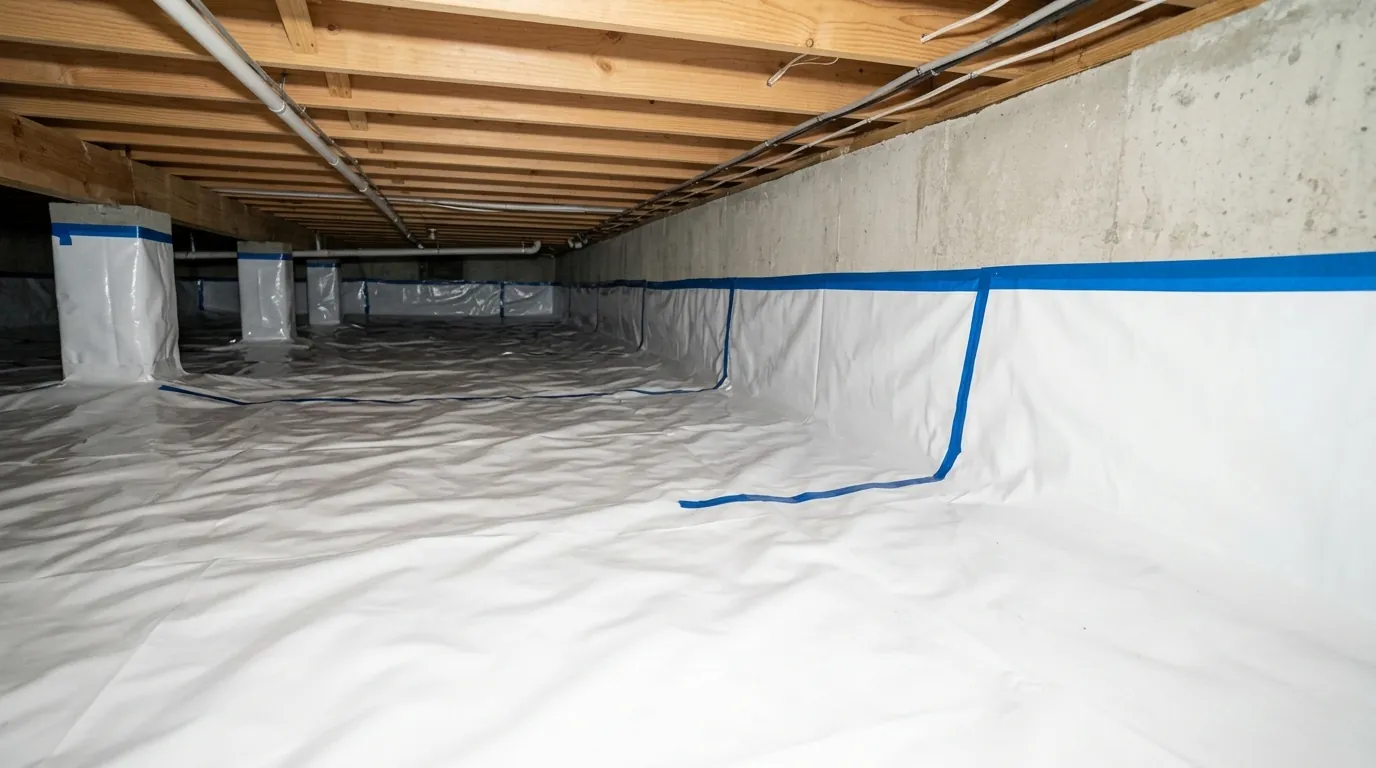
Restoration finishes it: a new 6-mil or heavier vapor barrier lapped and sealed across the soil, and new insulation batted back between the joists where the old material came out. Done right, the crawl space ends the job cleaner, drier and better insulated than before the rodents found it, and your floor-level air quality reflects it, since a meaningful share of indoor air rises from the crawl space.
Catch it early
Odor rising through floor registers or at floor level is crawl space air moving into the house, carrying whatever is down there with it.
Batts hanging from the joists or lying on the barrier are usually urine-soaked, rodent-tunneled or both, and they have stopped insulating.
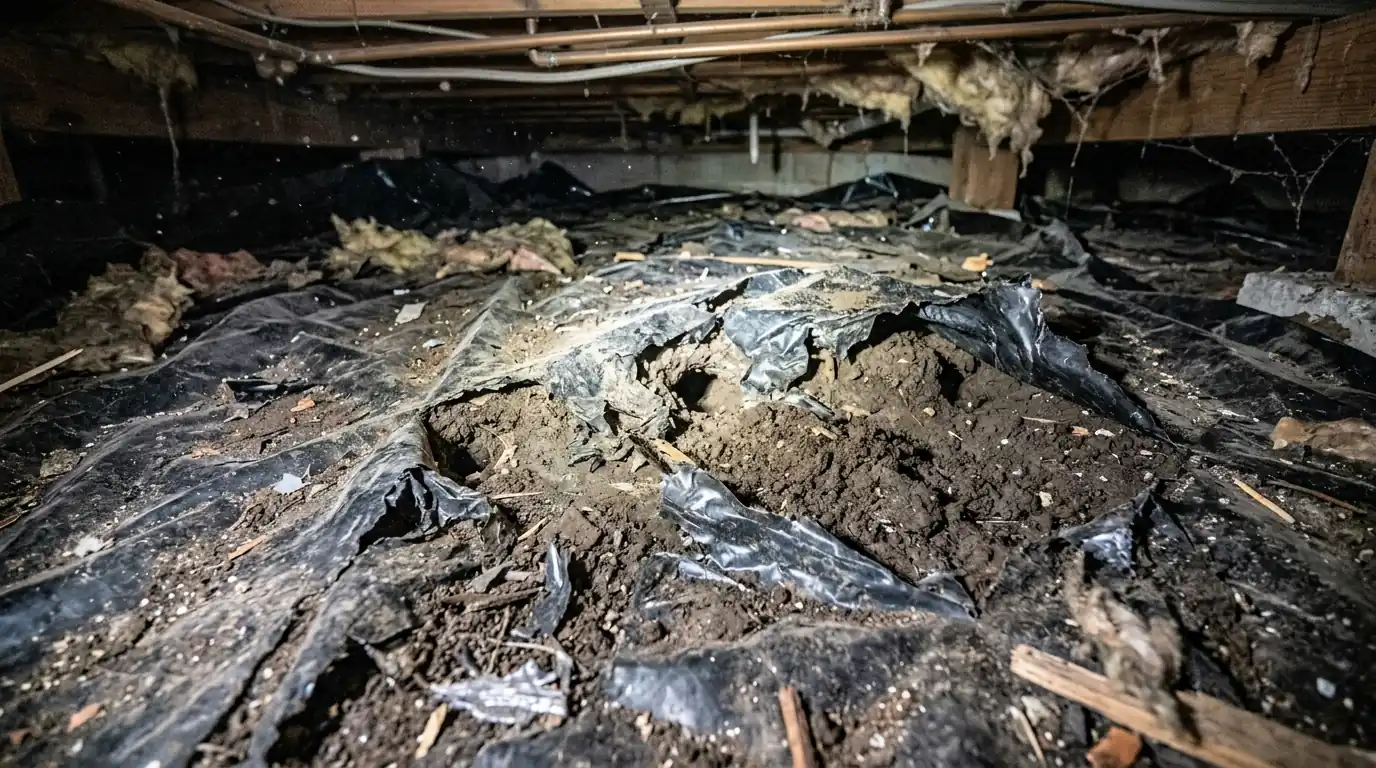
Rodents tear and tunnel under plastic. A barrier in pieces is no longer a barrier, and ground moisture is rising unchecked.
If droppings are visible just inside the access, density deeper in is nearly always worse; entries are the least-used zone.
Compromised insulation shows up as cold floors in winter and a heating bill that crept without explanation.
Scratching under floorboards means the cleanup should be scheduled with trapping and exclusion, not instead of them.
The Seattle angle
Roughly 62 percent of Seattle's single-family homes stand over a vented crawl space, a construction choice suited to the region's soil and seismic needs but one that leaves a soil floor breathing moisture upward year-round. Add 37 inches of annual rain and winter rodent pressure in a metro Orkin has ranked 12th nationally, and the crawl space becomes the room where Seattle's two home problems, water and rodents, meet. Once rodents have moved through, their waste holds that moisture, the insulation wicks it, and the space degrades faster than most owners realize.
We treat cleanup as part of the rodent cycle, not a cosmetic add-on. The honest sequence is trap, seal, then clean and restore; cleaning before exclusion just stages fresh material for the next arrivals. When we quote a cleanup we will tell you plainly where your house sits in that sequence.
How the job runs
We document contamination, moisture and barrier condition, and you see every photo with the quote.
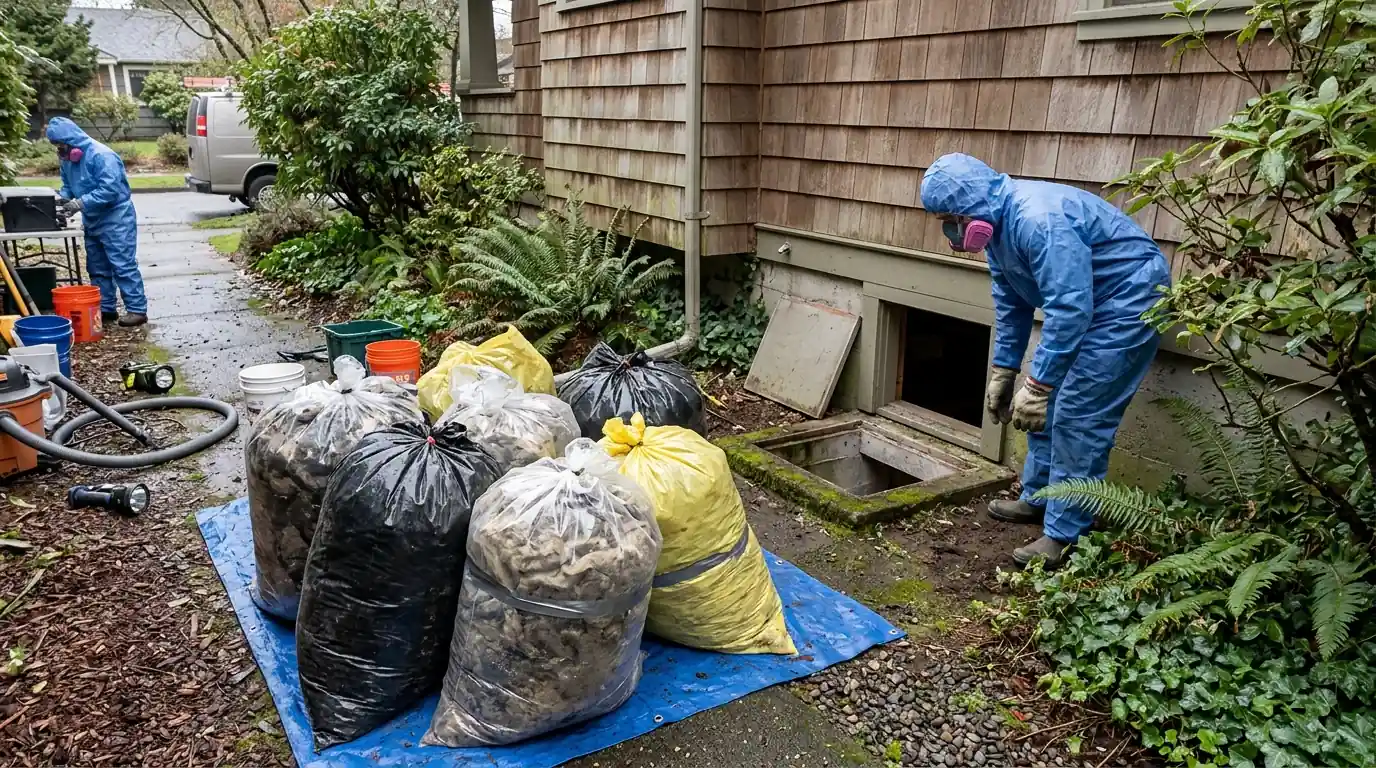
Suited technicians bag out droppings, nests, soiled insulation and failed barrier under HEPA filtration.
Antimicrobial treatment across soil and framing, with deodorizing where urine has penetrated.
New vapor barrier, lapped, sealed and run up the stem walls; new insulation between joists.
You get after photos and straight notes on anything structural or moisture-related we uncovered.
Honest numbers
Published Seattle figures put standard crawl space cleanups between about $300 and $1,000, with full cleanouts that include exclusion and restoration running $2,200 to $6,500 on larger or heavily contaminated spaces. The spread is wide because the jobs genuinely differ:
Every quote is itemized so you can see removal, sanitizing and restoration as separate lines and scale the job to your budget. The assessment photos are yours either way.
Make the visit count
Straight answers
It can be. The hazard is airborne: sweeping or vacuuming dried rodent waste aerosolizes bacteria and, where deer mice are involved, potentially hantavirus. Public health guidance is explicit about wet methods, respirators and HEPA filtration, which is exactly the equipment this service exists to bring.
It depends what the assessment finds. Insulation that is dry and intact stays; soaked or tunneled material should go, because it has already failed as insulation. We itemize the quote so cleanup, barrier and insulation are separate decisions.
If the odor source is rodent waste and soaked insulation below the floor, yes, removal plus sanitizing resolves it. If moisture itself is the driver we will say so, because a cleanup cannot outrun an unaddressed water problem.
It stops ground moisture migrating up into insulation, framing and the house air. In a city where wood above 15 percent moisture starts inviting carpenter ants, a sealed barrier is quiet, cheap structural protection.
Yes, and we sequence it that way: trap and seal first, clean and restore after. Cleaning an active crawl space is paying twice. If you call with both problems we bundle the scheduling so the order is right.
Minimal. Crews work from the exterior hatch in most homes; you will hear movement below the floor and some equipment, and the whole job typically wraps in one to two days.
Clean air starts under the floor. Book the assessment.
Call (206) 944-0849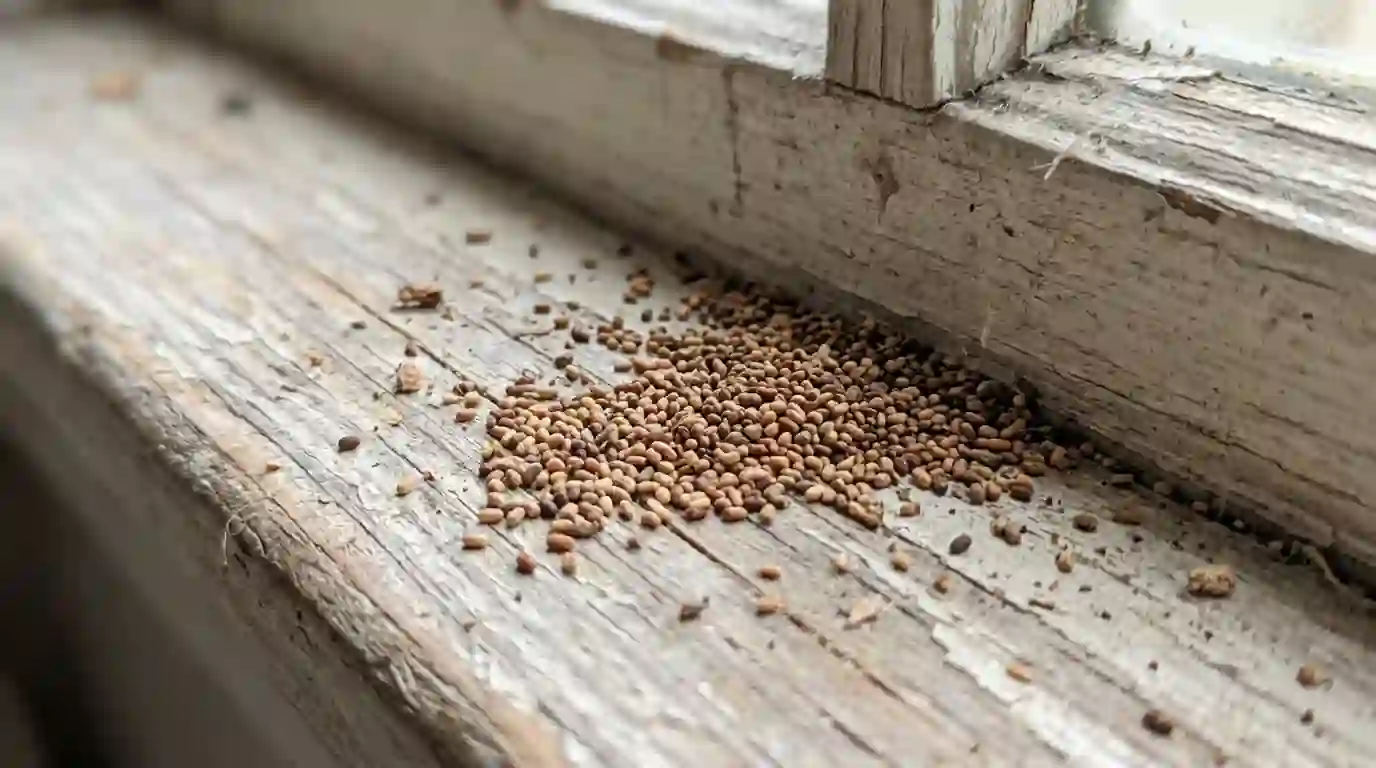
Talk to a technician
One assessment, photo-documented, one itemized quote, and a crawl space that comes back cleaner than the rodents found it. Call any hour.
Call (206) 944-0849Answered 24/7 from our Seattle service office.
Find the office
Our service office sits at 1440 5th Ave in Seattle, with the head office over in Aberdeen. Calls route to a person, not a queue, any hour.