Six-sided pellet piles
Dampwood frass is dry, hard pellets with six flat sides, accumulating in small piles below kick-out holes. It is the signature find.
Ants & Wood Destroyers
Western Washington's termite is the dampwood, and it cannot live in dry wood. That one fact shapes honest treatment here: we kill the active colonies with targeted applications, then make sure the moisture that invited them is found and fixed, because a dried structure is permanently termite-resistant.
Call (206) 944-0849 All treatments
Reviewed by Marjorie Tidwell, Pest Prevention Writer. Updated 2026-10-05.
In short: Call (206) 944-0849 with your inspection findings or what you are seeing: pellets, swarmers, soft wood. We confirm the species and colony locations, treat infested members directly with targeted applications, apply borate protection to vulnerable wood, and document the moisture repairs that will keep the structure unattractive to re-infestation. A clearance re-inspection closes the job.
What this treatment covers
Dampwood termite treatment differs from the soil-barrier termite work common elsewhere in the country, because the biology differs. Pacific dampwood termites colonize wood directly, no soil contact required, but only wood with high moisture content: the rotting deck post, the leak-soaked rim joist, the sill wicking from wet soil. There is no hidden mud-tube network to trench against; there are discrete colonies in discrete wet members, which the inspection locates precisely by pellet accumulations, probing and moisture mapping.
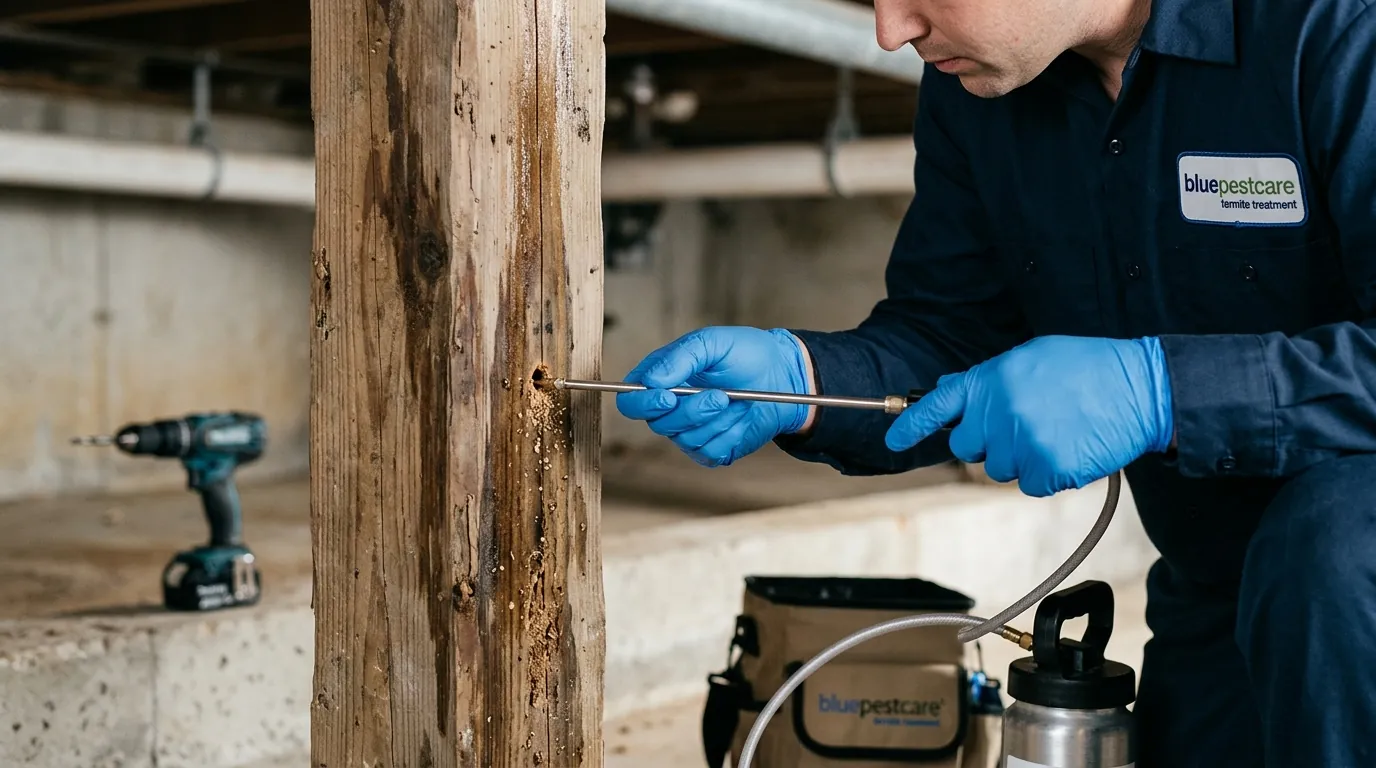
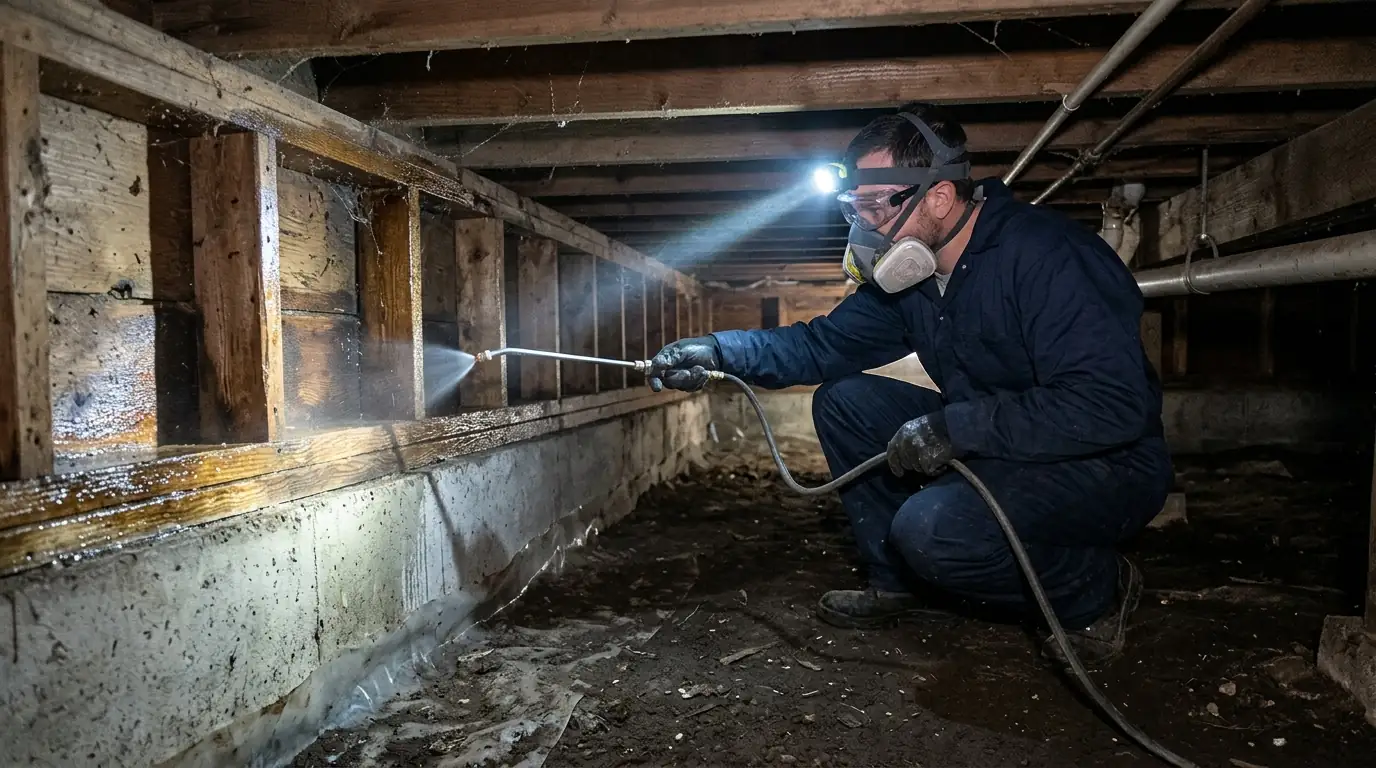
Treatment is correspondingly surgical. Located colonies are treated directly, with applications injected into galleries and infested members; vulnerable adjacent wood receives borate treatment, which penetrates and protects timber against both termites and fungal decay; and severely compromised members are flagged for replacement with documentation a contractor can work from. Where subterranean termites appear, uncommon west of the Cascades but not impossible, we say so plainly and scope the soil treatment that species actually requires.
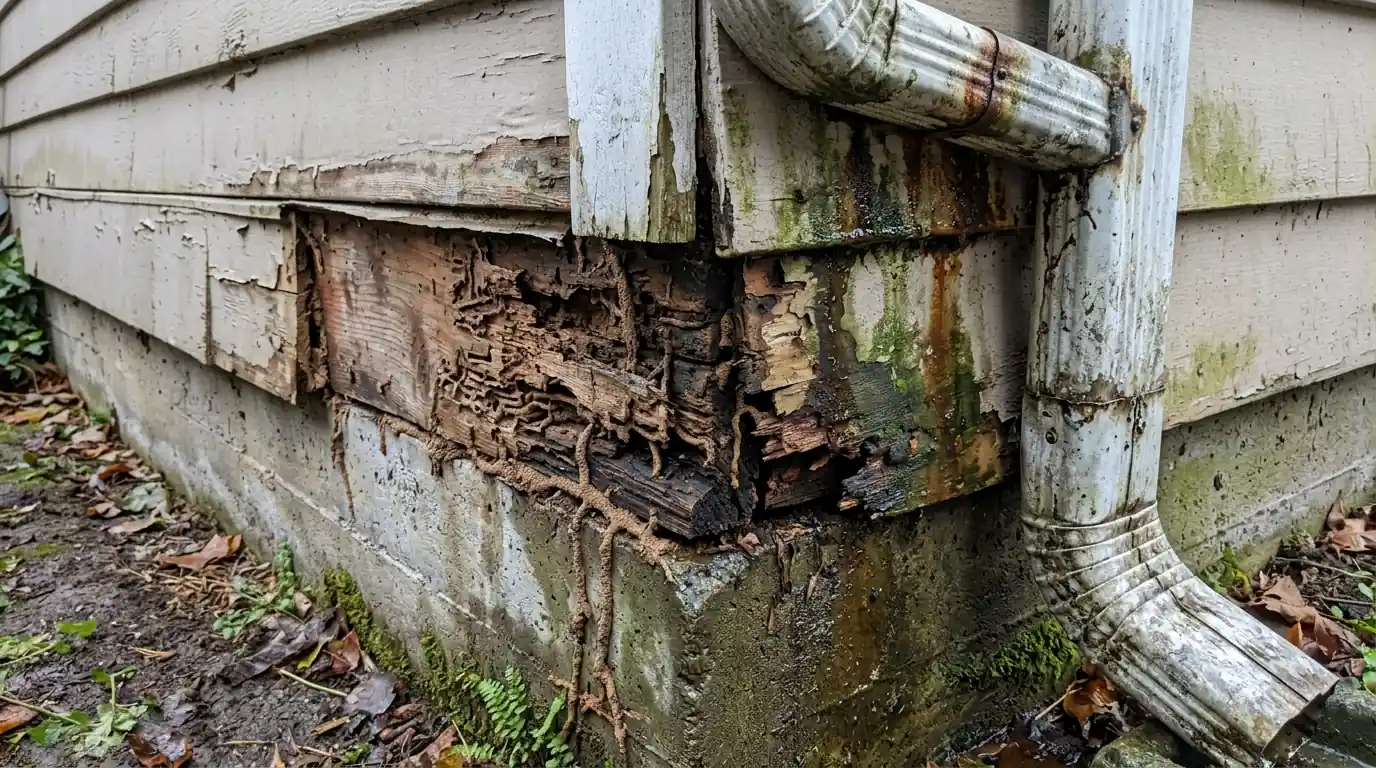
The second half of the job is the drying. Every dampwood colony marks a water source, and the treatment report names it: the grade that needs lowering, the gutter seam, the plumbing weep, the blocked crawl vent. Fix those and the structure is not just treated but inhospitable, which is the only termite guarantee worth having in this climate.
Catch it early
Dampwood frass is dry, hard pellets with six flat sides, accumulating in small piles below kick-out holes. It is the signature find.
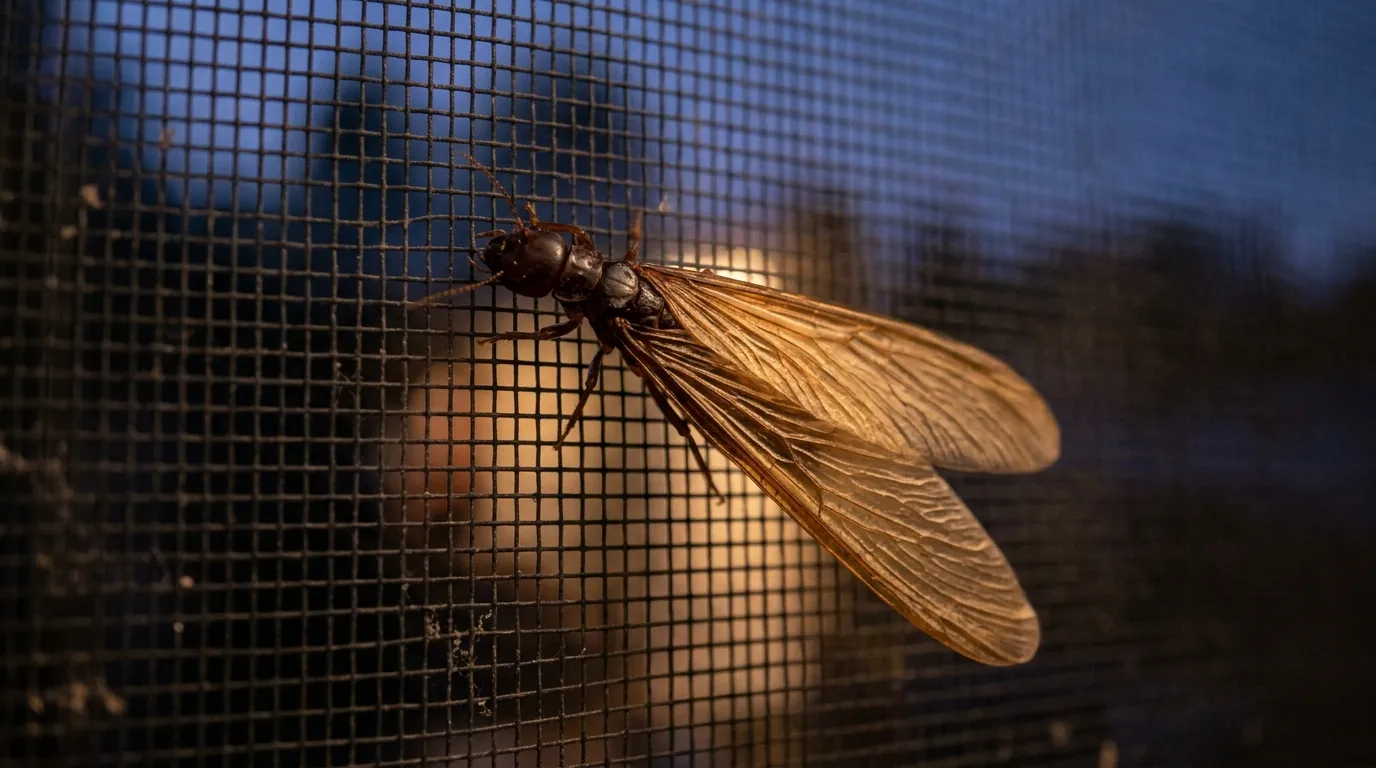
Dampwood reproductives, up to an inch with wings, fly on warm evenings August through October, often to lights.
Tap-testing along sills and posts finds the dead, papery note of galleried wood before a probe confirms it.
Galleries concentrating below a historic leak, at a deck ledger or along a wicking sill trace the moisture that fed the colony.
Discarded wings after a swarm night mean reproductives emerged nearby and some may have paired into new colonies.
A WDO report with live dampwood activity is this page's referral; the treatment picks up exactly where the report's diagram ends.
The Seattle angle
Seattle homeowners inherit termite instincts from national advertising that mostly do not apply here. The subterranean termites that justify trench-and-treat soil barriers across the South and East are rare west of the Cascades; the termite pressure this side of the mountains is the Pacific dampwood, a larger insect with a non-negotiable requirement for wet wood. In a city receiving 37 inches of rain across roughly 150 wet days, with most houses over vented crawl spaces whose sills sit nearest the soil moisture, the dampwood finds its habitat in any structure where water management has slipped.
That makes Seattle termite control unusually winnable. There is no regional subterranean pressure to hold back forever with chemical barriers; there are specific wet members to treat and specific water faults to fix, and a structure brought to dry condition stays protected by its own physics. It is why our treatment reports read half pest control, half moisture audit, and why we will never quote you a soil-barrier program this climate does not call for.
How the job runs
Pellets and specimens settle dampwood versus subterranean versus carpenter ant; everything downstream depends on it.
Pellet mapping, probing, tap-testing and moisture readings mark each infested member on a diagram.
Gallery injection and direct application kill located colonies; no theatrical whole-house measures.
Vulnerable and adjacent wood gets borate treatment against termites and the decay fungi that soften wood for them.
You get the moisture-repair list with photos, and a clearance re-inspection confirms the structure is quiet.
Honest numbers
Dampwood treatment prices on scope actually found, not on square footage formulas built for subterranean barriers. What the quote reflects:
Because the species is moisture-bound, we will also tell you when treatment can be minimal: a single colony in a replaceable deck post sometimes needs a saw more than a sprayer, and we say so. The quote is written, itemized and tied to the diagram from the inspection.
Make the visit count
Straight answers
Almost certainly not. Trench-and-treat soil barriers target subterranean termites, which are rare west of the Cascades. Paying for one against dampwood termites is buying a snow plow in Miami. If we ever do find subterraneans, we will show you the evidence before talking soil work.
Given years and persistent moisture, they do serious damage, but they telegraph constantly: pellets, swarmers, hollow wood. Caught at the first pellet pile, the typical job is a few treated members and a gutter repair. The disaster stories are always long-ignored water problems.
Not into dry wood, ever; the species physically cannot establish there. Re-infestation risk is precisely the list of unfixed moisture items in your report. Complete that list and the treatment is effectively permanent.
A borate is a mineral-based wood preservative that soaks into timber and makes it toxic to termites, carpenter ants and decay fungi while being low-hazard around people and pets once dry. We use it to armor the wood adjacent to treated areas, especially in crawl spaces.
Completely, which is why identification leads. Termite frass is pellets; carpenter ant frass is fibrous sawdust. Ant networks need trail-tracing and non-repellent transfer; dampwood colonies need direct member treatment. Treating one as the other wastes the money and the season.
Yes. Applications are targeted into galleries, voids and specific members rather than broadcast, and we will tell you if any single room needs a few hours of ventilation. Most treatments run with the household at home.
Pellets on the floor again? The colony is still working.
Call (206) 944-0849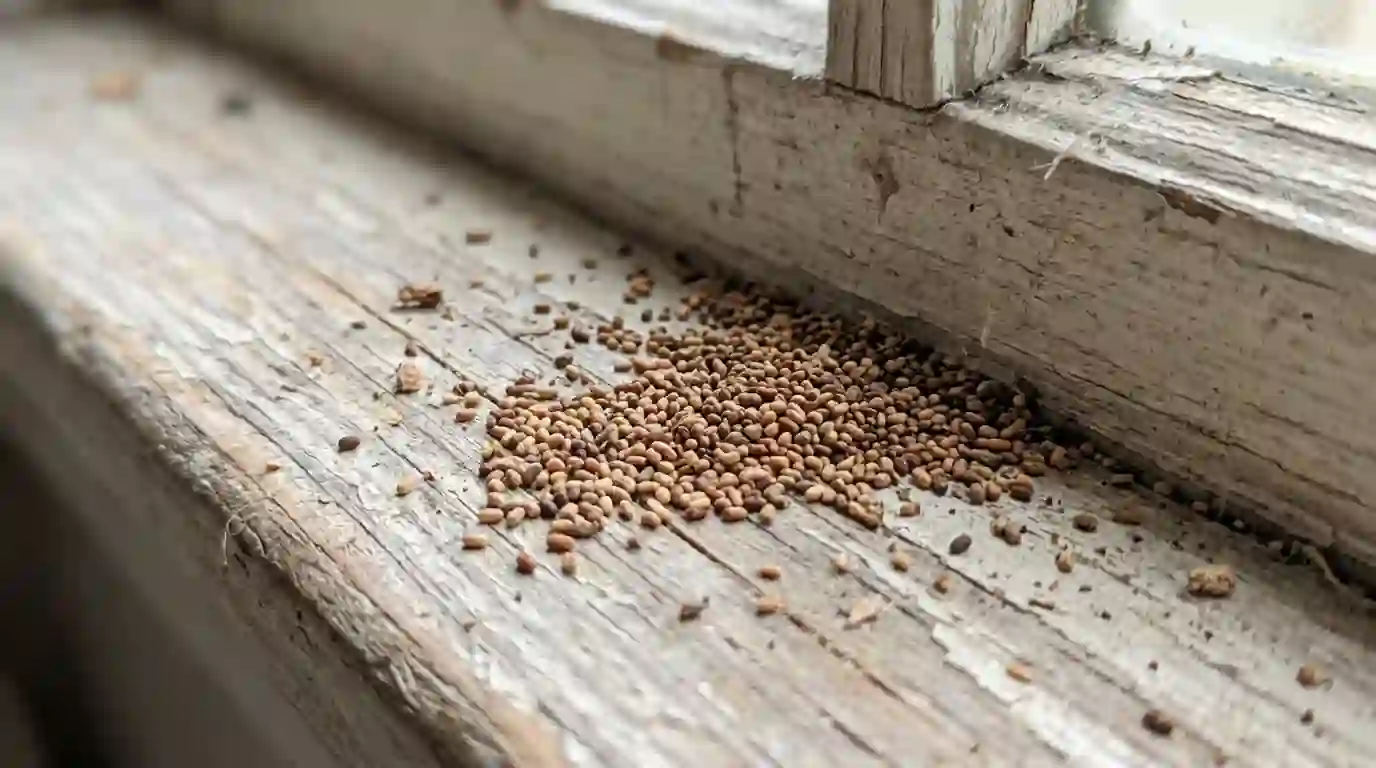
Talk to a technician
Direct colony treatment, borate protection, the moisture list that keeps it fixed, and a clearance re-inspection in writing. Call with what you found.
Call (206) 944-0849Answered 24/7 from our Seattle service office.
Find the office
Our service office sits at 1440 5th Ave in Seattle, with the head office over in Aberdeen. Calls route to a person, not a queue, any hour.