Tiny dark ants on sweets
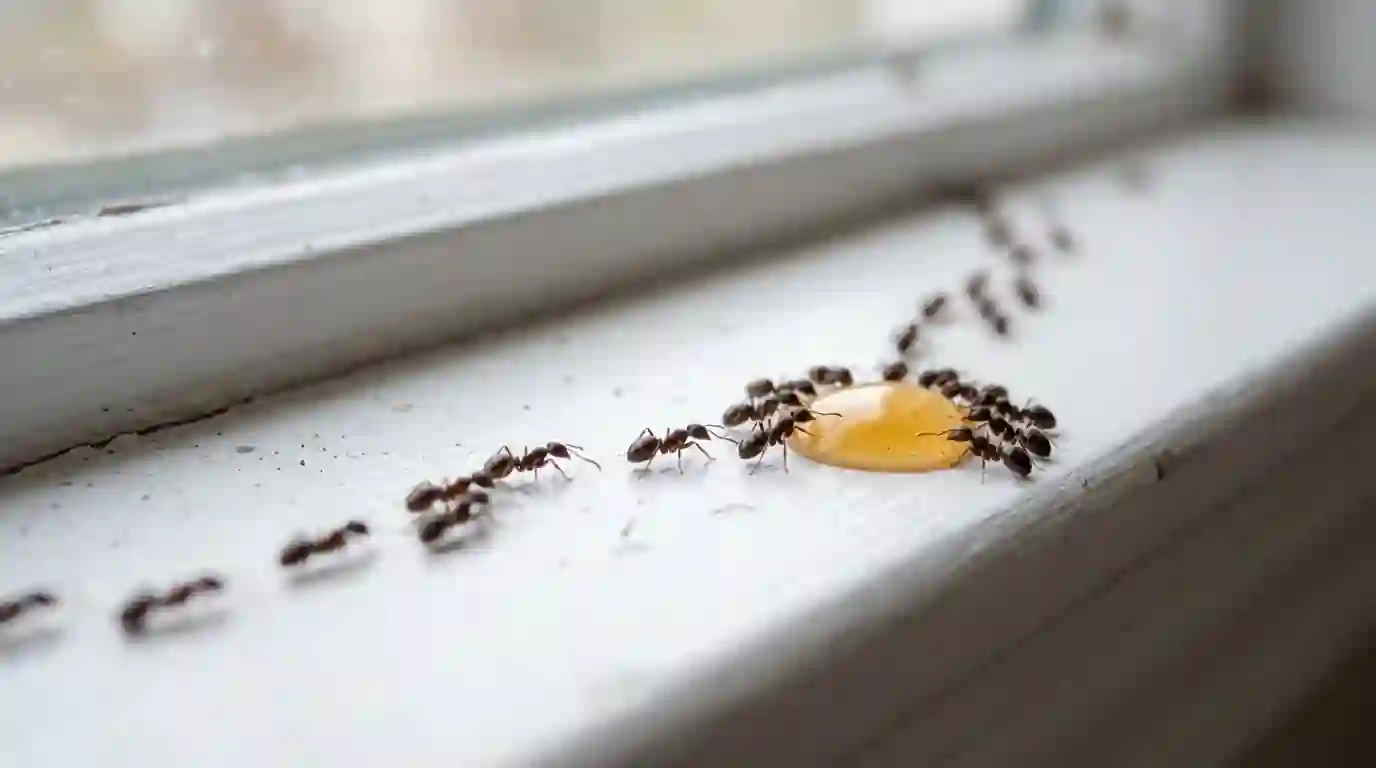
Odorous house ants, 2.4 to 3.3 millimeters, trailing to syrup, fruit or the dishwasher lip. Crush one: a rotten-coconut smell confirms it.
Ants & Wood Destroyers
Spraying the trail kills forty ants and leaves the colony of ten thousand untouched. Odorous house ants, pavement ants and moisture ants run Seattle kitchens from February through fall. We identify the species, bait the colony itself, and deal with the damp conditions that recruited it to your house.
Call (206) 944-0849 All treatments
Reviewed by Marjorie Tidwell, Pest Prevention Writer. Updated 2026-10-05.
In short: Call (206) 944-0849 and describe the trail: where it runs, what it is heading for, whether the ants are tiny and dark or larger. We identify the species on-site, place targeted baits the workers carry back to the colony, treat exterior nest zones, and flag the moisture issue that usually started it. Most kitchen trails are gone within one to two weeks of baiting.
What this treatment covers
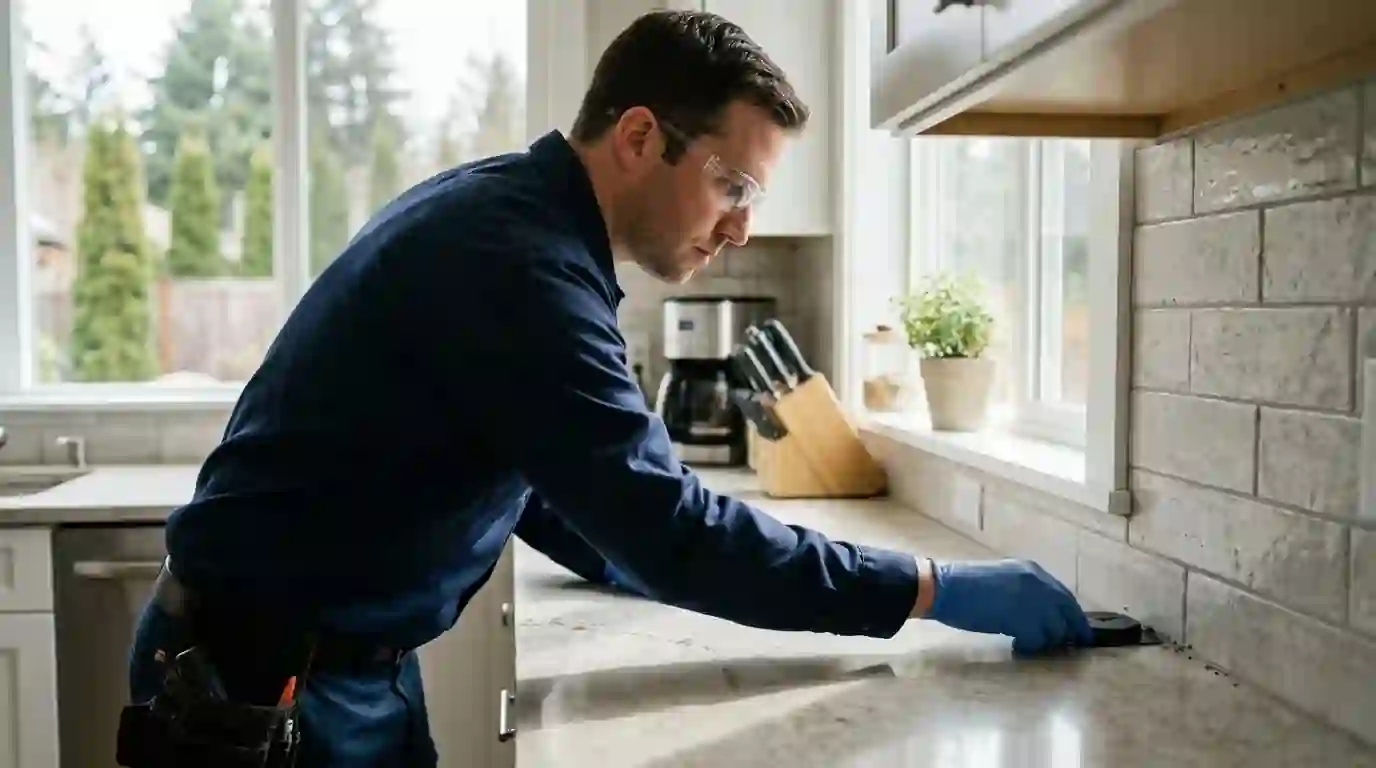
Seattle's everyday kitchen ant is the odorous house ant, a tiny dark ant that smells of rotten coconut when crushed and runs trails to sweets and grease. Its colonies are the reason sprays fail: a single colony can hold multiple queens across multiple satellite nests, and when a repellent spray hits a trail, the colony reacts by budding, splitting into more nests rather than fewer. Pavement ants, which throw up small soil piles at driveway and slab joints, and moisture ants, which nest in chronically damp wood, round out the usual suspects.
Identification decides the treatment. For odorous house ants we use slow-acting sweet and protein baits that foragers carry back and share, which is how the queens die; for pavement ants, targeted treatment at the slab joints and nest sites; for moisture ants, the honest answer is that the wet wood is the problem, and we will show you where it is. Non-repellent exterior applications along the foundation intercept foraging without triggering the budding response that over-the-counter sprays cause.
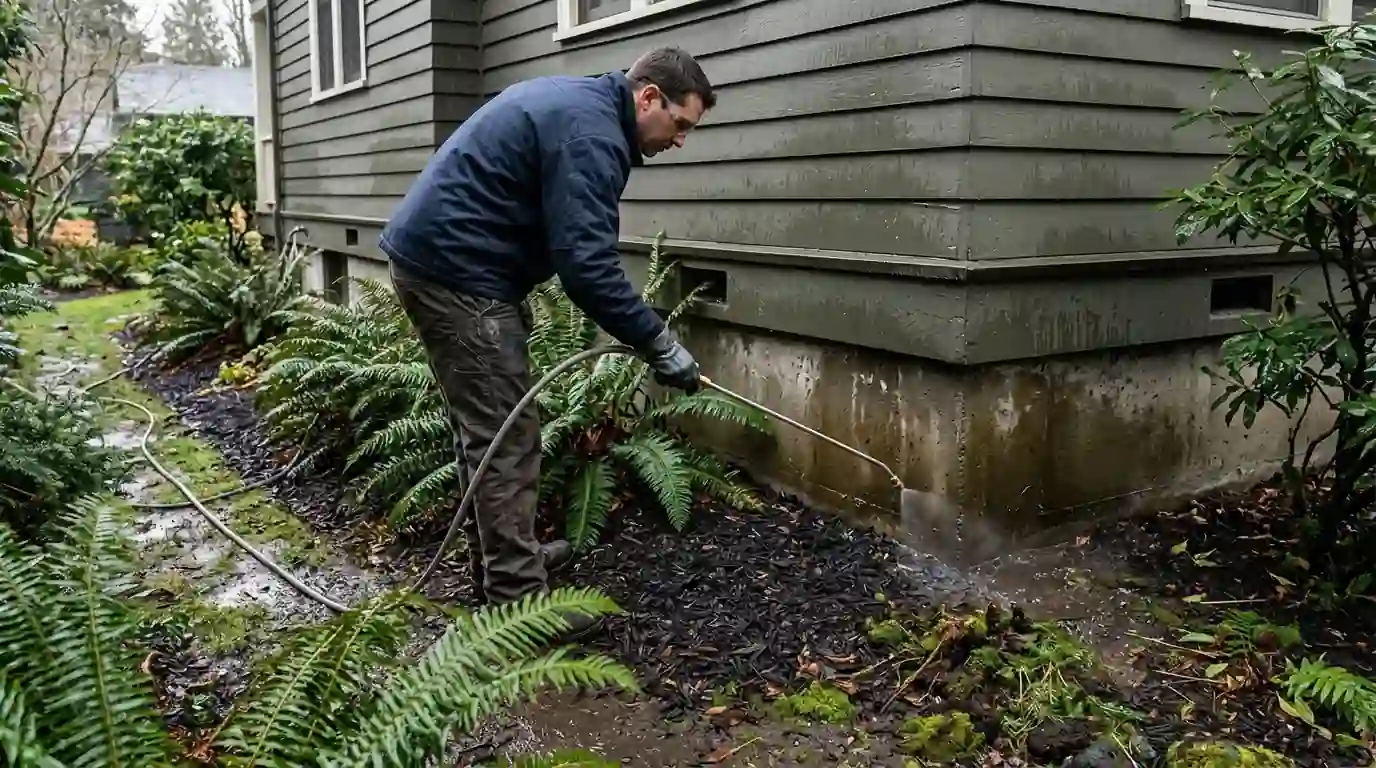
Every ant job here ends with a prevention read: the wet mulch against the siding, the dripping hose bib, the fir branch bridging onto the gutter. Seattle ants are a moisture story, and telling you that story is part of the service.
Catch it early
Odorous house ants, 2.4 to 3.3 millimeters, trailing to syrup, fruit or the dishwasher lip. Crush one: a rotten-coconut smell confirms it.
Classic budding response. The spray split the colony, and the new satellite nests are now foraging on fresh routes.
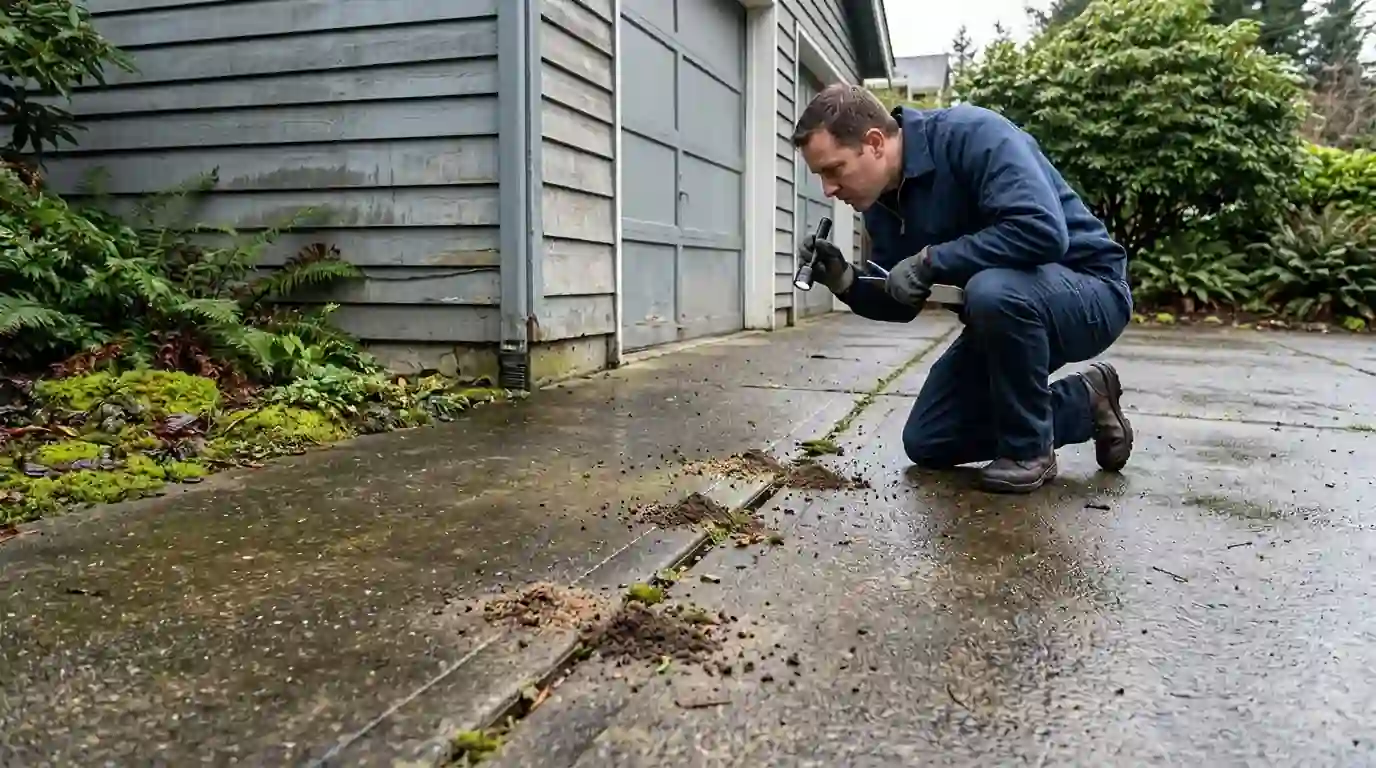
Pavement ants excavating between driveway sections, patio pavers or along the garage slab edge, worst in spring.
Trails emerging at kick plates and plumbing penetrations point to nesting in the wall void or the damp subfloor beneath.
A reproductive swarm inside means a mature colony in or very near the structure, and it is worth ruling out carpenter ants.
Trails that spike with wet weather are colonies being flooded out of soil nests and relocating toward the house.
The Seattle angle
Seattle's roughly 37 inches of rain across 150 wet days a year keeps soil moist, mulch damp and wood wet, which is the full list of what the region's dominant ants want. Odorous house ants thrive in exactly this climate and are consistently the most common kitchen invader in Puget Sound homes; moisture ants go a step further and nest only in wood that stays wet, making them a living moisture meter for your structure. When winter rain saturates their outdoor nests, colonies move laterally into crawl spaces and wall voids, which is why trails appear in February while the garden is still dormant.
The housing stock does its part. Older homes carry decades of settled gaps at sills and slab joints, and the vented crawl spaces under most of the city's houses hold the humid, protected conditions satellite nests prefer. One warning worth repeating: if the ants you are seeing are large and black, treat the sighting seriously and look at our carpenter ant page, because in Washington that species is a structural matter, not a kitchen nuisance.
How the job runs
Size, color, what they are trailing to and where the trail enters. We often narrow the species on the phone.
The technician confirms the species and maps trails back toward nest zones, inside and out.
Slow-acting baits go on active trails so foragers feed the queens. No repellent sprays indoors.
Non-repellent application along the foundation, entry points and nest sites intercepts new foraging.
You get the moisture and access report: the damp mulch, the drip, the branch. That is the long-term control.
Honest numbers
Ant work prices at the accessible end of pest control. Published Seattle one-time treatments run roughly $95 to $550 with an average near $170, and typical ant jobs land in the lower-middle of that band. What moves your number:
If the inspection turns up moisture ants or carpenter ants, we tell you straight, because that changes the conversation from a bait job to a wood-and-water job, and we quote the right service rather than treating the wrong one.
| One-time ant treatment | Quarterly plan | |
|---|---|---|
| Best for | A single season's trails | Homes with trails back every spring |
| Visits | Initial baiting plus one follow-up if needed | Four visits with exterior re-treatment each |
| Approach | Colony baiting plus perimeter | Standing perimeter barrier maintained year-round |
| Typical cost | Lower-middle of the $95 to $550 band | Commonly $95 to $185 per visit |
Make the visit count
Straight answers
Because the colony never died. Odorous house ant colonies overwinter in protected spots, often under slabs or in crawl spaces, and re-run their proven routes when temperatures lift. Colony-level baiting plus a maintained perimeter breaks the cycle; surface sprays just reset it.
Placement is the safeguard: gels go into cracks, voids and station housings on the trail line, not on open surfaces, and we walk you through every location. The bait quantities involved are tiny and the actives are selected with households in mind.
That rotten-coconut odor is the signature of the odorous house ant and is genuinely diagnostic. It also tells us the treatment plan: multi-queen colonies, sweet-bait preference, and absolutely no repellent sprays.
Sometimes they help, and if they are working, finish the job. Where they fail is matching bait to the colony's current appetite, which shifts between sugars and proteins seasonally, and reaching satellite nests. If three weeks of store baits have not ended the trail, the colony is telling you something.
Pavement ant excavation. They nest under slabs and push soil up through the joints, and they will happily extend foraging into a garage or kitchen. Nest-site treatment at the joints resolves them faster than baiting alone.
Size is the first screen: carpenter ants are large, 6 to 13 millimeters, where kitchen ants are tiny. Sawdust-like frass, rustling in walls at night and big winged ants in spring all point to carpenter ants, which in this state is a structural issue worth its own inspection.
Trail on the counter again this morning? Call now.
Call (206) 944-0849
Talk to a technician
One identification, the right bait, a treated perimeter and an honest moisture report. Call any hour and tell us what you are seeing.
Call (206) 944-0849Answered 24/7 from our Seattle service office.
Find the office
Our service office sits at 1440 5th Ave in Seattle, with the head office over in Aberdeen. Calls route to a person, not a queue, any hour.