How to identify them
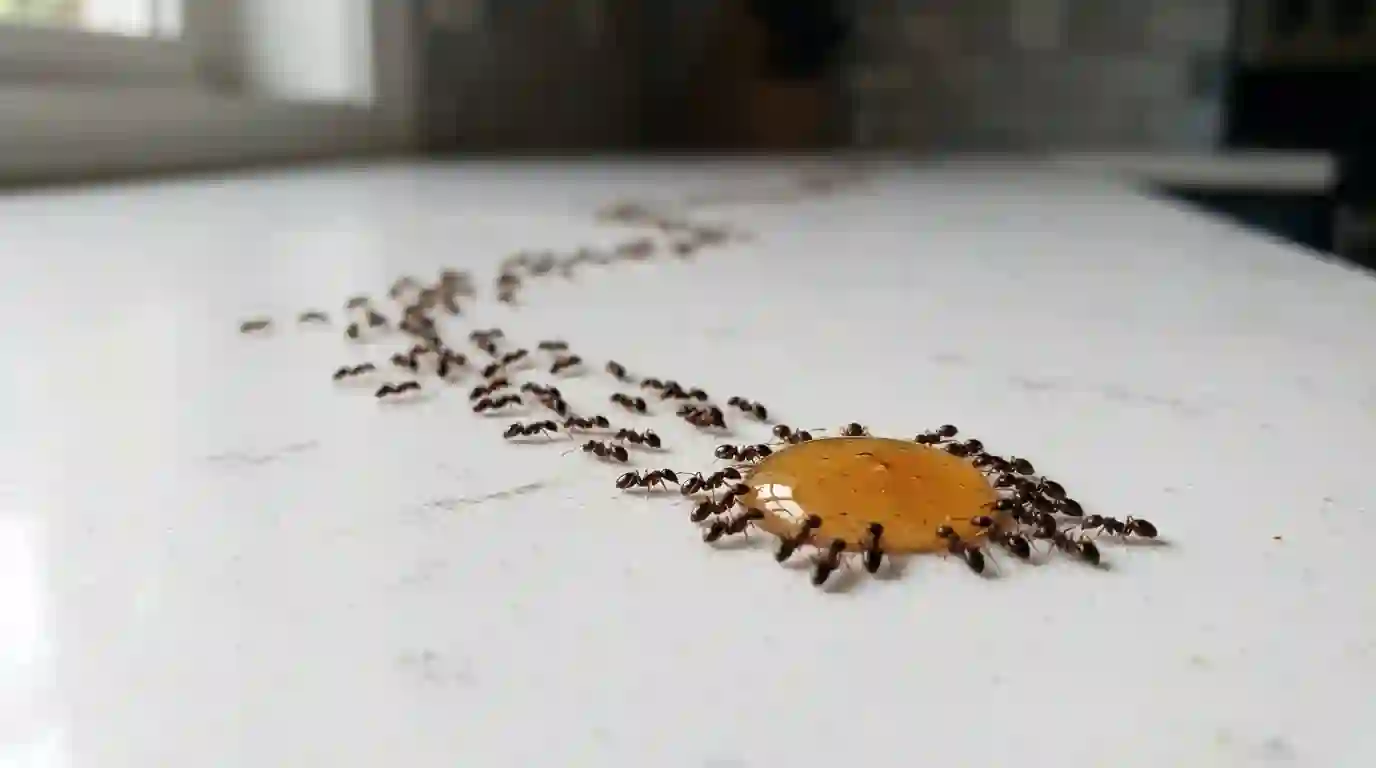
Odorous house ants are small, about 2.4 to 3.3 millimeters, and dark brown to black. Crush one and you will notice a smell like rotten coconut or blue cheese.
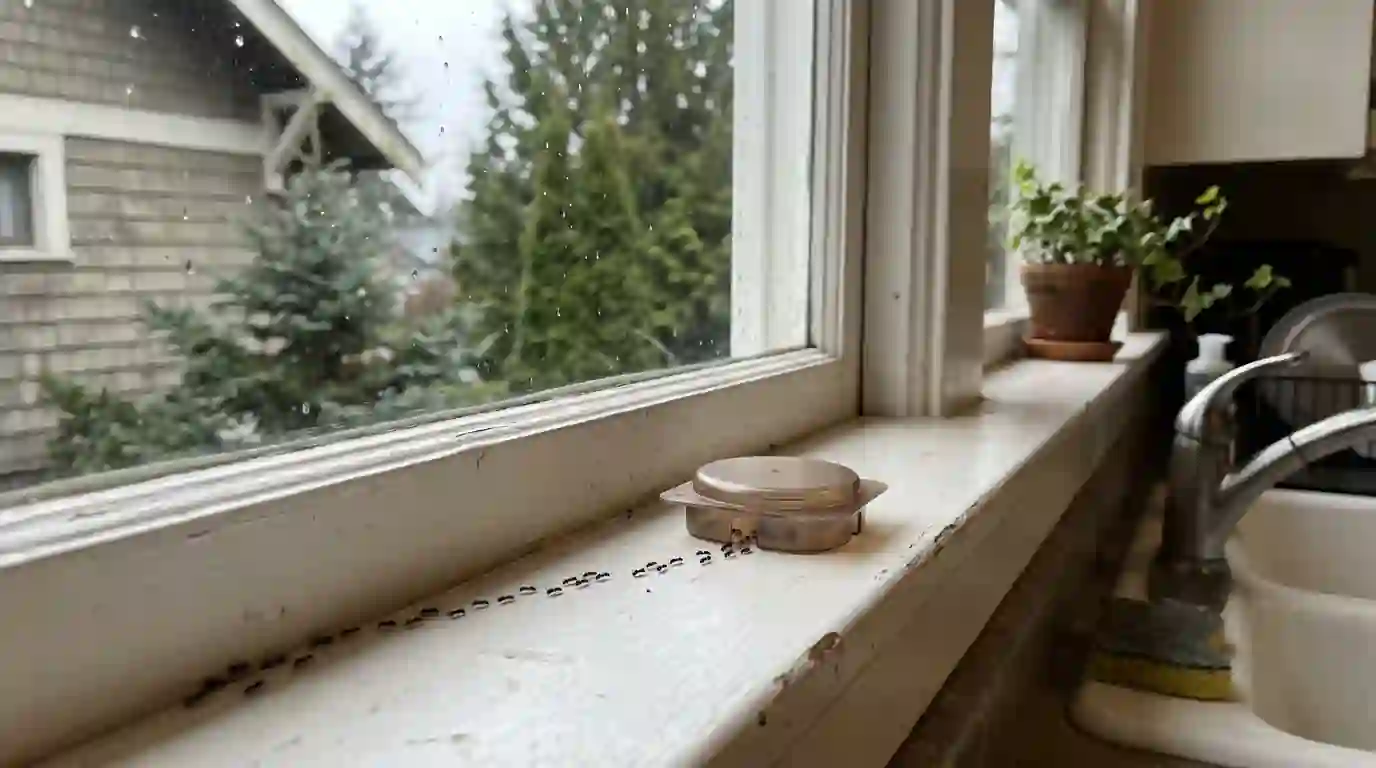
They trail to sweets, grease, pet food and the dishwasher, often entering at window frames, kick plates and plumbing penetrations.
Why spraying backfires
Colonies have many queens and satellite nests. When a repellent spray hits a trail, the colony can split, a process called budding, creating more nests in new places.
Slow-acting baits work because workers carry them back and share them with the queens.
Why spring in Seattle
Seattle's wet winters flood outdoor nests, pushing colonies toward the house. Trails often appear in late winter and spring as temperatures rise.
Moisture matters: damp mulch against the siding, leaking hose bibs and wet crawl spaces all support colonies.
Other common Seattle ants
Pavement ants nest under slabs and driveways and push soil up through cracks. Moisture ants nest in wet, decaying wood and are a sign of a moisture problem. Carpenter ants are large and can damage structural wood.
Each needs a slightly different approach. Pavement ants respond to nest-site treatment at slab joints, moisture ants to fixing the wet wood, and carpenter ants to locating and treating nests in the structure.
If you are not sure which ant you have, save a few on tape and photograph the trail. Identification takes seconds and points to the right fix.
What actually works
Clean up food sources, place baits along active trails and give them time. Pull mulch back from the foundation and fix leaks.
If baits have not stopped the trail in two to three weeks, professional baiting and non-repellent perimeter treatment can reach the satellite nests.
Making baits work better
Baits work best when ants have nothing better to eat. Clean counters, sweep crumbs, rinse recycling, and store sweets and pet food in sealed containers so the bait is the most attractive food available.
Place bait directly on or next to the active trail, not in random spots. If ants ignore a sweet bait, they may be feeding on protein or grease at that time of year, and a different bait type may work better.
Expect to see more ants at the bait for a day or two. That is a good sign: workers are collecting it and carrying it back to the colony. Resist the urge to spray them.
Give the bait time. Most trails slow within a few days and stop within one to two weeks. If ants keep coming after that, satellite nests may be in a wall or under the house and need a professional approach.
Ant trail checklist
- Do the crush-and-smell test
- Do not spray the trail
- Place baits along the active trail
- Wipe up sweets and grease
- Store pet food in sealed containers
- Fix leaks and pull mulch back from the siding
- Give baits two to three weeks
- Call if trails persist