Why late summer is worst
Queens start nests in spring, and colonies grow all summer. By August and September a single nest can hold thousands of workers. As natural food declines, they scavenge more at picnics and garbage.
Seattle's mild summers and abundant greenbelts give colonies a long, steady build season.
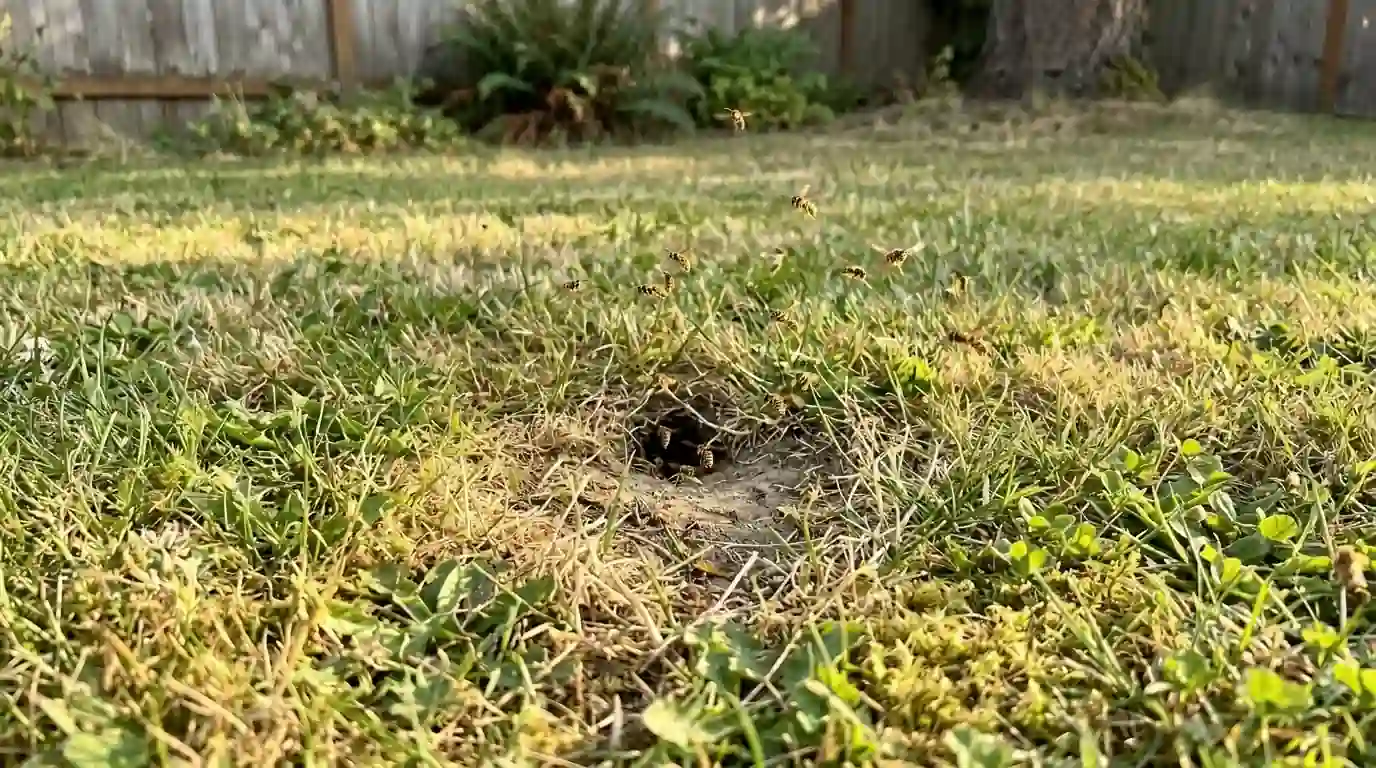
Finding the nest
Yellow jackets often nest underground in old rodent burrows or inside wall voids and under decks. Watch for a steady stream of wasps flying in and out of one spot.
Observe from a distance. Vibration from mowers, trimmers and footsteps can trigger defensive attacks.
Avoiding stings
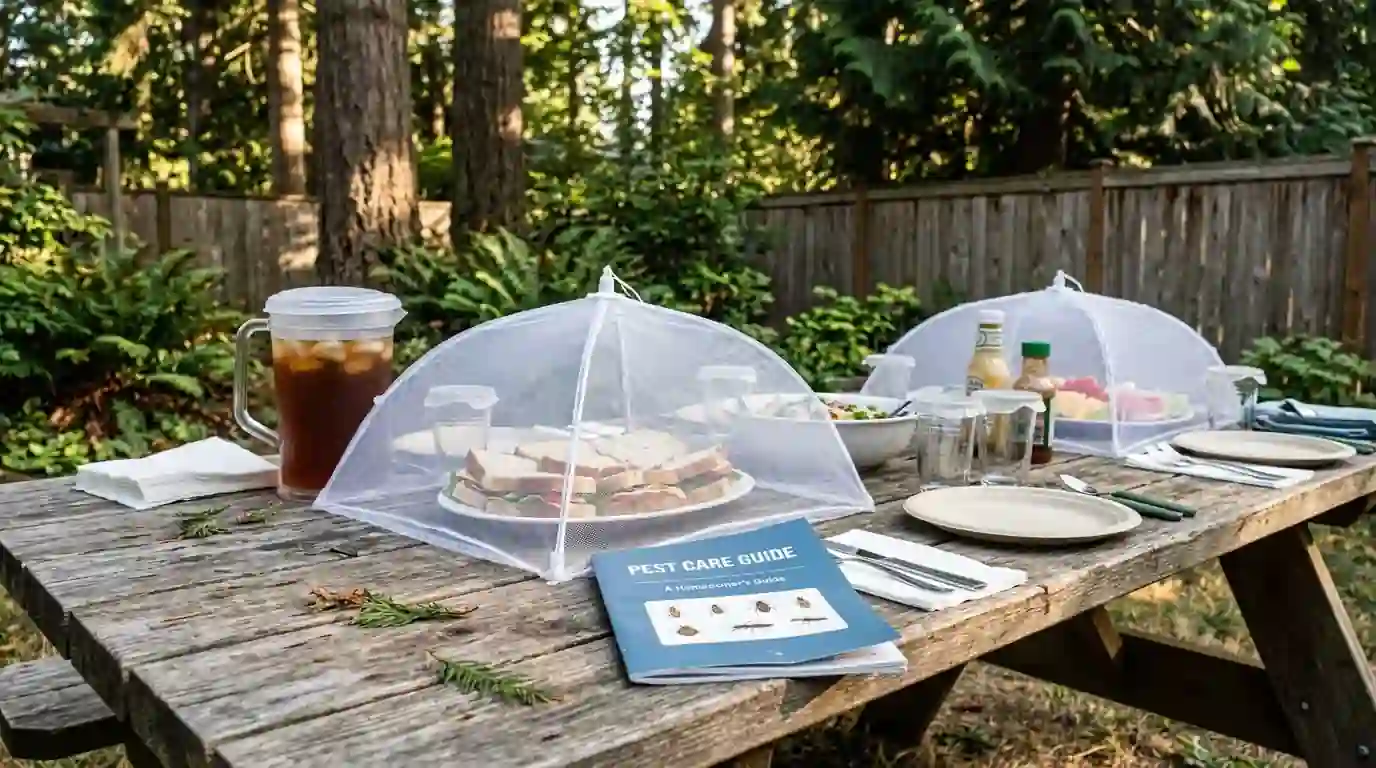
Cover drinks and food outdoors, especially sweet drinks and meat. Check cans before sipping. Keep garbage and compost lids closed.
Wear shoes in the yard and avoid swatting, which can provoke more stings. If you disturb a nest, walk away quickly and get indoors.
Yellow jackets vs other wasps
Yellow jackets are compact with bright yellow and black bands and usually nest in the ground or in walls. Paper wasps are longer with dangling legs and build open umbrella-shaped nests under eaves. Bald-faced hornets are black and white and build large gray paper nests in shrubs and trees.
Paper wasps are less aggressive and their nests can sometimes be left alone if they are away from activity. Yellow jackets and bald-faced hornets defend nests more aggressively, especially late in the season.
In early spring, a single queen starting a nest is easy to deal with. Checking eaves, sheds and deck corners in April and May for small starter nests can prevent a large late-summer colony.
When to call a professional
Nests near doors, decks, play areas or in walls should be treated by a professional with protective gear, at dawn or dusk when the colony is home.
Do not seal a wall nest entrance; trapped wasps can chew into the house. Anyone with a sting allergy should keep emergency medication available and seek medical help immediately if a reaction occurs.
If someone is stung
Move away from the nest area calmly and quickly. Yellow jackets release alarm signals when they sting, which can draw more wasps to the same person.
Wash the sting site with soap and water and apply a cold pack to reduce swelling. Unlike honey bees, yellow jackets usually do not leave a stinger behind.
Watch for signs of a serious allergic reaction, such as difficulty breathing, swelling of the face or throat, dizziness or hives spreading beyond the sting site. These need emergency medical care right away.
Multiple stings, especially in children or older adults, are also worth a call to a doctor even without obvious allergy symptoms. Once everyone is safe, keep the area clear and schedule nest treatment.
Yellow jacket safety checklist
- Watch for steady flight lines to ground holes or wall gaps
- Stop mowing near a suspected nest
- Keep kids and pets away from the area
- Cover outdoor food and drinks
- Keep garbage and compost lids closed
- Never seal a wall nest entrance
- Keep allergy medication handy if needed
- Call for professional treatment